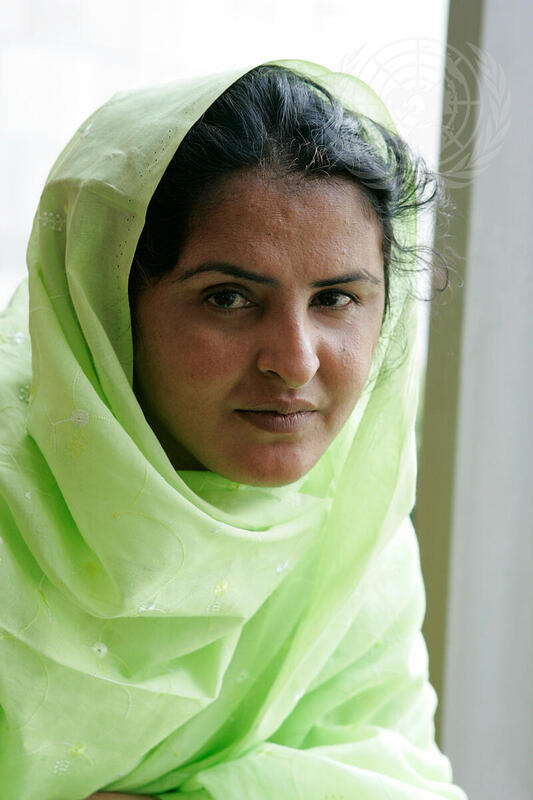
In 2002, Mukhtar Mai, a young woman from rural Pakistan, survived a brutal honor-based gang rape that shocked the nation. Mukhtar Mai was brutally gang-raped on the orders of her village council, because of an offence her 12-year-old brother was alleged to have committed.
But instead of bowing to fear or silence, she fought back, taking her attackers to court and defying centuries of patriarchal tribal customs.
Her courage turned a personal tragedy into a powerful mission, making her a global symbol of women’s empowerment, justice, and education in Pakistan.
Early Life and Life-Changing Incident
Mai was born around 1972 in Meerwala, Punjab in a conservative rural village where women had limited freedom and access to education. Her life changed after her 12-year-old brother, Abdul Shakoor, was abducted and sexually assaulted by members of the Mastoi clan on the allegations of him having an affair with their clanswoman.
Three men from the Mastoi clan abducted and gang-raped Abdul Shakoor, Mukhtaran Mai’s brother in a sugarcane field. When he spoke out, he was falsely accused of having an affair with Salma Naseen and arrested.
The Mastoi tribal council (jirga) decided that Shakoor should marry Naseen, and that Mukhtar Mai should marry a Mastoi man but villagers rejected this ruling, believing that adultery must be punished with adultery.
Mai was then ordered to appear before the council to apologize to the Mastoi tribe for her brother’s alleged misconduct.
But instead of being heard, she was immediately dragged to a nearby hut. and gang-raped by four Mastoi men, while around ten others watched. Afterwards, she was paraded nude through the village. Her clothes were later presented as evidence in court, and medical and chemical analysis confirmed the presence of at least two semen stains, validating the assault.
At that time, Mai was 33 years old and she was expected her to commit suicide as a result of the rape. But she refused and did the exact opposite.
She began what became a three-year legal battle against the men that raped her and in doing so captured the imagination of millions around the world. She accused accused 14 men of being involved in raping her. And won
In 2002 a court sentenced six to death and acquitted the others citing a lack of evidence.
The rapists were later convicted of sodomy (in Shakoor’s case) and rape (in Mai’s case), though initial sentences were controversial and later modified through appeals.
Legal Struggle and Advocacy
On 3 March 2005, the Lahore High Court overturned the trial court’s verdict, citing insufficient evidence, and acquitted five of the six men who had previously been sentenced to death.
In response, the Government of Pakistan filed an appeal against the acquittals. Mukhtar Mai requested that the court delay the release of the accused, and as a result, the five men remained in custody under a legal provision permitting 90-day detention without formal charges.
During a public interviews and media interaction following the Lahore High Court’s decision to overturn key convictions in her case, Mukhtar Mai said…
Women used to not speak up, now they come forward, but they don’t get justice. I gave them 70 witnesses; then why didn’t they give me justice?
The remark reflects her frustration with Pakistan’s judicial system and highlights the continued challenges faced by survivors of sexual violence despite increased willingness to speak out.
Mai fought a lengthy legal battle, initially winning convictions against her attackers. Although higher courts overturned most sentences, she continued to advocate for justice for women survivors, refused personal compensation and used resources to support her community, emphasizing that ‘education is key to ending oppression’.
On 5 July 2002, the Government of Pakistan granted Mukhtar Mai financial assistance amounting to 500,000 rupees (approximately 4,518 U.S. dollars). She reportedly told Attiya Inayatullah, the Minister for Women’s Development, that “she would have committed suicide if the government had not come to her help”.
She told the Associated Press,
I want to be the voice of those women who face circumstances similar to what I did. My message for my sisters is that we aren’t weak. We have a heart and a brain, we also think. I ask my sisters to not lose hope in the face of injustice, as we will get justice one day for sure.
Education and Women’s Empowerment
Mukhtar Mai founded the Mukhtar Mai Women’s Welfare Organization to support survivors of violence and promote sustainable social change through education. Recognizing that illiteracy was a major barrier to women’s independence, she focused her efforts on improving access to schooling in her village of Meerwala.
Mukhtar Mai has set up schools for girls in her village with compensation money she received for her ordeal and became a global campaigner for women’s rights. She also set up a women’s welfare organization, a resource center and a shelter for battered women winning her numerous human rights accolades.
Through her organization, she established:
- Girls Model School – dedicated to providing quality education to girls in a community where female literacy was traditionally discouraged.
- Ghulam Farid Primary School – offering primary education to both boys and girls in a safe and inclusive environment.
Key Statements And Beliefs:
Mukhtar Mai’s public statements reflect her unwavering commitment to justice, accountability, and women’s empowerment. Drawing from her personal experience, she has consistently emphasized the need for systemic reform rather than symbolic gestures”
- “I have dedicated my life to women’s rights. Wherever a woman is oppressed, I will go there and fight for her rights.”
- “Violence against women can end only when the culprits get punished.”
Awards and Recognition
In 2004, Mai was named one of TIME Magazine Most Influential People, in 2007 won the North-South Prize from the Council of Europe and named Glamour Woman of the Year by Glamour magazine in 2005.
Her work continues to inspire women’s rights movements, fight honor-based violence, and promote girls’ education in Pakistan.
Mukhtar Mai’s journey from victim to activist demonstrates courage, resilience, and the power of education.
Through her schools and advocacy, she continues to empower women, challenge patriarchal norms, and inspire generations across Pakistan and the world.
Umm E Habiba
Punjab, Pakistan