
A young Malian social-media influencer, Mariam Cissé, has been abducted and publicly executed by armed men while livestreaming in the village of Tonka, northern Mali.
The brutal killing has sent shockwaves across the region and raised alarm over the growing risks faced by digital creators in conflict-affected areas.
According to reports, Mariam was seized by unidentified gunmen while broadcasting a live TikTok session early this month. Eyewitnesses said the attackers accused her of “collaborating with the Malian army” because of her videos expressing support for the country’s military.
She was reportedly taken away in front of a crowd and executed the following day at Tonka’s main square — a public act meant to instill fear and reinforce extremist control in the area.
No group has yet claimed responsibility for her death, though authorities suspect militants linked to Jama’at Nusrat al-Islam wal Muslimeen (JNIM), an al-Qaeda affiliate active across the Sahel.
A rising voice silenced
Before her death, Mariam Cissé had gained tens of thousands of followers on TikTok, where she shared videos about daily life, community issues, and messages of support for Mali’s armed forces. Her cheerful style and patriotism made her a symbol of local pride, but also, tragically, a target.
“She was young, creative, and proud of her country,” a friend told reporters. “We never thought a livestream could end her life.”
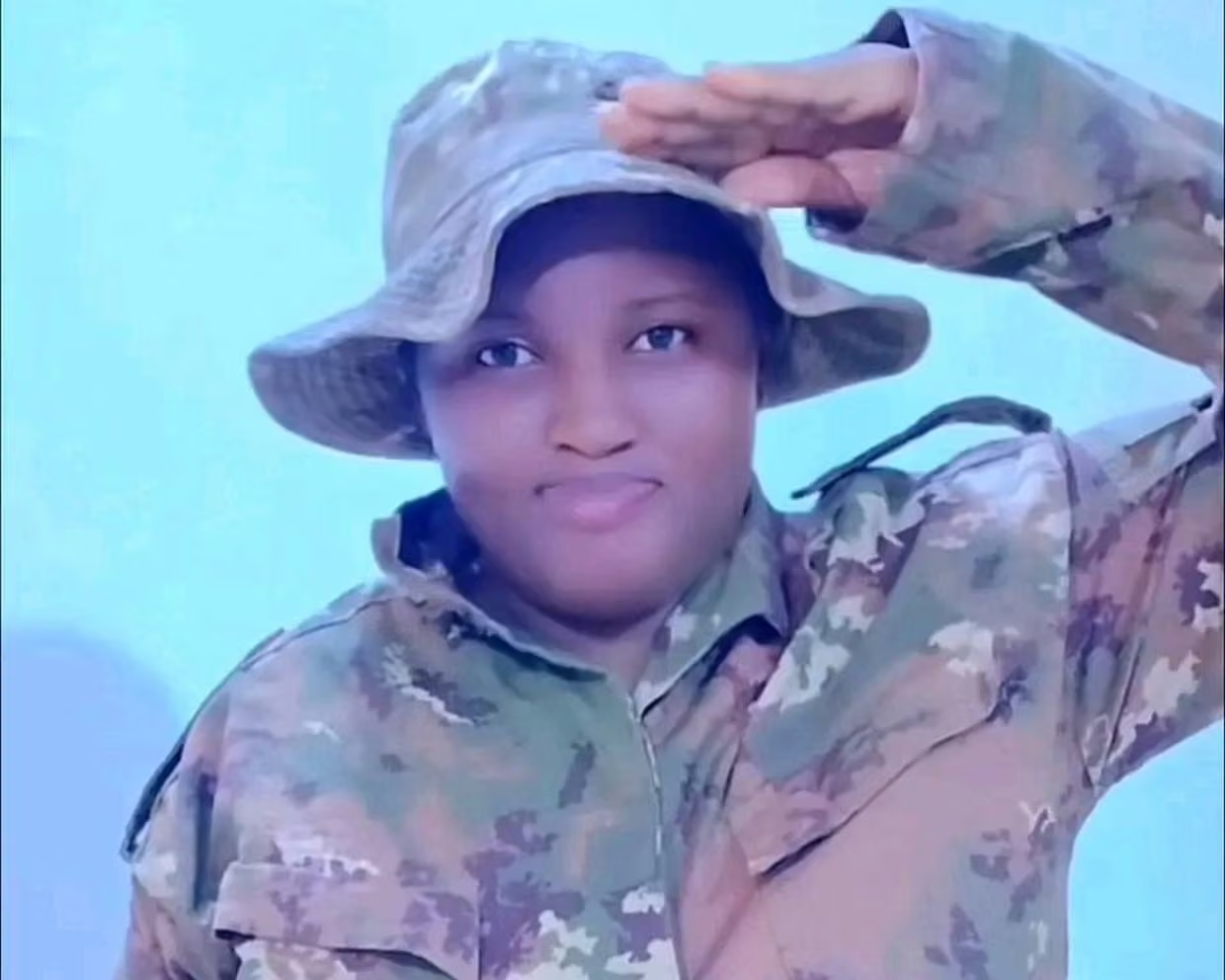
In one of her last posts, Mariam appeared wearing a military-patterned outfit, saluting Malian soldiers fighting insurgents. Within days, she was gone.
A nation under siege
Mali has struggled for over a decade with insurgencies and extremist violence.
Since the 2012 Tuareg rebellion, vast parts of the country’s north and center have fallen under the influence of armed groups linked to al-Qaeda and the Islamic State.
Frequent attacks, kidnappings, and executions have displaced thousands and crippled local governance. Despite the presence of Mali’s military government and Russian Wagner-linked forces, vast rural areas remain outside effective state control.
Tonka, where Cissé lived, sits along the Niger River about 150 kilometers from Timbuktu — an area long contested between militants and state forces. In such regions, even perceived association with the army can lead to deadly reprisals.
Social media meets conflict
The killing has drawn global outrage and renewed attention to the intersection of social media and security risks. Experts warn that in volatile environments like Mali, online expression — particularly support for one side in a conflict — can carry life-threatening consequences.
“This is a new kind of vulnerability,” said a Sahel-region analyst. “Visibility online now translates to exposure offline. When young people broadcast freely in conflict zones, they can unintentionally step into the crossfire.”
Human-rights observers have condemned the killing as an assault on free expression and women’s voices in Mali. The African Union and UN Human Rights Office have called for an investigation, urging authorities to identify those responsible and ensure the safety of civilians.
A chilling message
Mariam’s death has left an indelible mark on her community — and on Mali’s fragile social fabric. In Tonka, residents describe her as courageous and patriotic. Her videos, once filled with laughter and music, now circulate online as tributes tagged #JusticeForMariamCisse and #StopTheViolence.
For many, her execution is more than a local tragedy; it is a warning of how rapidly violence can silence young voices daring to speak.
“Mariam Cissé was not a soldier,” wrote one Malian journalist. “She was a symbol of hope — a woman who loved her country enough to show it. Her death reminds us how dangerous that simple act can be.”
Broader implications
Cissé’s killing highlights three growing concerns in the Sahel:
- Escalating threats to civilians, especially women, journalists, and content creators.
- Erosion of digital freedom, as online platforms become battlegrounds for propaganda and intimidation.
- Continued insecurity, despite years of international intervention and local military campaigns.
Analysts warn that without improved protection and accountability, more civilians may fall victim to similar acts of terror aimed at silencing free expression.
The story of Mariam Cissé is a haunting reflection of modern conflict — where smartphones meet gunfire; and the digital stage collides with the harsh realities of war.
Her final broadcast, once meant to entertain and inspire, ended as a grim testament to the dangers of living — and speaking — in the crossfire of Mali’s unrest.
In her death, Mariam Cissé has become both a victim and a symbol: a reminder that even in the smallest villages, the struggle for voice and freedom remains perilous — and deeply human.
James Nkyokomabasi E.
Abuja, Nigeria