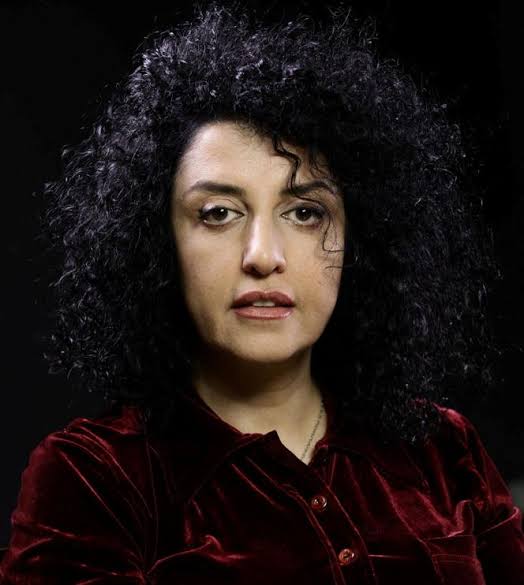
For years, one woman continued speaking for prisoners whose voices were buried behind prison walls. She defended women facing discrimination, campaigned against executions, exposed the psychological damage of solitary confinement, and refused to remain silent despite repeated arrests and years of imprisonment. Her work gradually transformed her into one of the most influential human rights voices in Iran, earning global recognition and eventually the Nobel Peace Prize in 2023. That woman is Narges Mohammadi.
Born on April 21, 1972, in Zanjan, Mohammadi grew up during the turbulent years following the Iranian Revolution, a period marked by political crackdowns and restrictions on freedom. From an early age, she became aware of injustice, particularly the limitations placed on women and political dissidents in Iranian society.
During the late 1980s and early 1990s, she studied physics at Imam Khomeini International University. Alongside her education, she became active in student organizations and began writing articles advocating democracy, civil liberties, and women’s rights. Even as a student, she displayed the determination that would later define her life’s work.
After graduating, Mohammadi moved into journalism and social activism. Throughout the 1990s, she collaborated with reformist newspapers and intellectual circles that called for greater freedoms in Iran. Her writings focused on human dignity, equality, and women’s rights, subjects that increasingly drew the attention of Iranian authorities.
In 2003, she joined the Defenders of Human Rights Center, founded by Nobel Peace Prize laureate Shirin Ebadi. The organization worked to defend political prisoners and document human rights abuses across Iran. Mohammadi later became the center’s vice president and one of the country’s most prominent activists.
Over the years, she campaigned relentlessly against the death penalty, emerging as one of Iran’s leading voices opposing executions. She also defended prisoners jailed for political expression and repeatedly criticized the treatment of women inside prisons. Much of her activism focused on exposing solitary confinement, which she described as a form of psychological torture.
Her growing influence came with repeated punishment.
In 1998, she faced her first arrest for criticizing the government. More arrests followed in the years that came after. Following Iran’s disputed 2009 presidential election and the protests that erupted afterward, pressure on activists intensified dramatically. Despite warnings, interrogations, and threats, Mohammadi continued speaking publicly.
In 2010, she was sentenced to prison, and in 2011 she was arrested again on charges linked to “propaganda against the state” and activities against national security. International human rights organizations condemned the charges, arguing that she was being punished for peaceful activism rather than any criminal act.
Years of imprisonment severely affected her health. Reports described lung complications, neurological disorders, episodes of muscular paralysis, and heart related conditions. Yet every temporary release appeared only to strengthen her determination to continue her advocacy.
In 2015, Iranian authorities sentenced her to additional years in prison because of her human rights work and anti execution campaigns. Much of this period was spent inside Evin Prison, where she continued documenting prison conditions and the suffering of women detainees.
Even from prison, Mohammadi refused silence.
She secretly published letters and testimonies describing solitary confinement and prison abuse. Her writings on what she called “white torture” gained international attention for exposing the psychological effects of isolation on prisoners, especially women.
One of her most widely known statements was:
“Solitary confinement is torture.”
The phrase became closely associated with her campaign against prison abuse and state repression.
In 2022, following the death of Mahsa Amini while in police custody, Iran erupted into nationwide demonstrations under the slogan “Woman, Life, Freedom.” Mohammadi openly supported the movement from inside prison, condemning violence against women and standing with protesters demanding equality and freedom.
Her activism during this period transformed her into an even more powerful global symbol for women’s rights in Iran.
On October 6, 2023, the Norwegian Nobel Committee awarded Mohammadi the Nobel Peace Prize for “her fight against the oppression of women in Iran and her fight to promote human rights and freedom for all.”
At the time of the award, she remained imprisoned.
Unable to attend the Nobel ceremony herself, her children accepted the prize on her behalf. In a message delivered to the world, Mohammadi declared:
“I will never stop striving for democracy, freedom and equality.”
The statement quickly became one of her most recognized declarations and reflected the spirit of her lifelong struggle.
Another powerful message often associated with her activism reads:
“The more of us they lock up, the stronger we become.”
Supporters viewed those words as a reflection of the resilience shown by Iranian women and political prisoners despite years of repression.
Mohammadi became only the second Iranian woman to receive the Nobel Peace Prize after Shirin Ebadi. Her achievement transformed her into one of the world’s most recognized human rights defenders.
Yet her journey came with immense personal sacrifice.
Her husband, Taghi Rahmani, spent years living in exile outside Iran. Their children grew up separated from their mother because of her repeated imprisonments. Despite deteriorating health and prolonged years behind bars, Mohammadi continued writing and speaking about freedom, equality, and justice.
By 2024 and 2025, international concern over her health had intensified. Reports described worsening heart and lung complications linked to years of imprisonment and limited access to medical treatment. In May 2026, reports emerged that she had been transferred from prison to a hospital in Tehran following severe health complications, prompting renewed global calls for her unconditional release.
Today, Narges Mohammadi is regarded by many as one of the defining human rights figures of modern Iran.
Through years of imprisonment, advocacy, and sacrifice, she has become a symbol of resistance for women demanding freedom, dignity, and equality not only in Iran, but across the world.
Umm E Habiba,
Punjab, Pakistan.