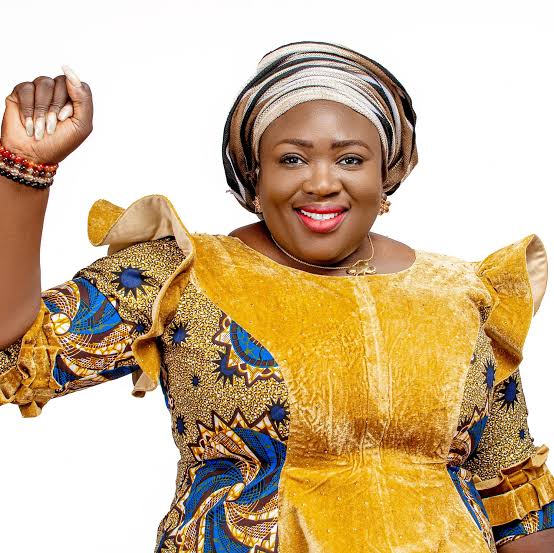
The League of Women Voters of Nigeria (NILOWV) has raised concern over the continued exclusion of women from leadership and decision-making positions in the country, describing the situation as a persistent democratic gap that undermines the ideals of June 12 and Nigeria’s democratic development.
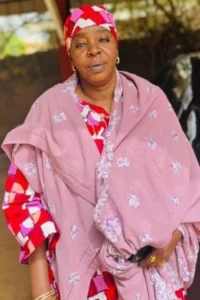
Speaking in a Democracy Day address, the President of NILOWV, Irene Awunah-Ikyegh, said the 2026 commemoration of June 12 presents yet another reminder that women remain significantly underrepresented in governance structures across all levels of government.
She noted that while June 12 symbolizes the triumph of popular will, democratic inclusion, and the sacrifices made for civilian rule, the reality for Nigerian women reflects a continuing struggle for equal participation in leadership spaces.
“June 12 remains a powerful reminder that democracy is not merely about elections; it is about inclusion, representation, participation, justice, and equal opportunity for all citizens,” she said.
According to her, Nigerian women, who make up nearly half of the country’s population and play critical roles in economic, social, and political development, continue to be marginalized in both elective and appointive positions.
She observed that this imbalance is visible across all tiers of government, from the National Assembly to state houses of assembly, and from local government councils to executive offices.
“This democratic deficit not only weakens governance but also undermines the principles of equity and justice upon which democracy stands. A democracy that excludes women is one that has not yet realized its full potential,” she added.
Awunah-Ikyegh further pointed to the recently concluded political party primaries, noting that they once again exposed deep structural inequalities within Nigeria’s political system.
She explained that although women actively participate in elections as voters, campaigners, mobilizers, financiers, and party loyalists, only a small fraction succeed in securing party tickets to contest elective offices.
“This persistent underrepresentation on the ballot is a reminder that the barriers confronting women begin long before Election Day. They are rooted in party structures, access to resources, financial limitations, and systemic political exclusion,” she said.
The NILOWV President stressed that women’s political inclusion should not be viewed as a gender issue alone but as a national development priority. She noted that countries that have embraced gender-inclusive governance have recorded stronger institutions, better policy outcomes, improved social indicators, and more sustainable development.
She also highlighted persistent challenges facing women in politics, including discriminatory practices, cultural and patriarchal norms, violence against women in politics, and lack of access to financial and institutional support.
Despite these challenges, she emphasized that Nigerian women have continued to demonstrate competence, leadership capacity, innovation, and resilience in various sectors when given opportunities.
Awunah-Ikyegh renewed the organization’s call for the passage and implementation of the Special Seats Bill for Women, describing it as a critical legislative intervention that could help correct long-standing gender imbalance in political representation.
She said the bill presents Nigeria with an opportunity to demonstrate genuine commitment to democratic inclusion and constitutional equity.
“We urge lawmakers to rise above partisan interests and support this critical reform that will strengthen, rather than weaken, our democracy. It offers a practical pathway to expanding women’s representation in legislative institutions,” she said.
She called on government institutions, political parties, traditional rulers, civil society organizations, the media, and international partners to support efforts aimed at ensuring greater inclusion of women in governance.
As Nigeria marks another Democracy Day, she reaffirmed NILOWV’s commitment to advocating for a more inclusive democratic system.
“Democracy is not complete until every citizen has an equal opportunity to participate in shaping the future of the nation. Until women are fully represented, our democracy remains a work in progress,” she concluded.
By Almustapha Bishir Jume