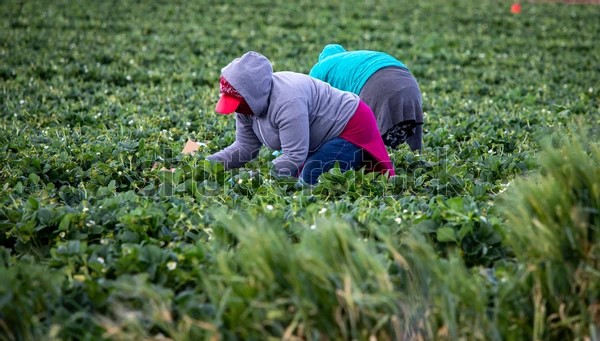
The death of a Moroccan seasonal farm worker in Spain has renewed concerns about the treatment, safety, and living conditions of thousands of migrant women employed in the country’s agricultural sector.
Hakima, a mother of four from the Moroccan city of Sidi Kacem, arrived in Spain’s Huelva province roughly 40 days before her death to take part in the red-fruit harvesting season. Like many women recruited through temporary labor programs, she left her family behind in the hope of earning an income that could provide a better future for her children.
According to accounts from people who were with her during her final hours, Hakima returned to her accommodation after a long day in the fields. She reportedly took a shower, prepared the meal she intended to bring to work the following day, and went to sleep. A forensic examination later indicated that she died around 1 a.m.
Authorities have not yet released a final determination regarding the cause of death. However, labor organizations believe the available evidence points to heatstroke during a period of exceptionally high temperatures in the region. The case has drawn comparisons to a similar incident in 2019, when another Moroccan agricultural worker reportedly died under comparable circumstances.
Hakima’s death has prompted renewed criticism from labor unions and rights organizations in both Morocco and Spain. Many argue that the tragedy reflects broader challenges facing seasonal migrant workers rather than an isolated event.
The Women’s Committee of the Agricultural Sector, affiliated with Morocco’s Labor Union, expressed sorrow over the loss and called for stronger protections for Moroccan workers employed abroad. The organization urged Moroccan and Spanish authorities to work together to ensure labor laws and international standards protecting workers’ rights are properly enforced.
It also called on Morocco’s Ministry of Economic Inclusion, Small Business, Employment and Skills and the National Agency for the Promotion of Employment and Skills (ANAPEC) to strengthen oversight of recruitment programs and improve monitoring systems for seasonal workers.
Khadija Ghamri, secretary-general of the committee, highlighted concerns about the conditions many Moroccan women face while working in Huelva. According to the union, workers frequently report overcrowded accommodation, inadequate sanitation facilities, and difficulties accessing union representation and collective support.
Similar concerns were raised by the Andalusian Human Rights Association, which stated that no one should lose their life while trying to earn a living for themselves and their family. The organization emphasized that workplace safety, occupational health protections, and dignified working conditions should be treated as fundamental rights.
Following Hakima’s death, migrant support organizations and labor groups launched efforts to assist her family in Morocco. These groups are helping relatives obtain medical information and explore possible legal avenues to ensure the circumstances surrounding the case are fully examined.
Rights advocates argue that the challenges facing seasonal workers extend beyond workplace safety. Many women arrive from rural communities with limited economic opportunities, making temporary agricultural work abroad one of the few available paths to financial stability.
This vulnerability, they say, can leave workers exposed to difficult conditions, long hours in extreme heat, and dependence on employer-provided accommodation.
Every year, thousands of Moroccan women travel to Spain through seasonal labor schemes that help meet demand in the country’s fruit and vegetable sector. While these programs provide an important source of income for many families, labor unions and rights organizations insist stronger safeguards are needed to protect workers from exploitation and preventable risks.
The Women’s Committee recently conducted field visits alongside a Spanish labor organization to assess conditions in agricultural operations employing Moroccan workers. It has pledged to continue monitoring the situation and advocating for reforms aimed at improving both living and working conditions.
As calls for accountability continue to grow, labor unions, rights groups, and migrant advocates are demanding a thorough investigation into Hakima’s death. They argue that establishing exactly what happened is important not only for her family, but also for the thousands of women who travel abroad each year in search of economic opportunity.
Hakima left Morocco hoping to provide a better life for her children. Her death has since become part of a wider debate about the responsibilities of employers, governments, and labor systems toward the workers who help sustain one of Europe’s most important agricultural industries.
By Umm e Habiba, Pakistan.