Between September 2021 and July 2026, Lagos State’s Domestic and Sexual Violence Agency (DSVA) recorded 33,009 reports of domestic and sexual violence through walk-in visits and its Virtual Referral and Response Service. That amounts to roughly 300 reports each month.
Domestic violence accounted for the largest share of the cases recorded, with 13,515 reports, far exceeding every other category. Defilement followed with 1,171 cases, while child abuse and physical assault accounted for a combined 797 reports. Sexual harassment was recorded in 428 cases, rape in 420, and sexual assault by penetration in 100 cases.
The agency also recorded 95 cases of technology-facilitated sexual and gender-based violence, highlighting how abuse has increasingly extended into digital spaces. Other cases included 323 threats to life, 79 attempted rape cases and 1,861 family-related disputes involving custody disagreements, neglect, abduction and child labour.
Among the figures, Pedro highlighted the impact on children who were not necessarily direct victims of violence as “one of the most sobering findings” from the dataset.
A total of 10,613 children were identified as having suffered emotional abuse after being exposed to domestic violence. “These children may not have been direct targets of the violence, but exposure to violence can leave deep emotional scars,” he said.
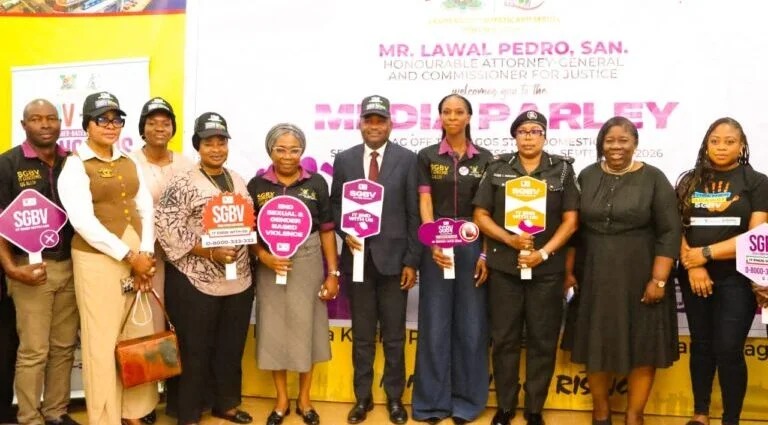
Pedro made the remarks on Monday in Ikeja during a media briefing marking the 2026 Domestic and Sexual Violence Awareness Month. He was represented at the briefing by the DSVA’s Executive Secretary, Titilola Vivour-Adeniyi.
The finding, he said, demonstrates why Lagos State’s response must extend beyond addressing individual incidents. The psychological wellbeing of everyone affected by violence, including children who witness abuse, must also be considered in the state’s support for survivors.
“One of the significant findings from the period under review reveals that domestic violence and emotional violence have been the highest prevalence cases received,” Pedro said.
The annual figures reveal a changing pattern. Reports rose from 1,075 cases in the final four months of 2021 to 5,929 in 2022, 6,389 in 2023 and a peak of 7,882 in 2024. In 2025, however, the number declined slightly to 7,721. By July 2026, the agency had recorded 4,013 cases.
Pedro cautioned against interpreting the decline as definitive evidence that violence itself had decreased.
“A reduction in reported cases does not automatically mean that sexual and gender-based violence has reduced by exactly the same proportion across Lagos State,” he said, noting that reporting patterns can change depending on awareness levels, access to services and the channels survivors use to seek help.
“Nevertheless, we believe the decline is an important signal that must be examined alongside the considerable investments Lagos State has made in prevention, early intervention, community engagement and behavioural change,” he added.
Going forward, the state plans to continue analyzing the data, examining patterns across different forms of abuse and areas of Lagos, while expanding community outreach and improving access to reporting and support services.
Pedro described the underlying goal of the state’s interventions simply: “The most successful SGBV case is ultimately the one that never happens.”
“Our ambition is not simply to see fewer cases appearing on our database. Our ambition is to see fewer people experiencing violence in the first place,” he added.
Vivour-Adeniyi said the Awareness Month was designed to strengthen public understanding of domestic and sexual violence, improve the capacity of frontline responders, expand access to support services and deepen engagement with communities and stakeholders.
The broader goal, she said, is to encourage more people to report cases and seek timely intervention.
She also thanked Lagos residents who continue to act as mandated reporters, urging the public to speak up when they encounter suspected cases of abuse.
“There is the need for us all that when we see something, we should say something, so that the needful can be done,” she said.
Umm E Habiba, Punjab, Pakistan.