Political leaders must translate their campaign promises into concrete action if Nigeria is to achieve lasting peace and peaceful coexistence, a representative of the Nigerian National Commission for UNESCO (NACOM-UNESCO), Mr Ojo Michael, has said.
He stressed that building a peaceful society should not be the responsibility of ordinary citizens alone, noting that political leaders also have a duty to promote unity and ensure that their actions reflect their promises.
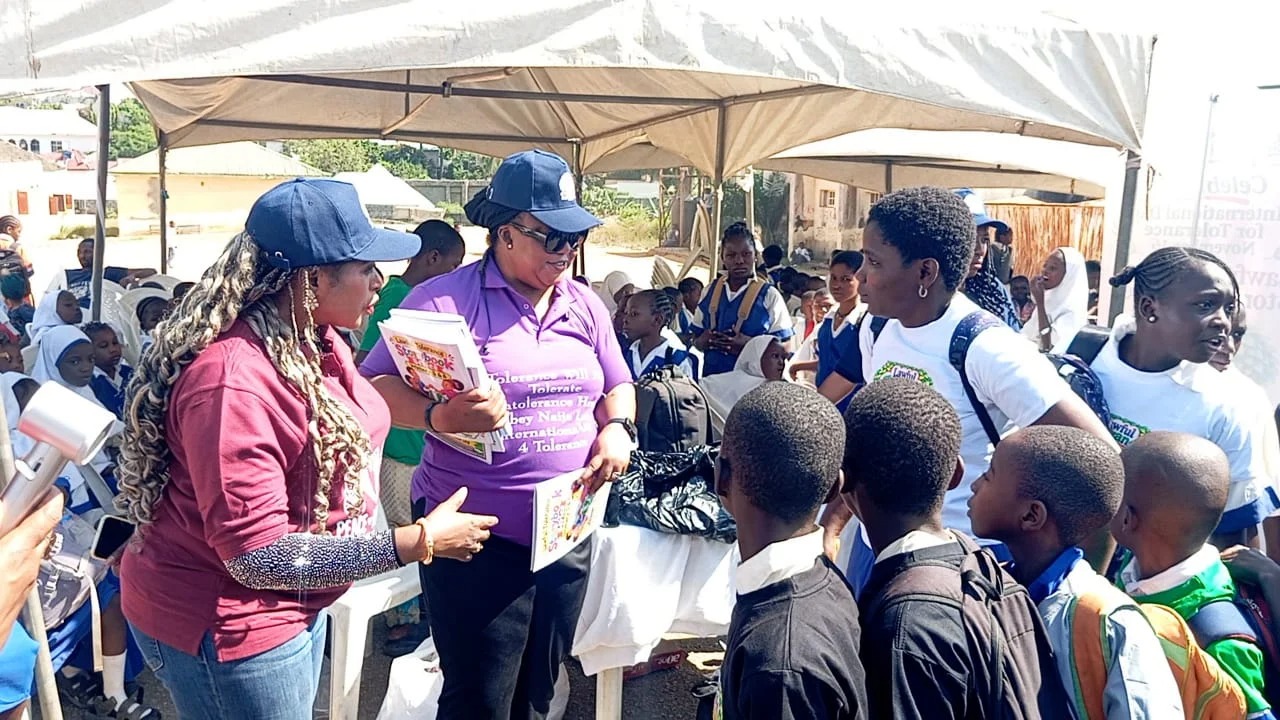
Ojo made the remarks at Model Primary School, Apo Legislative Quarters, Abuja, during the commemoration of the 2026 International Day for Tolerance on Monday.
He explained that the day was established in 1995 to address divisions arising from differences in religion, language, culture and other aspects of human identity.
Its annual observance, he said, serves as a reminder of people’s shared humanity and the need to live peacefully despite their differences.
As part of efforts to extend the conversation beyond the classroom, the organizers plan to hold an academic symposium in December to examine how lawful tolerance can be promoted in schools and across society.
The organisers also called on individuals and organizations to support the initiative by adopting schools and helping to ensure that every child receives a copy of the storybook being distributed.
The appeal was made by Ijeoma Akwara, National Coordinator of the National Festival of Tolerance and Peaceful Coexistence Programme.
Akwara explained that the school initiative was one of about six components of the wider festival programme. Known as “Adopted School: Read to Me Today”, the project seeks to instill values of tolerance, mutual respect and peaceful coexistence among pupils.
She said the organizers deliberately chose to begin with children because they would eventually shape the country’s future.
“We started with schools because we believe that it is important for our children to celebrate a wonderful ideology, which is the ability to be each other’s neighbour, irrespective of tribe, religion or status.
“We want to catch them young. They are all from different places and go back to different homes. It is important that the children are carried along while we prepare for the adults,” she said.
Ojo also explained that Model Primary School was selected for the commemoration because its pupils represent different states, ethnic groups and religious backgrounds.
“When you see any school in this country, it constitutes Nigerians. They are not all from the same state or religion. They come from the East, West, North and South,” he said.
He added that introducing children to the values of tolerance at an early age would encourage them to become peace ambassadors and contribute to a more united Nigeria.
“We are doing this in order to preach peace into the lives of our children, who are the greater tomorrow, so that they can learn to live in peace and become peace ambassadors in our country,” he said.
Akwara noted that Nigeria’s commitment to promoting tolerance was also reflected in its membership of UNESCO and its adoption of the 1995 Declaration of Principles on Tolerance.
The declaration encourages mutual understanding among people of different ethnicities, religions, ideologies and social backgrounds, while recognizing their right to live together peacefully.
She described lawful tolerance as the ability to respect and appreciate other people’s cultures and identities without disregarding the law.
“Lawful tolerance is just saying the same thing. It is a simple concept that makes you understand that tolerance is not oppression, but love for culture, which means respecting, appreciating and understanding each other within the boundaries of the law,” she said.
The event, held on Monday under the theme “Lawful Tolerance”, featured the distribution of the second edition of the Lawful Tolerance storybook to Primary 5 and 6 pupils.
According to Akwara, the initiative seeks to teach children to respect cultural, religious and ethnic differences while upholding the rule of law.
The organizers believe that introducing these values at an early age can help raise a generation better equipped to promote understanding, peaceful coexistence and national unity.
By Umm e Habiba, Pakistan.