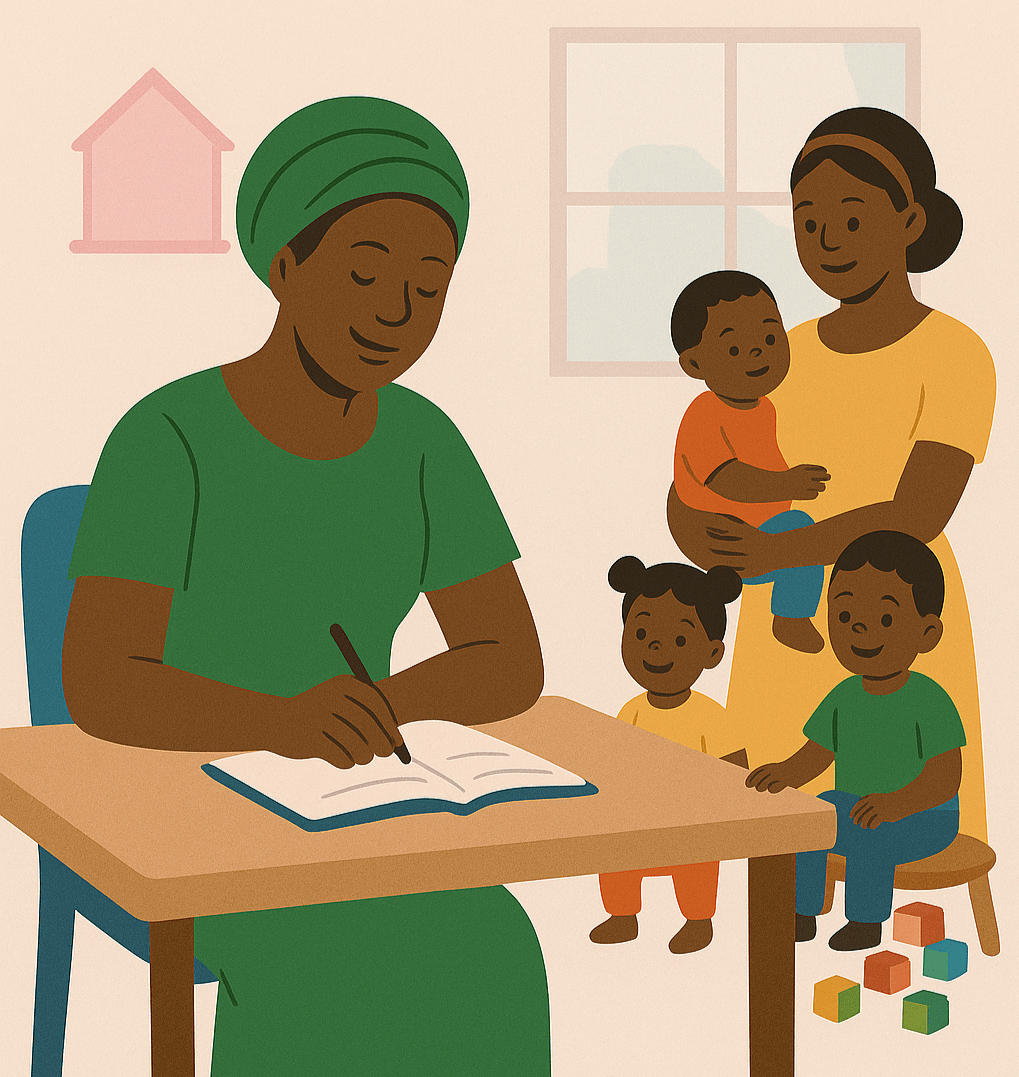
Majority of women’s ability to participate meaningfully in the labour force depends heavily on access to affordable, quality childcare. Across Africa, and particularly in Nigeria, women carry the bulk of domestic and childcare responsibilities while also holding down a career. Without dependable daycare, many are forced out of work or remain trapped in unstable, low-paying jobs.
The Challenges.
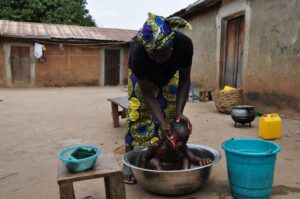
Urban Pressures: In cities like Lagos and Abuja, urbanisation has eroded extended family support systems. Women in slums and peri-urban areas lack safe childcare alternatives.
Cost & Quality Gap: Elite private daycares are unaffordable for most, while informal centers often lack trained staff, safety standards, and early learning opportunities.
Impact on Employment: Mothers without adequate and relaible childcare resources often have reduce working hours, exit the workforce, or bring children to unsafe work environments which not only impacts the child but also lowers the mother’s productivity and income.
Why Quality Daycare Matters
- Women’s Economic Empowerment: Affordable childcare allows women to take better-paying, stable jobs, increasing household income.
- Child Development: Quality daycare improves safety, nutrition, and early learning for children under five.
- Boost to National Economy: Closing gender gaps in work could add billions to Nigeria’s GDP.
- Equity & SDGs: Access to daycare supports SDG 5 (Gender Equality) and SDG 8 (Decent Work) while reducing inequality for low-income families.
Policy Pathways
- Government Action: Subsidies and vouchers for low-income mothers.
- Regulation: Clear standards for safety, caregiver training, and child-to-staff ratios.
- Workplace Solutions: Encourage employer-supported daycare.
- Awareness: Promote childcare as a shared societal responsibility, not just a woman’s burden to carry alone.
Investing in quality daycare is not a luxury but a strategic tool for economic growth. For Nigeria that unlocks women’s potential, safeguards children’s futures, and drives progress toward national development goals.
James Nkoyomabasi
Abuja Nigeria.