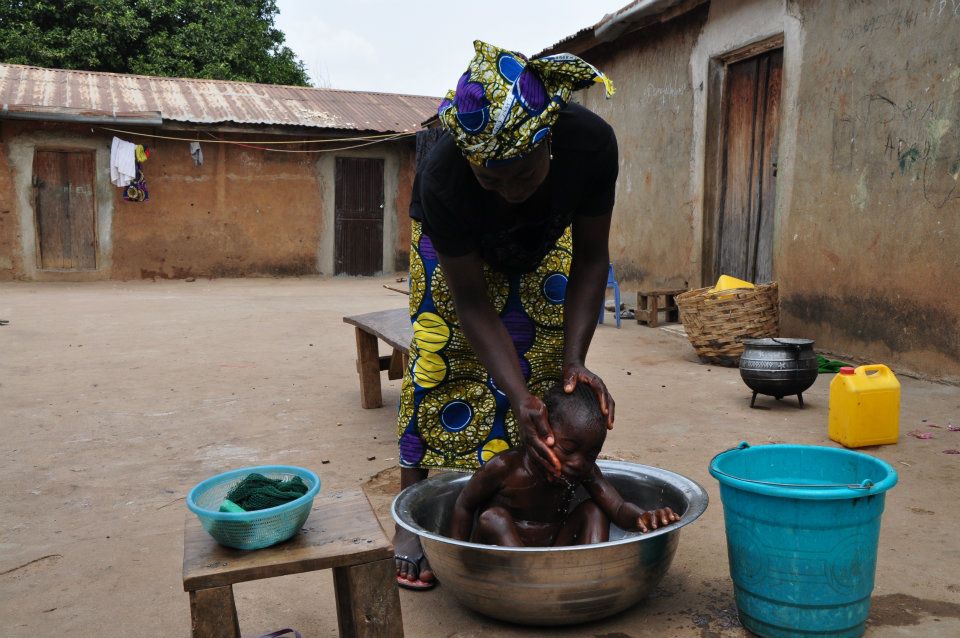
Unpaid work is the work people do without receiving any direct payment or salary. It includes essential activities that keep households, families, and even entire societies running, but are not counted in traditional economic measures like GDP.
Unpaid work is deeply gendered with women and girls performing the vast majority of it globally. The ILO estimates that unpaid work keep around 708m women and girls out of paid labor force.
- Women do about 3 times more unpaid care and domestic work than men (on average 4–4.5 hours per day for women vs. ~1–2 hours for men).
- This pattern holds across most countries and cultures.
- Men do more paid work, while women often juggle both — or get pushed out of paid employment entirely.
Unpaid work is mainly unpaid because it:
- Happens inside the home/private sphere — not in the “market” or formal economy.
- Society (and economic systems) has historically viewed it as a “natural” duty, especially of women — not as real “work”.
- No employer pays for it — it’s done for family, love, necessity, or social expectation.
- Traditional economics only counts paid activities in GDP, so unpaid work is invisible in national accounts.
”Women don’t work” is a belief and regular conversation in our societies, news and social media platforms. This belief highlights how women’s unpaid and care-based labor is overlooked and undervalued.
This statement is not only disrespectful and provocative, but also also a critique of societal and economic systems that fail to recognize women’s contributions.
According to experts, it also challenges the narrow definition of “work,” which typically measures productivity through paid employment, while ignoring essential roles that sustain families and communities.
Across Nigeria and much of Africa, women perform critical work every day—farming, managing households, caring for children and the elderly, and running small businesses.
However, despite the scale of these contributions, such efforts are often invisible in official statistics and policy planning because they are considered unpaid or informal.
The unpaid work economy in Nigeria primarily still remains invisible in traditional economic measures and limits women’s participation in paid employment, education, and other opportunities.
Recent data comes mainly from the Nigeria Time Use Survey (NTUS)—Nigeria’s first national time use survey—conducted by the National Bureau of Statistics (NBS) in partnership with UN Women revealed that:
Women spend 4.5 to 6 hours per day on unpaid care and domestic work while men spend 1.5 to 2 hours per day on the same activities.
This means women devote roughly 3 times more time (or more in some estimates) to unpaid care work than men with rural women facing the most burden; around 2.5 times more than men in some contexts.
When unpaid work is included into systemic wage structure, women’s total workload significantly exceeds men’s, reducing their time for paid work, rest, or other activities.
According to a 2025 analysis by NarratEQ estimated that if valued monetarily, Nigerian women’s unpaid care work contributes the equivalent of $111 billion annually which would be 10 to 39% of Nigeria’s GDP with the upper end being dramatically higher than sectors like oil, which contributes about 4% of GDP
For context, this unpaid contribution is nearly three times Nigeria’s 2025 federal budget (around $38 billion at the top estimate
What this means is that investing in the care economy could create up to 17 million new jobs mostly benefiting women and helping close gender employment gaps.
This highlights underscores calls for policies to recognize, reduce, and redistribute unpaid work as a massive but undervalued part of Nigeria’s economy that is exclusively driven by gender norms.
This invisibility has real consequences.
Women’s unpaid labor is frequently excluded from economic policies, social protection programs, and discussions on productivity, reinforcing inequality and limiting opportunities for financial independence.
This highlights the urgent need to redefine work in Nigeria and beyond, expand the definition to include all forms of labor that support life and community as it is a catalyst for gender equity, economic recognition, and the dignity of all forms of work.
Need For Recognition
It is necessary to recognize unpaid work. Recognition matters a lot — for several big reasons:
- Unpaid work is economically huge : It literally enables the paid economy to function -someone has to raise children, cook, clean, care for the sick/elderly so others can go to work. If this roles were paid, it would be worth trillions annually
- Unpaid work perpetuates gender inequality: Women carry the load of unpaid work which means less time for paid jobs, education, rest, or politics resulting to wider wage gaps, poverty, and power imbalances.
- Better policies : When governments recognize unpaid work (e.g., through time-use surveys, satellite accounts in GDP, or care policies), they can:
- Invest in childcare, elderly care, infrastructure (like water/electricity to reduce drudgery)
- Promote fairer sharing between men and women
- Design better social protection and labor laws
Unpaid work is real work, essential work, and mostly women’s work. Recognizing it isn’t just fair — it’s smart economics and a key step toward gender equality.
James Nkoyomabasi E.
Abuja, Nigeria.