
Nigeria’s agricultural transformation debate often begins with a familiar question: how can farmers produce more?
But there is another question that deserves equal attention: who captures the value created after the crop leaves the farm?
A farmer can spend months preparing land, buying seeds and fertilizer, planting, weeding, controlling pests, managing unpredictable weather, hiring labour and taking on other production costs before harvesting. The crop may then be sold as a raw commodity to a processor, who transforms it into a higher-value product.
Processing is essential to agricultural development. The problem arises when policies, financing systems and development programmes treat processors as more attractive entrepreneurs while viewing primary producers mainly as suppliers of raw materials.
That creates a weakness in the agricultural value chain, particularly for women and young people entering the sector.
Nigeria does not need to choose between farming and processing. Instead, more farmers should have the opportunity to participate further along the value chain as aggregators, processors, brand owners and agricultural entrepreneurs.
The farmer carries the first and often greatest risk
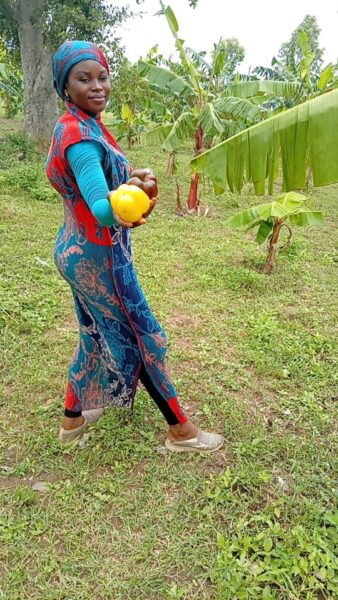
Agriculture is inherently risky.
Farmers face droughts, floods, pests, diseases, high input and labour costs, insecurity, transportation challenges, inadequate storage and unpredictable market prices.
Recent World Bank analysis using Nigeria’s General Household Survey data found that the proportion of agricultural plots experiencing partial crop losses rose from about 6 per cent in 2018/19 to more than 20 per cent in 2023/24. Climate shocks, environmental pressures and insecurity were among the factors contributing to these losses.
A farmer can therefore follow recommended practices and still suffer a substantial financial loss because of circumstances beyond their control.
The farmer is not simply someone who plants and sells. The farmer invests capital months before knowing the final market price.
Yet when the crop reaches the market, the producer is often positioned at the lowest-value point of the chain, selling an undifferentiated raw commodity.
This is where Nigeria’s agricultural transformation needs to evolve.
Farmer, producer and processor can be the same person
A farmer is engaged in agricultural production. A producer creates the agricultural commodity, while a processor transforms that commodity into another product with additional economic value.
These are different functions, but they do not have to be performed by different people.
A soybean farmer can learn to produce soy milk or soy flour. A maize farmer can process and package grain. A cassava farmer can participate in the production of gari, flour or starch. A fruit farmer can produce juice or dried fruit. A vegetable farmer can explore drying, preservation and packaging.
The objective is not to turn every farmer into an industrial manufacturer.
Rather, farmers should have access to the skills, equipment, financing and markets needed to participate further along the value chain when it makes commercial sense.
Consider the soybean value chain.
Soybean can be processed into oil, cake, animal-feed ingredients, flour and soy-based foods and beverages. Nigeria has a significant soybean sector, but production and processing remain disconnected in important ways.
A GIZ-supported soybean value-chain assessment identified inadequate finance, poor infrastructure, weak market linkages, limited knowledge and low productivity among the major constraints facing the sector. It also highlighted the crop’s potential for products including soy milk, animal feed, edible oil and pap.
Research on soybean processing among farmers in Benue State similarly found heavy reliance on manual post-harvest operations. Only 5.2 per cent of respondents used mechanized threshing, while just 0.3 per cent used mechanized cleaning.
The implication is significant.
When farmers lack access to storage, processing technology, packaging, finance and reliable markets, they are often forced to sell quickly, sometimes when prices are weakest.
That is not simply a production problem.
It is a value-chain problem.
Why capital often favours processors
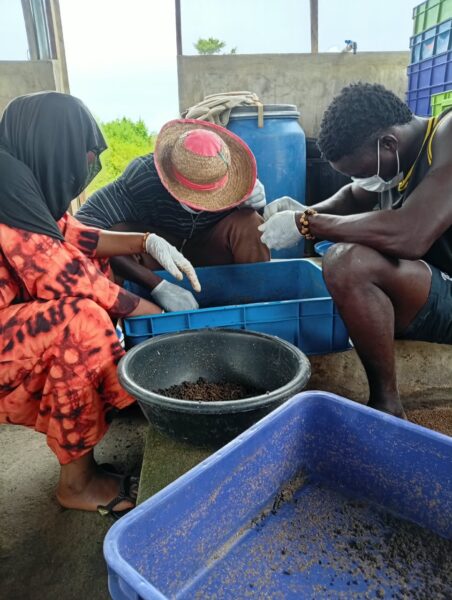
There is an economic explanation for why investors and financial institutions may find processing businesses easier to finance.
Processors may have established customers, sales records, physical equipment, contracts and more predictable operating cycles. Primary farmers, by contrast, face seasonal income, uncertain yields, climate risks and limited collateral.
IFAD has noted that small-scale farmers and rural agricultural enterprises are frequently perceived by financial institutions as too risky to lend to. Small loans can also carry relatively high transaction costs for lenders.
This helps explain why capital can gravitate towards established processors rather than primary producers.
But the answer should not be to leave farmers behind.
Nigeria needs mechanisms that reduce and manage the risks associated with agricultural production.
Agricultural insurance, blended finance, farmer cooperatives, aggregation, guaranteed off-take agreements, warehouse receipt systems, irrigation, extension services and appropriate technologies can make primary agricultural production more investable.
Women face an additional financing barrier
The financing challenge becomes even more significant for women farmers.
World Bank analysis has identified barriers facing Nigerian women in accessing productive resources, including land, finance, agricultural inputs and knowledge.
Financial inclusion has improved, but a gender gap remains. World Bank Gender Data Portal figures show that in 2024, 52.2 per cent of Nigerian women and 74.3 per cent of men had an account with a financial institution or mobile-money provider.
The implication is clear: telling women farmers simply to “go and get financing” does not address the structural barriers they face.
Financial products need to reflect the realities of agricultural businesses. Women farmers need financing that can recognise seasonal cash flows, productive assets, group guarantees, farm records, contracts and expected income rather than relying exclusively on conventional collateral.
From farmer support to farmer enterprise development
Nigeria has already recognized the importance of value addition.
Federal agricultural programmes increasingly focus on productivity, value chains, financing and support for women and young people. The National Agricultural Growth Scheme–Agro-Pocket programme, for example, reported registering more than 647,500 farmers, with 622,818 receiving subsidized inputs. Government also reported a 30 per cent increase in crop production among participating states.
The African Development Bank’s Special Agro-Industrial Processing Zones programme similarly centres on aggregation, processing infrastructure, market access and private-sector investment, with attention to women and young people.
These interventions point towards a more integrated agricultural value chain.
But the next step should be to ensure that farmers are not only supplying raw materials to processing zones. Some should also be supported to become small and medium-scale processors within those value chains.
Building the farmer-producer-processor
Nigeria could develop a Farmer-Producer-Processor Model built around five interconnected stages.
First, produce.
Farmers need access to quality seeds, extension services, climate-smart technologies, irrigation where appropriate, mechanization and production finance.
Second, aggregate.
Small producers can organize into cooperatives and producer groups. Rather than each farmer trying to process a small quantity independently, groups can aggregate enough produce to make shared processing equipment commercially viable.
Third, process.
Selected farmers and farmer groups can receive practical training and access to appropriate processing equipment.
This does not necessarily require expensive factories. A soybean community enterprise, for instance, could begin with cleaning, drying, storage and small-scale processing before progressing into products such as flour or soy beverages, subject to food-safety and regulatory requirements.
Fourth, brand and market.
Agricultural training should extend beyond production.
Farmers need skills in packaging, quality control, pricing, bookkeeping, branding, customer research, digital marketing and market negotiation.
The objective is to move farmers from being solely price takers to becoming value-chain entrepreneurs.
Fifth, reinvest.
Additional income generated through value addition can be reinvested into production.
The result is a cycle of production, processing, higher-value products, increased income, reinvestment and expanded production.
That is a more diversified agricultural business model than production alone.
Financing must change too
If investors perceive primary agriculture as too risky, development finance should help reduce those risks rather than simply avoid the sector.
Blended finance is one possible mechanism, allowing government or development partners to absorb part of the risk while private capital provides additional financing.
A practical funding package for farmer-processors could combine production loans, processing-equipment grants or matching grants, working-capital facilities, agricultural insurance, climate-risk financing, business-development training, cooperative lending, market agreements, storage facilities and technical and food-safety training.
The African Development Bank’s 2026 gender-focused financing package for Nigeria provides one example of how financing can target women-owned businesses and agricultural SMEs. The package includes an $8 million agricultural SME line of credit, with at least 75 per cent directed towards women-owned agricultural SMEs.
Such financing mechanisms should also reach women who are directly producing agricultural commodities, not only businesses operating further downstream.
Processing must not become another form of exclusion
There is an important caution.
Telling farmers to become processors without providing the necessary support would simply transfer another burden to them.
Processing requires equipment, electricity, water, packaging, food-safety compliance, technical knowledge, working capital and reliable markets.
Therefore, “farmers should process” cannot mean that farmers should solve the value-chain problem by themselves.
It should mean that farmers should have a realistic pathway into value addition.
Government and development partners can support shared processing facilities, training centres, aggregation hubs and affordable financing. Farmer organizations, universities, research institutions, NGOs, processors and financial institutions can then connect these resources to viable agricultural enterprises.
The dry season can become an enterprise season
For many farmers, the dry season brings reduced production.
But it can also provide an opportunity for processing, packaging, marketing and business development.
A farmer who harvests maize, soybean, cassava, vegetables or other crops during the main production season could use the off-season to process stored commodities, develop products, improve packaging, build markets and prepare for the next production cycle.
This could help transform agriculture from an enterprise that generates income primarily at harvest into a more continuous business.
Measuring what happens beyond production
Nigeria often asks how much farmers have produced.
The country should also ask how much of that production was lost, how much was processed locally, how much income remained with producers, how many farmer-owned processing businesses were created, how many women and young people moved from subsistence production into agribusiness, how much value was retained within rural communities and how many jobs were created beyond the farm gate.
These indicators offer a broader picture of agricultural transformation.
The objective should not simply be to increase the volume of raw materials leaving farms.
It should be to increase the economic value retained by the people who produce them.
A role for government, investors and development partners
Nigeria’s farmers do not need pity. They need an ecosystem that recognises both the economic value of agriculture and the risks involved in producing it.
Government should expand agricultural insurance, irrigation, rural infrastructure, extension services, affordable finance and farmer-oriented processing infrastructure.
NGOs and development organizations should design programmes that include primary producers rather than concentrating disproportionately on downstream enterprises.
Financial institutions should develop agricultural lending products that reflect production cycles and cash flows rather than relying exclusively on conventional collateral.
Investors should explore partnerships that combine production, aggregation and processing.
Universities and research institutions should strengthen practical training and technology transfer.
Farmers, for their part, can strengthen their position by organizing into producer groups, maintaining reliable financial and production records, developing business-management skills and exploring commercially viable opportunities for value addition.
Changing the narrative
The farmer should not be viewed simply as the person who produces the commodity while others capture most of the value.
The farmer is the foundation of the agricultural value chain.
Without the soybean farmer, there is no soybean processor. Without the maize producer, there is no maize miller. Without the cassava farmer, there is no cassava flour or starch processor. Without the vegetable producer, there is no vegetable-processing industry.
Processing adds value, but production creates the raw material on which the entire system depends.
Nigeria therefore does not need a competition between farmers and processors. It needs a stronger connection between production and processing.
The more sustainable model is one in which farmers can remain producers while also having the opportunity to become aggregators, processors, brand owners or agricultural entrepreneurs.
For women and young people in particular, this could broaden the economic opportunities available within agriculture, turning production from a livelihood with uncertain returns into part of a more diversified enterprise.
The message should be clear: do not fund only the businesses that process farmers’ products. Create pathways for farmers to produce, process, add value and build businesses of their own.
If Nigeria can move from a system that primarily asks farmers to produce raw materials to one that enables them to capture more value from those materials, the benefits could extend beyond individual farmers to rural employment, women’s economic participation, youth engagement, food security and broader economic development.
The future of Nigerian agriculture should not simply be more farmers producing more raw materials.
It should be more farmer-entrepreneurs capturing more value.
By Lawal Azeezat Olayinka