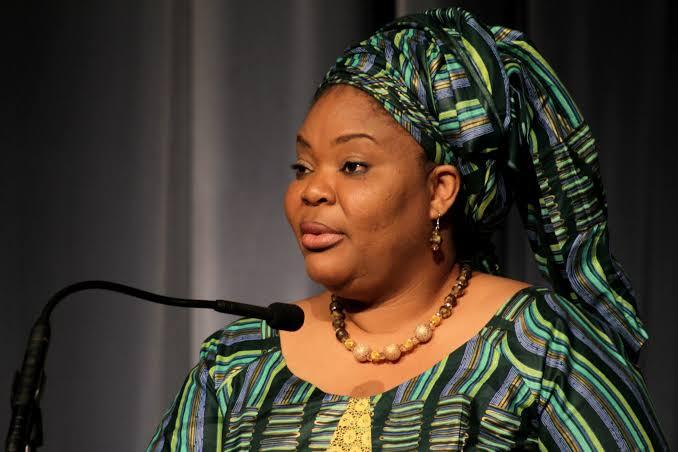
History often remembers wars through the names of presidents, generals, and armed movements, but some of the most powerful revolutions in human history began quietly in the hearts of ordinary people. Liberia’s story of survival cannot be told without the name Leymah Gbowee, a woman whose courage transformed pain into resistance and resistance into peace. In the midst of one of Africa’s most devastating civil conflicts, she became a voice for the wounded, the displaced, the forgotten, and the women whose suffering had long been ignored by both politics and war.
Born on February 1, 1972, in Monrovia, Liberia, Leymah Roberta Gbowee grew up in a country that once represented stability and hope in West Africa. Liberia had been founded by freed African American slaves in the nineteenth century and carried a unique political history on the continent. Beneath that history, however, lay deep social and political divisions that gradually intensified over time. By the late 1980s, Liberia had descended into violent civil unrest under the leadership of Charles Taylor and competing armed factions. What followed became one of the bloodiest conflicts in African history.
The Liberian Civil War was not simply a political struggle. It was a collapse of humanity itself. Entire communities were destroyed. Children became soldiers. Women became targets of violence and abuse. Families disappeared overnight. Fear became part of everyday existence. Thousands lost their lives while countless others fled into exile or displacement camps. The war robbed an entire generation of safety, education, dignity, and stability.
Leymah Gbowee experienced this destruction personally. She was still a young woman when the violence consumed Liberia. Like many others, she was forced to confront uncertainty and survival at an age when she should have been building dreams for the future. The conflict shaped her understanding of pain and human suffering in profound ways. She later described how the war transformed her life completely, forcing her into adulthood under brutal conditions.
Rather than allowing bitterness to define her, Gbowee chose service. She trained as a trauma counselor and began working with former child soldiers who had been psychologically damaged by the war. Many of these children had witnessed unimaginable violence. Some had been manipulated into committing atrocities before they were old enough to understand the meaning of morality or death. Through counseling and rehabilitation work, Gbowee encountered the deep emotional scars left by conflict. She listened to stories of grief, fear, addiction, displacement, and hopelessness.
Those experiences changed her understanding of peace. She realized peace was not merely the absence of gunfire. Peace meant restoring human dignity. Peace meant creating conditions where children could dream again and women could live without terror. Peace meant confronting the systems and leaders that normalized violence.
As the war intensified in the early 2000s, Liberia’s political situation grew increasingly unstable. Armed groups continued fighting for control while civilians paid the highest price. International attention remained limited, and many Liberians felt abandoned by the world. During this period, Gbowee began organizing women across religious and ethnic lines under a movement that would later become globally recognized as the Women of Liberia Mass Action for Peace.
The movement was revolutionary not because it possessed weapons or political influence, but because it united ordinary women through shared suffering and shared determination. Christian and Muslim women came together despite religious differences. Market women, mothers, widows, students, and displaced citizens joined hands with one purpose: to end the war that had consumed their country.
Dressed in white clothing to symbolize peace, the women gathered publicly in markets, churches, mosques, and open spaces. They prayed together, protested peacefully, fasted, sang songs of resistance, and demanded accountability from political leaders. Their presence carried extraordinary symbolism. In a nation divided by violence, they represented unity. In a society silenced by fear, they represented moral courage.
Gbowee emerged as one of the central voices of the movement because of her ability to transform pain into collective action. She understood that silence protects oppression. She also understood that women possessed enormous social power even in societies that frequently underestimated them. The movement challenged traditional assumptions about leadership, proving that political transformation could emerge from grassroots organizing rather than military force.
One of the movement’s most controversial tactics involved a form of nonviolent resistance where women threatened a sex strike against their husbands and partners to pressure men toward supporting peace efforts. While symbolic in many ways, the action attracted significant public attention and highlighted the desperation of Liberian women who had exhausted every other means of survival.
The women maintained pressure on Liberia’s government and rebel groups through continuous demonstrations. Their determination eventually forced political leaders toward peace negotiations in Accra, Ghana, in 2003. Even there, progress remained painfully slow. Delegates argued while civilians continued dying back home. Frustrated by the delays, Gbowee led a dramatic protest outside the negotiation hall.
Alongside other women, she physically blocked the exits of the meeting venue and refused to allow negotiators to leave without making serious progress toward peace. Security officials threatened arrest, but the women remained firm. Their action created immense pressure on the political leaders involved in the talks. The moment became one of the defining images of nonviolent resistance in modern African history.
The pressure worked. The peace negotiations moved forward and eventually contributed to ending Liberia’s fourteen year civil war. For countless Liberians, the women’s movement represented a turning point in national history. Their courage demonstrated that ordinary citizens could influence the course of political events even during periods of extreme violence.
The end of the war opened a new chapter for Liberia. Democratic elections followed, leading to the victory of Ellen Johnson Sirleaf, who became Africa’s first elected female president in 2005. The rise of women into visible leadership positions reflected the political and social transformation that movements like Gbowee’s had helped create.
International recognition soon followed. In 2011, Leymah Gbowee received the Nobel Peace Prize alongside Ellen Johnson Sirleaf of Liberia and Tawakkul Karman of Yemen. The Nobel Committee honored them for their nonviolent struggle for the safety of women and for women’s full participation in peacebuilding efforts. The award elevated Gbowee into a global symbol of grassroots activism and female leadership.
Despite global recognition, her work never became centered on personal fame. Gbowee consistently emphasized collective struggle over individual achievement. She often reminded audiences that Liberia’s peace movement succeeded because ordinary women believed their voices mattered. Her speeches and writings repeatedly focused on responsibility, civic participation, and moral courage.
Her memoir, Mighty Be Our Powers, offered a deeply personal account of her experiences during Liberia’s civil war and the rise of the women’s peace movement. The book revealed not only political struggle but also emotional vulnerability, motherhood, trauma, faith, and perseverance. Through her writing, readers gained insight into the emotional burden carried by women living through war.
The documentary Pray the Devil Back to Hell further introduced the story of Liberia’s women’s movement to international audiences. The film captured the bravery of women who confronted armed men and political elites using nothing but unity, persistence, and moral conviction. It remains one of the most powerful documentaries on peace activism and women’s resistance in Africa.
Beyond Liberia, Gbowee became an international advocate for women’s rights, education, peacebuilding, and social justice. She has spoken at universities, global conferences, humanitarian forums, and leadership summits across the world. Through the Gbowee Peace Foundation Africa, she has supported educational opportunities and leadership development for young women, particularly those from disadvantaged backgrounds.
Her activism also challenges global perceptions about African women. Far too often, African women are portrayed only through narratives of victimhood and suffering. Gbowee’s story presents a different reality. It reveals African women as organizers, negotiators, intellectuals, strategists, and defenders of democracy. Her leadership demonstrated that women are not merely affected by political crises; they are capable of resolving them.
One of the most remarkable aspects of Leymah Gbowee’s legacy lies in her understanding of peace as an active responsibility rather than a passive hope. She rejected the idea that citizens should wait for leaders to save them. Instead, she encouraged communities to organize, speak out, and hold institutions accountable. Her life became evidence that moral courage can challenge even the most violent systems.
She once said, “You can never leave footprints that last if you are always walking on tiptoe.” The statement captures the essence of her life’s philosophy. Change demands courage. Justice demands sacrifice. Silence may feel safe temporarily, but it cannot transform societies.
Today, Leymah Gbowee remains one of the most influential voices in global peace activism. Her work continues to inspire movements for justice, women’s empowerment, and nonviolent resistance across different parts of the world. In classrooms, conferences, political discussions, and humanitarian spaces, her story stands as proof that history is not shaped only by governments or armies. Sometimes history changes because ordinary women decide they have suffered enough.
Leymah Gbowee did not simply help end a civil war. She redefined what leadership looks like in moments of national crisis. She transformed motherhood into resistance, faith into activism, and collective pain into a force capable of changing the destiny of a nation.
Long after political speeches fade and the noise of war disappears from memory, her story will continue to endure as a reminder that courage does not always arrive carrying power or authority. Sometimes courage arrives dressed in white, standing peacefully in the path of destruction, refusing to move until peace becomes possible.
By Almustapha Bishir Jume