
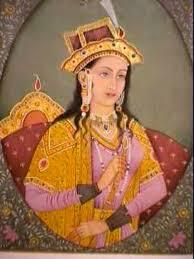
When history recalls emperors for their conquests and authority, it often overlooks the women whose presence and influence helped shape the direction of empires. One such figure was Mariam-uz-Zamani, a queen whose life reflected diplomacy, cultural connection, and quiet but powerful leadership within the Mughal world.
Long before she became one of the most respected women in the Mughal Empire, she was a Rajput princess from Amber, in what is now Rajasthan, India. Born into a royal family known for bravery, honor, and tradition, she grew up in an environment shaped by duty and identity. From an early age, she was surrounded by stories of leadership, loyalty, and resistance that defined Rajput history.
In 1562, her life changed when she married Emperor Akbar, the ruler of the Mughal Empire, Akbar. What began as a political alliance between two powerful houses gradually became a symbol of cooperation between the Mughal court and Rajput kingdoms. This relationship helped reduce conflict and encouraged a new atmosphere of political understanding.
Within the Mughal court, she carried herself with dignity and calm strength. The imperial court was a complex environment filled with nobles, advisors, military leaders, and scholars. Navigating such a space required intelligence and emotional balance. She earned respect not through public authority but through presence, character, and consistency.
One of her most remarkable qualities was her ability to maintain her Rajput identity while living as a Mughal empress. She remained connected to her cultural roots while adapting to her new imperial role. In a time when division often defined politics, she became a quiet symbol of coexistence and mutual respect.
Her presence also aligned with the broader atmosphere of tolerance that developed during Akbar’s reign. While the emperor promoted dialogue across religions and cultures, the influence of respected figures within the royal household contributed to this environment of openness and exchange.
Beyond court life, she is also remembered for her involvement in commerce and trade. She participated in business activities that extended across regions and supported the economic strength of the empire. At a time when women rarely engaged directly in commerce, she managed trading ventures that connected distant markets and communities through maritime routes.
These ships carried goods across long distances, linking regions through exchange and enterprise. Her role in trade demonstrated that influence within an empire could extend beyond politics and into economic life, where decisions shaped prosperity and connection between peoples.
As a mother, she also played an important role in imperial succession. She gave birth to Prince Salim, who later became Emperor Jahangir, Jahangir. Her position as his mother placed her at the center of the imperial family and gave her lasting significance within Mughal history.
What makes Mariam uz Zamani especially remarkable is not any single achievement but the balance she maintained throughout her life. She moved between identities as a Rajput princess, Mughal empress, mother of an emperor, and a figure of economic influence. Each role reflected a different dimension of leadership and responsibility.
In a period often shaped by conflict and hierarchy, she demonstrated that influence could also be expressed through understanding, stability, and connection. She showed that leadership does not always depend on public authority or military power.
Centuries later, her story continues to attract the attention of historians and readers who seek to understand the human relationships behind imperial history. She represents a form of leadership that is quiet but deeply impactful, one that bridges difference rather than deepening it.
For those looking for historical role models, her life offers a clear message. Strength and grace are not opposites. Identity and adaptation can exist together. Influence can be exercised without domination.
When she is remembered, she is often described in relation to her marriage to Akbar. However, her legacy extends far beyond that connection. She was a cultural bridge, a figure of economic presence, and a respected member of one of the most powerful courts in history.
Mariam uz Zamani’s life reminds us that some of the most enduring forms of leadership are not always visible in conquest or proclamation. Sometimes they are found in the ability to unite differences, sustain balance, and shape the future quietly but firmly from within.
That is the legacy of Mariam uz Zamani, a queen whose influence continues to speak across centuries.
By Rukayya Muhammad Adam