

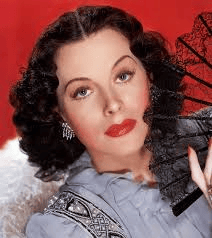
Hedy Lamarr was a Hollywood star whose ideas quietly helped shape the foundation of modern wireless communication.
Born Hedwig Eva Maria Kiesler on November 9, 1914, in Vienna, Austria, she grew up with a strong curiosity about how the world worked. Her father introduced her to mechanical systems, explaining machines, transportation, and engineering concepts during their walks. These early experiences sparked an interest in invention and problem solving that stayed with her throughout her life.
As she grew older, her striking beauty became widely recognized, and she entered the world of acting. She quickly rose to international fame, eventually becoming one of Hollywood’s most celebrated film stars during the 1930s and 1940s.
Audiences admired her elegance and screen presence, and she became known as one of the most beautiful women in cinema. However, behind the public image was a deeply inventive mind.
While working in Hollywood, Hedy Lamarr continued to explore scientific ideas privately. She studied engineering concepts and filled notebooks with technical sketches and inventions. Her interest in science was not a side hobby but a parallel identity that existed alongside her acting career.
During the Second World War, she turned her attention toward helping solve a critical communication problem. Radio controlled weapons such as torpedoes could be easily jammed if signals were transmitted on a single frequency.
This limitation made military communication vulnerable.
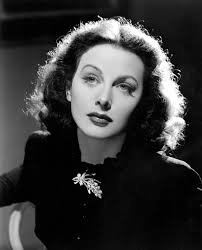
Together with composer and inventor George Antheil, she developed a solution based on what is now known as frequency hopping. The idea involved rapidly switching communication signals between multiple frequencies in a synchronized pattern. This made it extremely difficult for enemies to intercept or disrupt transmissions.
In 1942, the two were granted a patent for their invention. Although it was not immediately adopted for military use, the concept was far ahead of its time and laid important groundwork for future communication systems.
Decades later, engineers and scientists revisited the idea and recognized its significance. Frequency hopping became a foundational principle in spread spectrum technology, which is used in modern wireless systems including Wi Fi, Bluetooth, satellite communication, and secure data transmission.
Today, billions of devices rely on technologies that trace conceptual roots back to this invention.
What makes her story especially powerful is the way it challenges assumptions. Society often places people into narrow categories, assuming that success in one field excludes talent in another. Because she was a film star, many underestimated her intellectual capabilities. She proved otherwise.
Her life demonstrated that creativity and intelligence are not confined to a single discipline. A person can be both artistic and scientific, expressive and analytical, visible and deeply intellectual.
Despite the importance of her work, recognition came slowly. For many years, her contributions to science remained overshadowed by her acting career. It was only later in life that historians and technology communities began to fully acknowledge her role in shaping communication technology.
In 1997, she received the Electronic Frontier Foundation Pioneer Award, honoring her contribution to technological innovation. By that time, the systems influenced by her ideas had already become part of everyday global communication.
Hedy Lamarr passed away in 2000, but her legacy continues to expand as modern technology evolves. Her story is now taught as an example of interdisciplinary genius, showing how ideas from unexpected sources can transform the world.
For the Sheroes platform, her life represents originality, courage, and intellectual freedom. She reminds us that innovation often comes from those who are willing to think beyond the limits placed on them by society.
More than a Hollywood icon and more than an inventor, she stands as a symbol of hidden brilliance. Her legacy lives on every time a device connects wirelessly to another, silently echoing an idea she imagined decades before the world was ready to understand it.
By Rukayya Muhammad Adam