

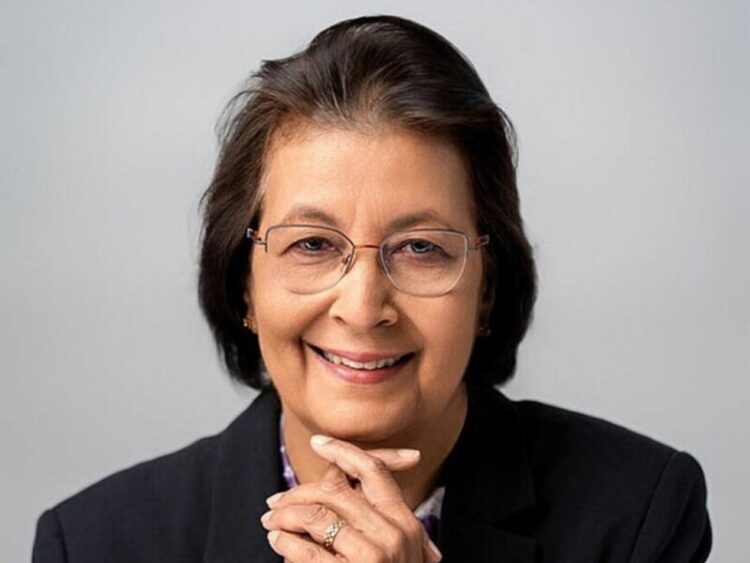
Jennifer Geerlings-Simons is a Surinamese physician and politician who has played a central role in the country’s public life for nearly three decades. Her career spans medicine, long-term parliamentary leadership, and ultimately the presidency.
She is widely recognised for her institutional discipline, policy-driven governance, and historic role as Suriname’s first female president, as well as her strong advocacy for gender equality and inclusive development.
Early Life and Education (1953–1979)
Born on 5 September 1953 in Paramaribo, Suriname, Jennifer Simons grew up in a working-class household, with a father employed in civilian military service and a mother who was a nurse. Her upbringing exposed her early to discipline, service, and caregiving. She pursued higher education in medicine at Anton de Kom University of Suriname, graduating in 1979 and laying the foundation for a life committed to public service and social responsibility.
Medical and Public Health Career (1979–1996)
From 1979 to the mid-1990s, Geerlings-Simons worked as a medical doctor and public health professional. She served within Suriname’s Ministry of Health and contributed to national health programmes, including dermatology services and HIV/AIDS prevention initiatives. This period shaped her technocratic leadership style and reinforced her belief that social development, healthcare access, and equality are central to national progress — especially for women and vulnerable groups.
Entry into Politics and Parliamentary Career (1996–2010)
In 1996, she entered national politics after being elected to the National Assembly of Suriname. Over the following years, she became a prominent parliamentary figure, serving as a faction leader and committee member. During this phase, she worked on legislation related to public health, governance reform, and social welfare, gradually building credibility in a male-dominated political environment.
Her experience during these years shaped her views on women’s participation in leadership.
She later emphasised the historical role of women in national struggles, stating, “Women in my country have always been at the forefront of the struggle for freedom, justice and economic development,” she said.
Speaker of the National Assembly (2010–2020)
A major milestone came in 2010 when she was elected Speaker (Chairperson) of the National Assembly, becoming one of the few women in Suriname to hold this position. She served in this role for ten consecutive years (2010–2020). As Speaker, she strengthened parliamentary procedures, promoted institutional stability, and represented Suriname in regional parliamentary organisations. Her tenure symbolised a breakthrough for women in political leadership and governance.
Personal Hardship and Resilience (2015)
In 2015, Geerlings-Simons experienced profound personal tragedy with the death of her eldest son. Despite this loss, she continued to carry out her public duties. While she has rarely spoken publicly about this hardship, it stands as a testament to her resilience and emotional strength, qualities that have shaped her leadership and empathy toward social issues.
Temporary Withdrawal and Political Return (2020–2024)
After the 2020 elections, she stepped back from frontline parliamentary politics, declining to take up her seat despite being re-elected. This period marked a pause in active leadership. In July 2024, she returned to the political center stage when she was elected leader of the National Democratic Party (NDP), succeeding its founder, Dési Bouterse, assuming responsibility during a sensitive period of political transition.
Presidency of Suriname and Gender-Inclusive Leadership (2025–Present)
In 2025, following national elections and coalition negotiations, Jennifer Geerlings-Simons was elected President of Suriname by the National Assembly. Her election made history, as she became the first woman to hold the presidency since independence. She assumed office amid economic strain, public debt challenges, and anticipation of future offshore oil revenues, placing high expectations on her leadership.
As president, she has explicitly linked national development with inclusive empowerment, stating, “Let us redouble our efforts to ensure that no one men, boys, women, and girls is left behind. Because as women and men, we are stronger together,” Geerlings-Simons said.
This statement reflects her belief that gender equality is essential for sustainable economic and social growth.
Philosophy on Gender Equality and Women’s Empowerment
Geerlings-Simons promotes a nuanced understanding of gender equality that values difference without inequality. She articulated this clearly when she said, “Women and men are 90 percent the same, but we look at life differently on crucial points. We can’t just turn into a man because we want equality.” This perspective supports gender-sensitive policies, shared responsibility, and systems that adapt to women’s realities rather than exclude them from leadership, work, or decision-making.
Leadership Profile and Legacy
Jennifer Geerlings-Simons is known for her calm, analytical leadership style rather than populist rhetoric. Her career reflects long-term institutional commitment, resilience in the face of personal hardship, and the breaking of entrenched gender barriers. By combining historic leadership with a strong vision for women and girls’ empowerment, she stands as a defining figure in Suriname’s contemporary political history.
Umm E Habiba,
Punjab Pakistan.