

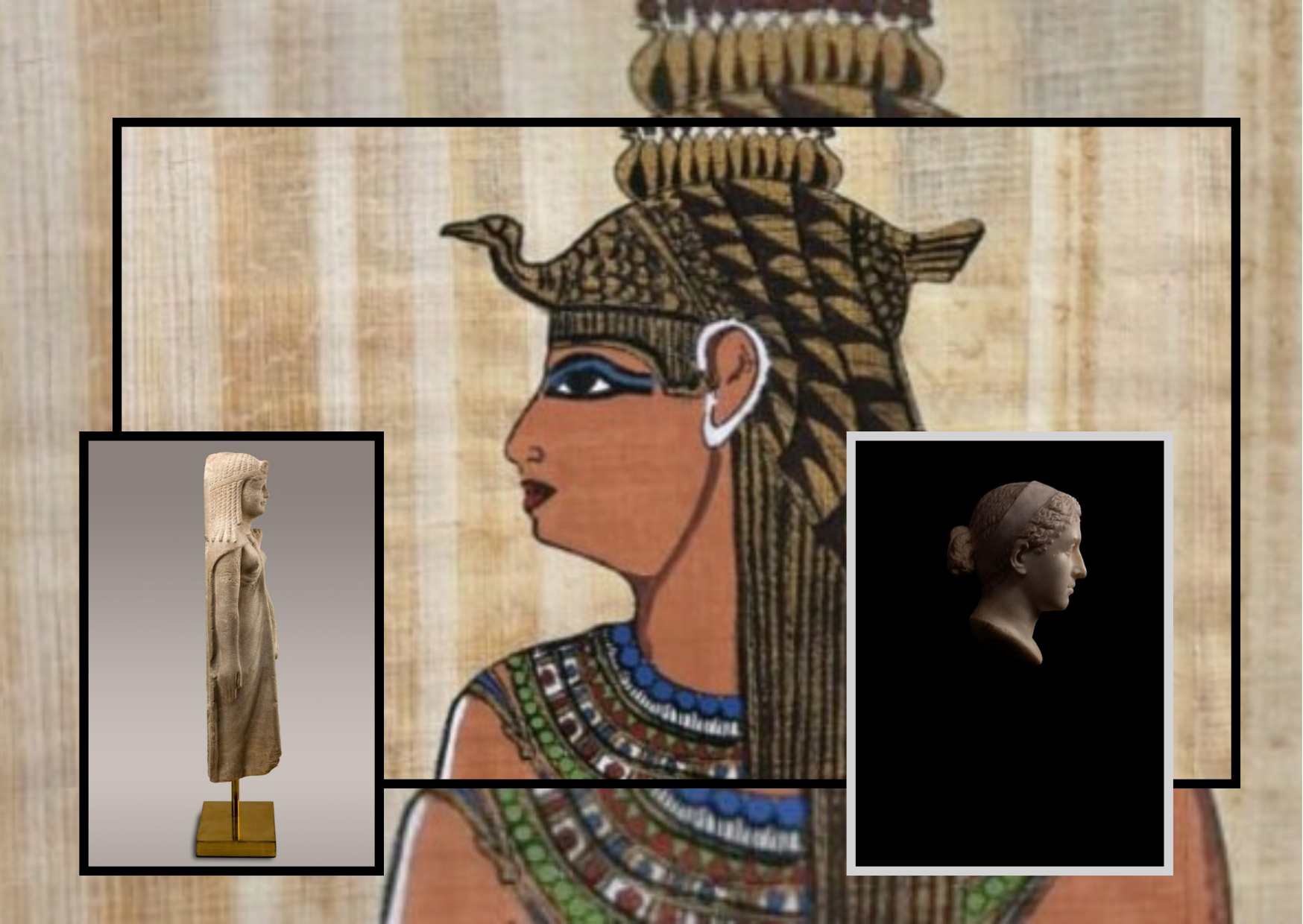
When people hear the name Cleopatra VII Philopator, they often think of beauty, romance, and her well known associations with powerful Roman leaders. However, her true story is far more political and far more remarkable. Before she became a legend, she was a multilingual ruler, a strategist, and one of the most intellectually capable monarchs of the ancient world. Her legacy was built on her determination to preserve Egypt’s independence during the rise of Roman power.
Born in 69 BCE, Cleopatra belonged to the Ptolemaic dynasty, a Greek speaking royal family that had ruled Egypt since the time of Alexander the Great. From an early age, she received an exceptional education. She studied philosophy, mathematics, astronomy, medicine, literature, and politics. Unlike many rulers of her dynasty, she also learned the Egyptian language and is believed to have spoken several languages fluently. This ability allowed her to communicate directly with different peoples and strengthened her authority as a leader.
When Cleopatra became queen, Egypt faced serious challenges. Political instability, economic pressure, and the expanding influence of Rome threatened the kingdom’s survival. Rather than withdrawing from these difficulties, Cleopatra stepped into them with determination. She understood that survival required intelligence, diplomacy, and careful strategy.
One of Cleopatra’s greatest strengths was her political skill. She knew how to negotiate, build alliances, and defend Egypt’s interests. At a time when women rarely ruled independently, she governed one of the wealthiest and most influential kingdoms in the Mediterranean world. She appeared on coins, issued official decrees, and made decisions that affected millions of people.
Cleopatra worked to strengthen Egypt’s economy and maintain stability within her kingdom. She supported trade, encouraged learning, and preserved Alexandria’s reputation as a center of knowledge and scholarship. The city of Alexandria remained one of the leading intellectual centers of the ancient world during her reign.
Her relationship with Julius Caesar is often highlighted in popular accounts, but its importance was deeply political. Cleopatra recognized Caesar as one of the most powerful figures in Rome. Their alliance helped secure her position as ruler and strengthened Egypt’s standing. Together they had a son known as Caesarion.
After Caesar’s assassination, Cleopatra faced new political uncertainty. Rome entered a period of intense struggle, and Mark Antony emerged as another dominant figure. Cleopatra formed an alliance with Antony that combined both political cooperation and personal connection. Together they sought to maintain influence in the eastern Mediterranean.
Their ambitions eventually brought them into direct conflict with Octavian, who would later become Augustus. The struggle culminated in the Battle of Actium in 31 BCE. Cleopatra and Antony were defeated, and Egypt’s independence was placed in grave danger.
In 30 BCE, with defeat unavoidable and Roman control imminent, Cleopatra chose death rather than capture. She was thirty nine years old. Her death marked the end of the Ptolemaic Kingdom and the beginning of Egypt’s incorporation into the Roman Empire.
Cleopatra’s story did not end with her death. More than two thousand years later, she remains one of the most studied and recognized figures in ancient history. Her significance lies not in myth or romance, but in her ability to govern during a period of intense political pressure and imperial expansion.
For generations, writers often reduced Cleopatra to a romantic figure. Modern historical scholarship places greater emphasis on her political intelligence, economic awareness, and statecraft. She was a ruler who understood power in practical terms and used every available tool to preserve her kingdom.
Cleopatra continues to represent courage, intelligence, and resilience. She reminds us that leadership is defined by vision and capability rather than gender. Despite overwhelming political forces, she refused to surrender her kingdom without resistance.
When I reflect on Cleopatra, I see a queen who mastered languages, governed a major civilization, and stood at the center of events that reshaped the ancient world. Her death is only one part of her story. Her life is the true legacy.
That is why Cleopatra remains one of history’s most significant rulers. Not because of the men associated with her story, but because of the strength, intelligence, and leadership she embodied.
By Rukayya Muhammad Adamu