Politics has long been dominated by men, and women seeking leadership positions continue to face obstacles that extend beyond the usual demands of public office. In Trinidad and Tobago, the country waited until 2010 to have its first female Prime Minister, while women still occupy only about three in ten parliamentary seats.
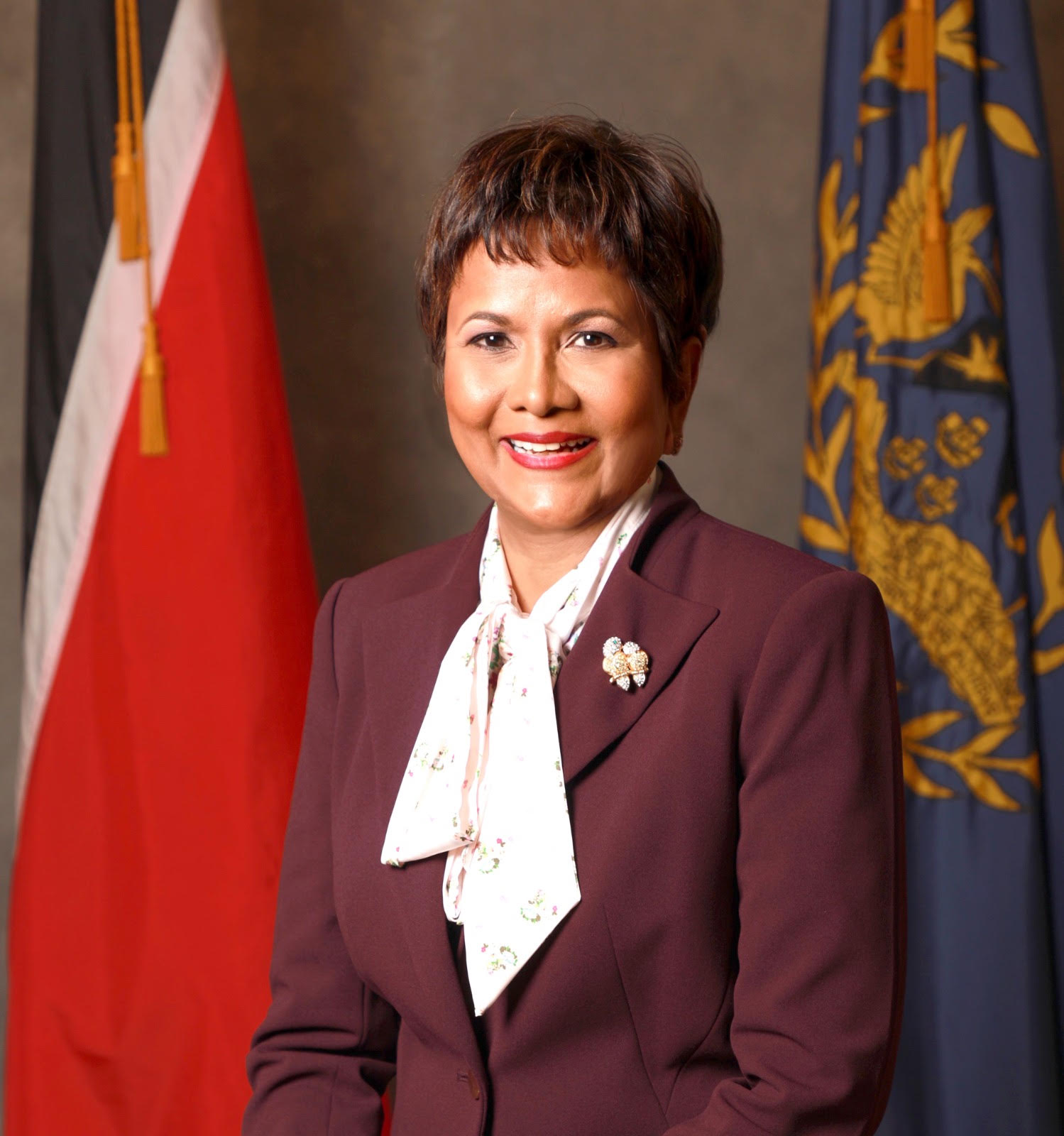
Women who enter public life often face scrutiny over their voices, conduct and appearance, alongside the expectations placed on them to represent the aspirations of other women. For Christine Carla Kangaloo, the journey to the country’s highest office has been shaped by years of legal practice, parliamentary service and public leadership.
Born on December 1, 1961, in San Fernando, Trinidad, Kangaloo was the fifth of seven children in the Presbyterian Indo-Trinidadian family of Carlyle and Barbara Kangaloo.
Her professional journey began in 1985 when she joined her father’s law firm in San Fernando. They practiced together until his death in 1996. She also served as an Assistant Registrar of the Supreme Court between 1992 and 1996.
Although she would later become one of the country’s most prominent political figures, her background in law remained central to her professional identity.
Kangaloo entered Parliament in January 2001 as an Opposition Senator under the leadership of Patrick Manning. Her parliamentary career subsequently took her through several positions, including Vice-President of the Senate, Minister in the Office of the Prime Minister and Minister of Legal Affairs.
During her time at the Ministry of Legal Affairs, a free birth certificate programme received an innovation award in 2005.
In 2007, she was elected to the House of Representatives to represent Pointe-à-Pierre and appointed Minister of Science, Technology and Tertiary Education. Her tenure as a member of parliament and minister ended in May 2010 following a change of government.
From Senate Leadership to the Presidency
A new chapter in Kangaloo’s public service began in 2015 when she was elected President of the Senate, a position she held until January 2023.
During those years, she became known for her work in parliamentary leadership and institutional responsibilities. She also acted as President of the Republic on 33 occasions before her eventual election to the substantive office.
Her political journey included a departure from the People’s National Movement (PNM) in 2015. According to a former party official, the move was requested by the party, although accounts of her political status during that period also described her as an independent.
In January 2023, Kangaloo was elected President through the Electoral College and formally assumed office on March 20 of that year.
Her election made her the second woman to become President of Trinidad and Tobago. She also became the first woman in the Americas to succeed another woman as head of state and the first woman of Indian ancestry to hold the presidency in the region.
In her inaugural address, she outlined a leadership approach centred on restraint, diplomacy and service.
“My words do not need to be shouted in the public square,” she said, describing her role as that of a “diplomat-in-chief”.
She also made a commitment to improving the institution and ensuring that it served the wider population.
“As your President, I will fight to the end to make the office work better for all of us,” she pledged.
Political Tensions and Questions of Impartiality
Despite her emphasis on diplomacy, Kangaloo’s presidency has faced political disagreements and public scrutiny.
Following the 2025 general election, which returned Kamla Persad-Bissessar to the office of Prime Minister, questions emerged over Kangaloo’s impartiality. Critics pointed to her previous association with the PNM and her decisions concerning appointments to the Senate’s independent bench.
The Prime Minister described her as “a low-level PNM functionary”, while some government ministers also publicly questioned her independence.
Kangaloo rejected the suggestion that her political background undermined her constitutional position. She argued that the Constitution clearly provides for a sitting member of Parliament to become President.
She also raised concerns about gender bias in the criticism directed at her, arguing that a male predecessor with a comparable political background might not have faced the same level of scrutiny.
The tensions became more pronounced in September 2026 when she addressed the International Women’s Forum of Trinidad and Tobago’s Inspirational Women Awards Gala.
After repeatedly choosing not to respond publicly to attacks against her and the Office of the President, she used the occasion to speak about the distinction between legitimate criticism and language that undermines the dignity of public institutions.
“A presidency cannot be conducted as a continuation of party politics by other means,” she said.
She also argued that some of the attacks directed at her office carried gendered undertones, linking the language used against the presidency to the sexual degradation of women.
Kangaloo explained that her decision to remain silent in the face of some criticism should not be mistaken for weakness.
“Not every silence is surrender,” she said, adding that “leadership gives language both reach and permission.”
Her remarks brought renewed attention to the pressures women in positions of authority can face, particularly when political disagreements become intertwined with gender-based attacks.
A Presidency Beyond Political Disagreements
Beyond the controversies surrounding her office, Kangaloo has continued to participate in national and cultural activities.
In 2026, as Trinidad and Tobago marked 50 years as a republic, she reflected on the importance of protecting constitutional rights and democratic principles.
“Rights surrendered in anxious times are not always easily recovered,” she warned.
She has also remained involved in the country’s cultural life, including the installation of the national Poet Laureate and diplomatic engagements at President’s House, where she has received newly appointed ambassadors.
Her public engagements reflect the ceremonial, diplomatic and constitutional responsibilities associated with the presidency.
Kangaloo’s journey from a law practice in San Fernando to the highest constitutional office in Trinidad and Tobago represents a career built through several stages of public service. Her experience in the judiciary, Parliament, ministerial positions and Senate leadership preceded her election as head of state.
She has also used her position to speak about the importance of women’s participation in public life and the possibilities that leadership creates for younger generations.
In a 2023 address to the Girl Guides, she reminded young women of how much the country’s political landscape had changed, noting that it “might never have had a female Prime Minister or female Presiding Officers in our Parliament, or even female Presidents!”
Her message reflects a broader challenge facing women in politics: entering leadership positions is one achievement, but ensuring that institutions treat women fairly and allow them to exercise authority without gender-based prejudice remains an ongoing struggle.
By Umm e Habiba Pakistan