
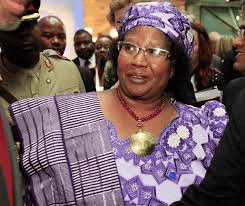
The president who chose to sell her private jet and luxury vehicles in a time of national crisis was not driven by power, but by purpose. In Malawi, where economic hardship shaped everyday life, Joyce Banda made a decision that drew global attention as a rare example of ethical leadership and responsibility. At a time when many leaders were associated with privilege and excess, she chose sacrifice, accountability, and the welfare of her people.
This defining act did not emerge suddenly. It was the result of a life shaped by resilience, struggle, and an unwavering commitment to change.
Joyce Banda was born into a modest village where opportunities were limited and inequality was a visible reality. Her early education began locally, but her understanding of the world expanded through lived experiences and exposure beyond her immediate environment, particularly in Kenya, where she became actively involved in community development. Her learning was not confined to classrooms. It was shaped by real challenges, giving her a deep awareness of poverty, gender inequality, and the structural barriers faced by women in developing societies.
A turning point in her life came through personal adversity. In her early marriage, Joyce Banda experienced domestic abuse, a reality that many women endure in silence. Rather than allowing that experience to confine her, she transformed it into a source of strength and purpose. It became the foundation of her advocacy for women’s rights, gender equality, and social justice. She did not speak about these issues from a distance. She spoke from lived experience, which gave her voice both authenticity and power.
Before entering politics, she established herself as a social entrepreneur and grassroots leader. She believed strongly that empowering women economically was one of the most effective ways to break cycles of poverty. Through her initiatives, she created opportunities for women to become financially independent and active contributors to their communities. Her work expanded into organizations focused on education, entrepreneurship, and long term development, all rooted in the idea that sustainable progress begins with people.
Her transition into politics was a natural extension of this mission. As Minister of Gender and later Minister of Foreign Affairs, she demonstrated strong and people-centered leadership in both social and diplomatic spaces. Her approach earned her credibility and respect, ultimately leading to her historic rise as the first female President of Malawi in 2012. This achievement not only reshaped Malawi’s political landscape but also inspired women across Africa to envision themselves in positions of leadership.
When Joyce Banda assumed office, Malawi was facing a severe economic crisis marked by rising inflation and strained relationships with international donors. She moved quickly to restore ties with global financial institutions such as the International Monetary Fund and the World Bank, helping to unlock aid and stabilize the economy.
Her economic reforms were bold and, at times, difficult. She implemented currency devaluation to correct market imbalances and improve trade competitiveness. Although this decision created short term hardship for many citizens, it was widely regarded as necessary for long term economic recovery. It reflected her willingness to make tough decisions in the interest of national progress, even when they carried political risks.
Among all her actions, the decision to sell the presidential jet and luxury vehicles became the most powerful symbol of her leadership. It was a clear demonstration of fiscal discipline and a rejection of unnecessary government excess. In a country where many citizens struggled daily, this move sent a strong message about priorities and accountability. It showed that leadership, at its core, is about service, not comfort. It also helped rebuild international confidence, signaling that Malawi was committed to reform and responsible governance.
Beyond economic policy, Joyce Banda remained deeply committed to social development. She focused on improving maternal healthcare, expanding access to education, and supporting vulnerable communities. She believed that true national progress could only be achieved by investing in people, particularly women and children.
Her advocacy for women empowerment remained central throughout her leadership. She encouraged women’s participation in politics and business, promoted access to education, and supported efforts to end child marriage in order to protect young girls and secure their futures. Her influence extended beyond Malawi, inspiring women across the African continent and beyond.
Her presidency was not without challenges. The Cashgate corruption scandal tested her administration and drew significant criticism. In response, she initiated investigations and took corrective measures, demonstrating a commitment to accountability despite the political consequences.
Even after leaving office, Joyce Banda has continued her work through advocacy and humanitarian efforts. She remains an influential voice in global conversations on leadership, development, and gender equality, using her platform to inspire and advocate for meaningful change.
Joyce Banda’s story is one of transformation, courage, and purpose. From a village upbringing marked by hardship to leading a nation through economic crisis, she demonstrated that leadership is not defined by privilege, but by responsibility. Her legacy continues to shape discussions on African leadership, economic reform, and women empowerment, reminding the world that true leadership is grounded in service, sacrifice, and the determination to create lasting impact.
Umm E Habiba,
Punjab, Pakistan.