

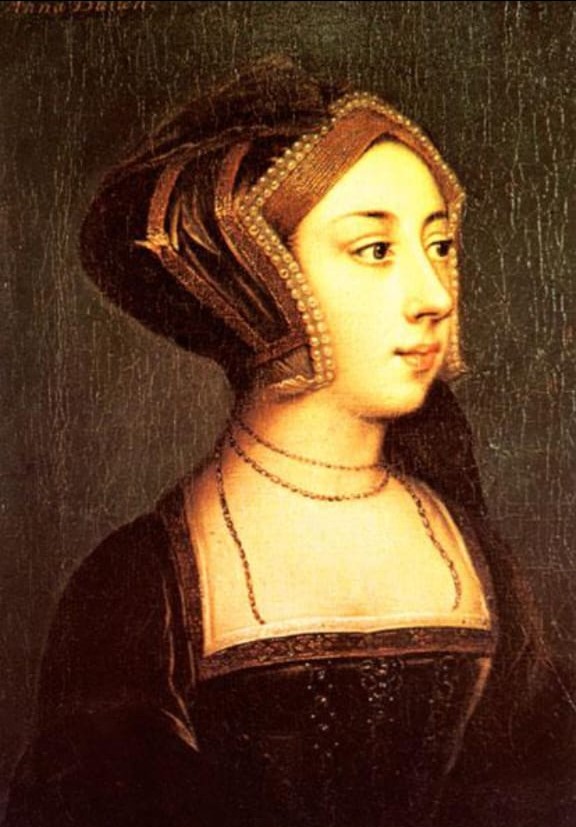
For many people, Anne Boleyn is remembered for the dramatic events that led to her execution in 1536. Her name often appears in discussions of royal scandal, political intrigue, and one of the most famous downfalls in English history. Focusing only on her death, however, tells only a small part of her story.
Long before she became Queen of England, Anne Boleyn was known for her intelligence, education, confidence, and influence. She lived in a world where women were expected to remain in the background, but she became one of the most talked-about and influential figures of her generation.
Anne was born around 1501 into the ambitious Boleyn family, one of the rising noble families in England. Her father, Thomas Boleyn, was a respected diplomat who understood the value of education and international experience. As a result, Anne received opportunities that many girls of her time could only dream of.
At a period when most women were expected to focus solely on domestic responsibilities, Anne studied languages, literature, music, religion, and courtly etiquette. She developed a love for learning and became known for her curiosity and quick mind. Education shaped the way she viewed the world and gave her a confidence that distinguished her from many of the women around her.
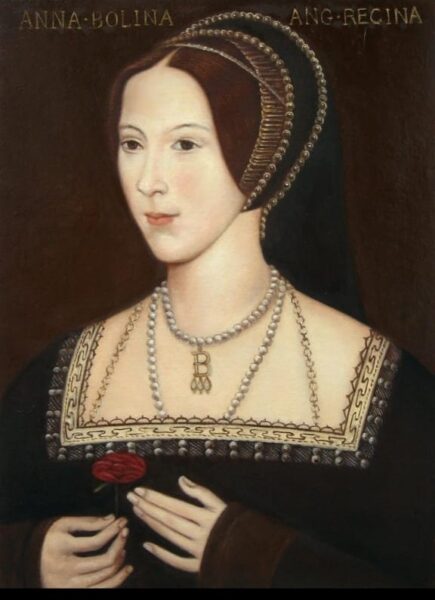
As a young girl, Anne was sent abroad to continue her education. She first spent time in the Netherlands before moving to France, where she lived at the French royal court. Those years proved transformative. France was one of the cultural centers of Europe, and Anne was exposed to new ideas, sophisticated court life, art, fashion, and intellectual discussions.
She became fluent in French and developed a refined manner that impressed many people when she later returned to England. She also gained an understanding of politics and diplomacy that was uncommon among women of her age. The experiences broadened her outlook and helped shape the woman she would become.
When Anne returned to England, she joined the household of Queen Catherine of Aragon as a lady-in-waiting. It was here that her life took a dramatic turn. Anne quickly attracted attention, not because she fit conventional standards of beauty, but because of her wit, intelligence, and confidence. She was known for her lively personality and her ability to engage others in thoughtful conversation.
Among those who noticed her was King Henry VIII.
At the time, Henry was married to Catherine of Aragon, and Anne’s older sister, Mary Boleyn, had previously been associated with the king. Many expected Anne to follow a similar path and become Henry’s mistress. Instead, she refused. Whether motivated by personal principles, ambition, or a combination of both, Anne insisted on something more.
Her refusal only increased Henry’s determination.
Over the following years, Henry became increasingly committed to marrying Anne. The obstacle was that he was already married, and the Roman Catholic Church would not grant the annulment he sought.
The dispute grew into one of the most significant political and religious crises in English history.
Unable to obtain the Pope’s approval, Henry eventually broke from the authority of Rome and established the Church of England. Historians continue to debate Anne’s exact role in these developments, but there is little doubt that her presence influenced a chain of events that transformed the nation. Few women in sixteenth-century Europe had such a profound effect on the direction of their country’s history.
In 1533, Anne Boleyn became Queen of England.
As queen, she sought to use her position for more than ceremony. She showed a strong interest in education and religious reform, supporting scholars and encouraging the circulation of religious texts in English. She believed that knowledge should be more accessible and that faith should involve personal understanding rather than blind obedience.
Her interest in learning reflected the education she had received as a young woman. She understood the power of ideas and the importance of intellectual growth. While her time as queen was relatively short, she demonstrated that queenship could involve influence as well as symbolism.
Later that same year, Anne gave birth to a daughter, Elizabeth. Many members of the court had hoped for a son, believing a male heir would secure the future of the Tudor dynasty. The disappointment was immediate in some circles, but history would tell a different story.
That little girl would one day become Elizabeth I, one of the most celebrated rulers in English history.
Despite the significance of Elizabeth’s birth, Anne’s position at court gradually became more difficult. The Tudor court was a place of shifting alliances, rivalries, and political maneuvering. Friends could quickly become enemies, and favor could disappear overnight.
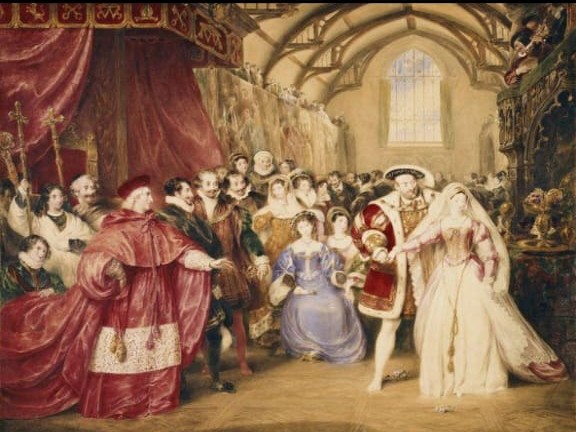
As years passed without the birth of a surviving son, Henry’s affection for Anne began to fade. Powerful individuals who had opposed her from the beginning saw an opportunity to act. Opposition to Anne grew, and she found herself increasingly isolated.
In 1536, events moved rapidly.
Anne was arrested and charged with adultery, incest, and treason. The accusations shocked many people and remain controversial to this day. Numerous historians have argued that the evidence against her was weak and that the charges were driven more by politics than by facts.
Whatever the truth, Anne’s fate was largely decided before she entered the courtroom.
She was tried, convicted, and sentenced to death. For a woman who had once stood at the center of English power, the fall was dramatic and devastating.
Accounts from the period describe her as composed, intelligent, and remarkably courageous. Even when confronted with death, she maintained a dignity that impressed many observers.
On May 19, 1536, Anne Boleyn was executed at the Tower of London.
Many people see that moment as the defining chapter of her story. History paints a broader picture.
Her daughter Elizabeth eventually ascended the throne and presided over one of the most celebrated periods in English history. The Elizabethan Age became known for achievements in literature, exploration, trade, and national development. The reign of Elizabeth I transformed England into a major European power and secured her place among history’s greatest monarchs.
Anne did not live to see any of it, but her influence endured through the daughter she left behind.
Today, Anne Boleyn remains one of the most discussed women in history. She was educated in an age when education was often denied to women. She participated in political and religious debates in a society dominated by men. She challenged expectations, embraced learning, and refused to be easily controlled.
Her life was not without controversy, and historians continue to debate aspects of her character and ambitions. Regardless of those debates, her significance is impossible to ignore. She helped shape a period of transformation that altered England’s political and religious future.
As a Shero, Anne Boleyn reminds us that women have influenced history in ways that often extend far beyond the titles they held or the tragedies they endured. Her story is one of intellect, determination, resilience, and impact.
More than four centuries after her death, Anne Boleyn continues to capture the world’s attention. Not simply because she was a queen, and not only because of how her life ended, but because she dared to think, learn, and lead in a world that often discouraged women from doing so.
That is why Anne Boleyn deserves to be remembered as more than a tragic queen. She was a woman whose mind, courage, and influence helped change the course of a kingdom and left a legacy that continues to endure.
By Rukayya Muhammad Adamu