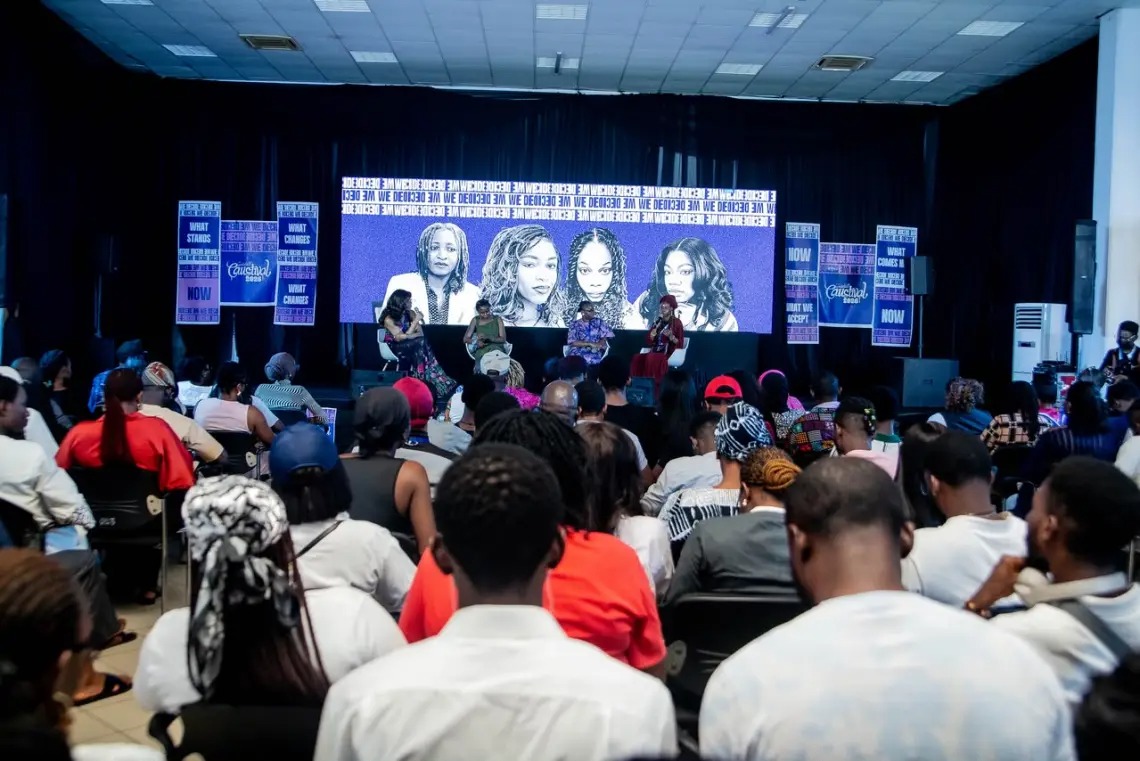
As political activities are gradually gathering momentum across the country as Nigeria moves closer to the 2027 general elections, young Nigerians are voicing growing concerns about the country’s democratic future, highlighting declining public trust in democratic institutions, persistent barriers to women’s political participation, and the urgent need for stronger civic education.
These issues took centre stage at Caustival 2026, a social justice festival organised by Gatefield, held in Abuja, Nigeria.
The event brought together artists, filmmakers, activists, researchers, and citizens to examine the challenges and opportunities shaping Nigeria’s democracy.
With the theme “We Decide,” the festival combined film screenings, exhibitions, live performances, and public discussions to explore questions of power, inclusion, and civic responsibility.
Participants called for greater citizen engagement and a more inclusive approach to governance as the country prepares for another election cycle.
One of the festival’s most striking activities was a mock voting exercise that organisers intentionally disrupted midway.
The exercise was designed to provoke discussion about how easily confidence in electoral processes can be undermined and to highlight the vulnerability of democratic institutions when public trust is weakened.
A recurring theme throughout the event was the range of obstacles that prevent women from fully participating in politics, leadership and public life.
Speakers identified online harassment, political violence, and entrenched social norms as major factors discouraging women from seeking leadership positions or engaging in public discourse.
Nabilah Usman, producer of the documentary Double Minority, spoke about the damaging impact of digital violence on women’s participation in public spaces.
Digital violence makes women leave the digital space, which means they can’t be out there to talk about their work, campaign for themselves and make money,” she said.
Gender justice activist Fakhriyyah Hashim expanded on this concern, noting that online abuse often extends beyond the digital sphere and carries serious real-world consequences.
According to her, persistent threats and harassment undermine women’s confidence, affect their mental well-being, and discourage many from pursuing political office.
These physical threats and digital threats, they take a toll on women’s mental health when they want to run for office,” Hashim said.
She criticised the limited interaction between elected officials and citizens outside election periods, arguing that the absence of continuous engagement fuels public distrust and encourages transactional politics rather than genuine public service.
The discussions also examined broader structural barriers to women’s representation in politics when Solape Sonuga, Curator of Abuja Global Shapers, challenged the widely held belief that lack of funding is the primary obstacle preventing women from contesting elections.
The overall barrier to women’s participation in politics is not money. It is a cultural problem, rooted in gender disparity,” she said.
Beyond representation, participants stressed the importance of civic education and a deeper understanding of Nigeria’s political history.
Cultural archivist Salma Ja’eh argued that meaningful civic participation begins with an informed understanding of the country’s democratic journey. She maintained that citizens who understand Nigeria’s political history are better equipped to engage critically with current political developments and demand greater accountability from those in power.
In her reflections on the disconnect between politicians and the electorate, she observed that people extract as much as they can from politicians because they know they only see them once every four years.
As discussions at Caustival 2026 concluded, participants agreed that rebuilding public trust in democratic institutions, expanding opportunities for women in politics, and strengthening civic education are extremely essential to fostering a more inclusive, accountable, and resilient democracy ahead of Nigeria’s 2027 general elections.
Umm E Habiba,
Ounjab, Pakistan