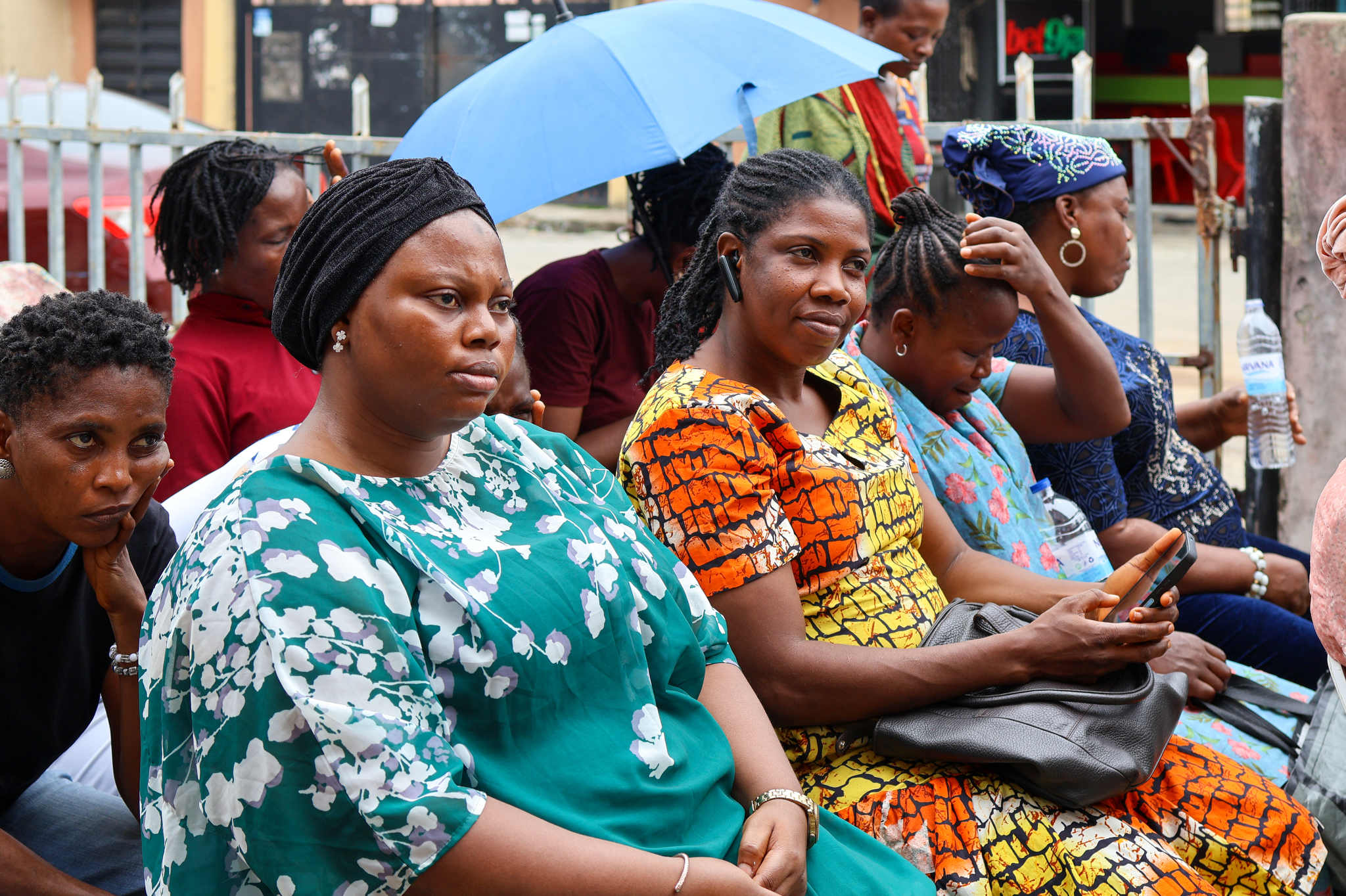
Women account for 74 per cent of informal trade operations across West Africa, according to the ECOWAS Commission, highlighting their central role in an economy that often remains largely invisible in official trade statistics.
The figure was disclosed by Christopher Mensah-Yawson, Director at the ECOWAS Commission Trade Directorate, during a parliamentary seminar in Abuja held alongside the ECOWAS Parliament’s 2026 First Extraordinary Session.
Mensah-Yawson said the scale of women’s participation in informal trade reflected the region’s wider demographic and economic realities.
“Our population exceeds 456 million, nearly half are women, and the median age is 18.2 years. These are enormous opportunities, but also serious challenges for integration and development,” he said.
Young people, he added, also play a major role in sustaining informal markets across the region, even as women and youth continue to face significant barriers to participation in formal trade systems.
Those barriers range from complicated customs procedures and limited knowledge of regional trade rules to inadequate access to finance and storage facilities. Women also face border infrastructure that does not adequately account for their needs, alongside harassment, extortion and security risks.
“Women and youth face multiple challenges, including complex customs procedures, limited awareness of trade regimes, inadequate access to finance and storage facilities, gender-insensitive border infrastructure, harassment, extortion, and security risks,” Mensah-Yawson said.
He said the African Continental Free Trade Area (AfCFTA) provides an opportunity to address some of these challenges by creating pathways for informal traders to enter the formal economy.
Rather than viewing AfCFTA solely as a trade agreement, Mensah-Yawson described it as a framework that can help remove barriers facing small-scale traders through initiatives such as the Protocol on Women and Youth in Trade, simplified trade regimes, digital trade frameworks and support for small and medium-sized enterprises.
Several regional programmes are already aimed at improving women’s participation in formal and digital markets.
ECOWAS operates a Trade and Gender Framework covering 2024 to 2030, alongside a Regional E-Commerce Strategy and digital skills programmes targeting rural women.
The Informal Trade Regularization Support Programme is also designed to address challenges surrounding documentation and formal recognition, while partnerships with institutions including Ecobank and the International Trade Centre seek to expand financial opportunities for women-led businesses and young entrepreneurs.
Mensah-Yawson, however, stressed that regional initiatives would require stronger implementation at the national level to produce meaningful change.
“Member States must accelerate reforms to formalise informal trade, protect vulnerable traders, and remove structural barriers to formal markets,” he said.
He described women and young people as central to the region’s economic resilience and food security, arguing that their contribution must be recognized in efforts to deepen regional integration.
“Women and youth are central to economic resilience, food security, and sustainable development in West Africa,” he said.
He added that the success of AfCFTA would ultimately depend on whether its benefits reached people who have historically operated outside formal markets.
“The future of West Africa’s trade depends on making AfCFTA work for those historically excluded from formal markets,” Mensah-Yawson said.
The Abuja seminar brought together lawmakers, regional institutions, development partners and trade experts to discuss ways of expanding trade within West Africa and ensuring that the benefits of regional integration extend beyond the formal economy.
At the centre of the discussions was a reality often obscured by conventional trade data: informal commerce sustains millions of households across West Africa, particularly in border communities.
For many of these communities, informal trade supports food security, livelihoods and market connectivity. Women, who account for the vast majority of informal trade operations in the region, remain at the heart of that system.
Recognizing their contribution and removing the barriers that keep them outside formal markets, speakers argued, will be essential if West Africa is to unlock the full economic potential of AfCFTA.
By Umm e Habiba, Pakistan.