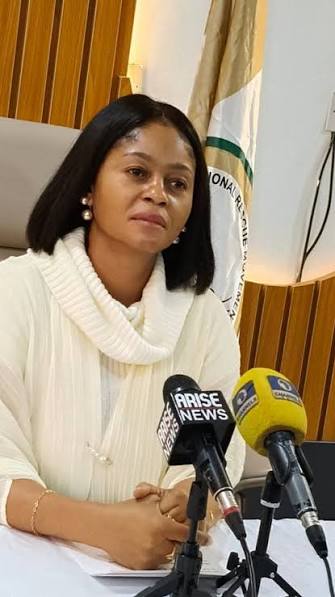
Only Two of 18 Presidential Candidates Address Barriers Facing Women in Politics
Only two of the 18 presidential candidates for the 2027 general election have spoken about the obstacles women face in Nigerian politics, according to Okereke, who made the observation during an interview on the News Agency of Nigeria’s personality interview series in Abuja on Sunday.
She cited the 1929 Aba Women’s Riot as an example of what women can achieve through collective action, even without financial resources or political backing.
Recalling the historic protest, Okereke explained that the women recognized the injustice facing men under colonial taxation and feared that women would eventually face similar treatment.
She said the women decided to take action rather than remain silent, organizing themselves to defend their communities.
According to her, their success demonstrated the power of solidarity despite their limited resources.
“They didn’t have social media, they didn’t have the godfather support or godmother support, they have no support whatsoever. All they had was the palm fronds and their wrappers. But still, they succeeded,” she said.
Okereke urged contemporary Nigerian women to draw inspiration from that history by refusing to allow political interests to divide them. She called on women to unite, support one another and encourage their relatives to vote for female candidates capable of changing the country’s political narrative.
She argued that women have consistently borne a significant share of the country’s economic difficulties and should therefore have a meaningful role in decisions affecting their lives.
Financial Barriers, Cultural Expectations and Political Violence
Okereke identified three major obstacles preventing women from participating fully in politics: inadequate financial resources, restrictive cultural expectations and political violence.
She described the cost of contesting elections as a significant challenge, noting that many women are discouraged by the financial demands of political campaigns.
“Women are usually scared for three reasons: money. You and I know how expensive it is to run election,” she said.
She identified cultural expectations as the second obstacle, explaining that women are often raised to believe that politics is primarily a man’s responsibility.
According to her, women are frequently confined to supporting roles during political campaigns, such as mobilising voters, chanting campaign slogans and persuading people in markets to support male candidates.
“All we do is take our wrapper, chant, campaign slogan, go to the market, convince everyone to vote for the men,” she said.
Political violence was the third challenge she highlighted. She said threats, intimidation, bullying and political thuggery discourage women from seeking elective positions.
Okereke also expressed concern about the pressure some women experience within their households, particularly when their husbands dictate which candidates they should support during elections.
She recounted instances in which women were allegedly threatened with being denied access to their homes if they failed to vote for their husbands’ preferred candidates.
She argued that such situations reflected the broader problem of male dominance in Nigeria’s political system.
“Everything still boils down to the men controlling the system,” she said.
Vows to Challenge Electoral Intimidation
Speaking about the peace accord signed by presidential candidates, Okereke said she intended to hold all signatories accountable for their commitments.
She explained that she had made it clear during the signing that she would monitor compliance and speak out against any violations, particularly those involving female candidates.
She pledged to raise the alarm if she or any other female contestant experienced intimidation, bullying or harassment during the electoral process.
Despite these concerns, she expressed hope that the 2027 elections would provide a safe and peaceful environment for all candidates, particularly women.
Calls for Equal Representation in Governance
Okereke also rejected the 35 per cent affirmative action benchmark for women’s representation, arguing that it remained insufficient to guarantee genuine equality in decision-making.
Rather than settle for a designated percentage, she advocated equal participation and balanced representation of women, young people and men in governance.
“Allocating only 35 per cent to women is still marginalization. We are not asking men to vacate the decision-making table; we are saying, ‘adjust slightly so we can sit together,’” she said.
She maintained that excluding women from political decision-making undermines the country’s ability to build a functional and stable system.
“When you exclude half of a country’s population from decision-making, you cannot have a balanced, functional, or stable system,” she said.
However, she acknowledged that some men were increasingly supporting women’s political participation, describing the growing involvement of male allies as an encouraging development.
She argued that men who trusted women with responsibilities within the home should also recognise their capacity to contribute meaningfully to national governance.
“If you have trusted us that much to run the home, bring up your children, keep the home system running, imagine what we will do at the decision table,” she said.
A Campaign Built Around Social Welfare and Inclusion
Explaining her political vision, Okereke said her campaign would focus on practical solutions rather than gender-based appeals.
“I do not bring you gender politics. I bring you blueprint with framework, a plan to rescue. Nigeria does not need another manager, Nigeria needs a mother to rescue her children,” she said.
She identified her involvement in supporting vulnerable groups, including orphans, widows and persons living with disabilities, as central to her leadership credentials.
Okereke described herself as the mother of orphans, the first lady of widows and the matron of persons living with disabilities.
She maintained that these descriptions were earned through years of service rather than honorary titles.
She said her work had involved supporting, rehabilitating, educating and empowering vulnerable people and their families.
According to her, some of the people she had helped, particularly widows, were among the earliest supporters who encouraged her to seek elective office.
She recalled that the widows had repeatedly urged her to contest, expressing their desire to see her take on a leadership position.
Okereke said she was already receiving support from different groups and believed her candidacy could make a meaningful contribution to the 2027 elections while encouraging more women to pursue political leadership.
She concluded with an appeal to voters to give female candidates with practical plans and clear development frameworks an opportunity to lead.
“Let’s allow a woman with a plan, a blueprint, a framework to try,” she said.
By Umm e Habiba, Pakistan.