Gender-based violence remains a major obstacle to Nigeria’s development, with women and girls with disabilities facing additional barriers to reporting abuse and accessing justice. UN Women has called for stronger institutional responses, public awareness and collective action, warning that legislation alone cannot end the problem.
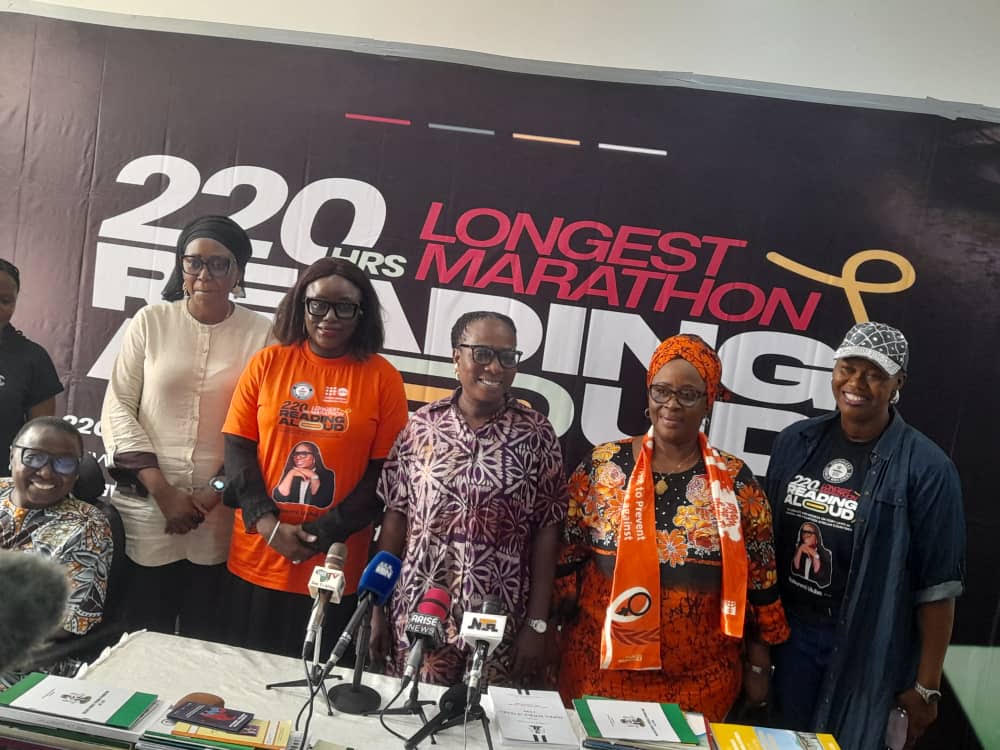
Beatrice Eyong, UN Women Representative in Nigeria, raised the concern at the launch of a 220-hour non-stop reading marathon of legal frameworks and human rights instruments in Abuja. She stressed that gender-based violence extends beyond individual cases of physical abuse and has far-reaching consequences for education, economic participation and national development.
According to Eyong, many people understand gender-based violence only through incidents of physical assault between partners, overlooking its broader implications for society.
“Gender-based violence is not only a women’s issue. It is not only for gender advocates or activists. It is something that is actually limiting our development, seriously limiting our development,” she said.
She identified child marriage and other harmful practices that prevent girls from accessing education and employment opportunities as significant contributors to the problem. Girls forced out of school to marry often lose opportunities to acquire marketable skills, secure employment and become financially independent.
“That’s perpetration of poverty,” Eyong said.
She also identified limited awareness of existing laws as a major challenge, noting that both public officials responsible for enforcing the laws and individuals whose rights they are designed to protect often lack sufficient knowledge of their provisions.
“Sometimes the duty bearers don’t know about these laws and sometimes the right owners don’t know about this law. You cannot assert any law that you actually don’t know about,” she explained.
Eyong described the reading marathon as an innovative approach to public education, noting that it would help make legal information more accessible to Nigerians.
“She is turning legal text into an instrument of public education, making important information accessible and bringing the law closer to the people it is meant to protect,” she said.
She urged government institutions, traditional and religious leaders, civil society organizations, the media, families, men and boys to work together to challenge harmful social norms, strengthen accountability and build communities where violence is neither accepted nor normalized.
She further emphasized that the initiative’s success should be measured by its public impact rather than the achievement of a Guinness World Records milestone.
“The most important thing is not just getting a Guinness World Records milestone. The most important thing is the millions of people that will be reached with this initiative,” she added.
Women and Girls with Disabilities Face Additional Barriers
While addressing the gathering, Lois Auta, Founder of the Network of Women with Disabilities, highlighted the particular difficulties women and girls with disabilities encounter when seeking justice after experiencing sexual violence.
She argued that although legal protections exist, inaccessible institutions and inadequate support systems often prevent survivors with disabilities from reporting abuse and pursuing justice.
“For too many women, especially women and girls with disabilities, the law exists on paper, but it has not spoken to us and today, we will make it speak,” Auta said.
She questioned the effectiveness of existing protection mechanisms, pointing out that sexual violence against women with disabilities frequently goes unreported or unaddressed.
“When a woman with a disability is raped, what happens? Too often, nothing,” she stated.
Auta illustrated the barriers through examples of inaccessible police stations, the absence of sign language interpreters and medical documentation that is not available in Braille. She also raised concerns about discriminatory attitudes within the justice system, where survivors with communication disabilities may be considered unreliable witnesses because they cannot communicate in ways expected by authorities.
She warned that these obstacles can leave survivors without justice while perpetrators escape accountability.
To address the situation, Auta called for accessible police stations, hospitals and court facilities, alongside the provision of Braille materials and sign language interpretation services. She also urged the government to domesticate and effectively implement relevant laws while ensuring that police officers, judges and other justice-sector personnel receive appropriate training.
She challenged civil society organizations to ensure that women with disabilities are actively involved in conversations and decisions affecting their lives.
“To civil society organisations, do not hold your workshops about us without us. Nothing about us without us. Anything about us without us is against us,” she emphasised.
Legal Education and Institutional Accountability
The 220-hour reading marathon, which commenced in Abuja on Monday, features Olubumi Oluba, a staff member of the Federal Ministry of Justice, reading legal frameworks, human rights instruments and survivor protection laws from Nigeria and 14 other African countries.
According to the News Agency of Nigeria, the exercise is scheduled to run for nine days and four hours, bringing legal provisions and human rights protections into public attention through an extended reading initiative.
Yewande Gbola-Awopetu, Head of the Sexual and Gender-Based Violence Response Unit at the Federal Ministry of Justice, reaffirmed the ministry’s commitment to improving access to justice, strengthening institutional responses and ensuring the effective implementation of existing laws.
She described sexual and gender-based violence as a serious threat to individual dignity, safety, fundamental rights and the well-being of families and communities.
Gbola-Awopetu maintained that addressing the problem requires more than the introduction of legislation. She highlighted the importance of sustained public education, effective institutional responses, access to justice, accountability and collective efforts to confront the attitudes and structures that enable violence.
She also commended Oluba for dedicating the marathon to promoting public awareness and legal education.
The initiative highlights the need to bridge the gap between the existence of legal protections and their practical implementation. For women and girls, particularly those with disabilities, meaningful protection requires institutions that are accessible, responsive and capable of delivering justice without discrimination.
Ultimately, ending gender-based violence in Nigeria will require more than laws on paper. It demands sustained public engagement, institutional accountability and a society committed to protecting the rights, dignity and safety of every woman and girl.
By Umm e Habiba, Pakistan.