With Nigeria targeting an open defecation-free status by 2030, the Federal Capital Territory (FCT) is facing renewed calls to strengthen sanitation practices and ensure that residents have access to safe and adequate toilet facilities.
The Minister of Water Resources and Sanitation, Prof. Joseph Utsev, has identified sustainable financing, improved data management and stronger institutions as critical areas requiring attention if the country is to achieve its national target.
Speaking at a ministerial press briefing, Utsev urged Nigerians to make toilet use a regular habit and discourage open defecation in their communities. He emphasized that achieving an open defecation-free Nigeria requires collective responsibility.
“Every household, community and institution has a responsibility to contribute to a cleaner and healthier Nigeria,” he said.
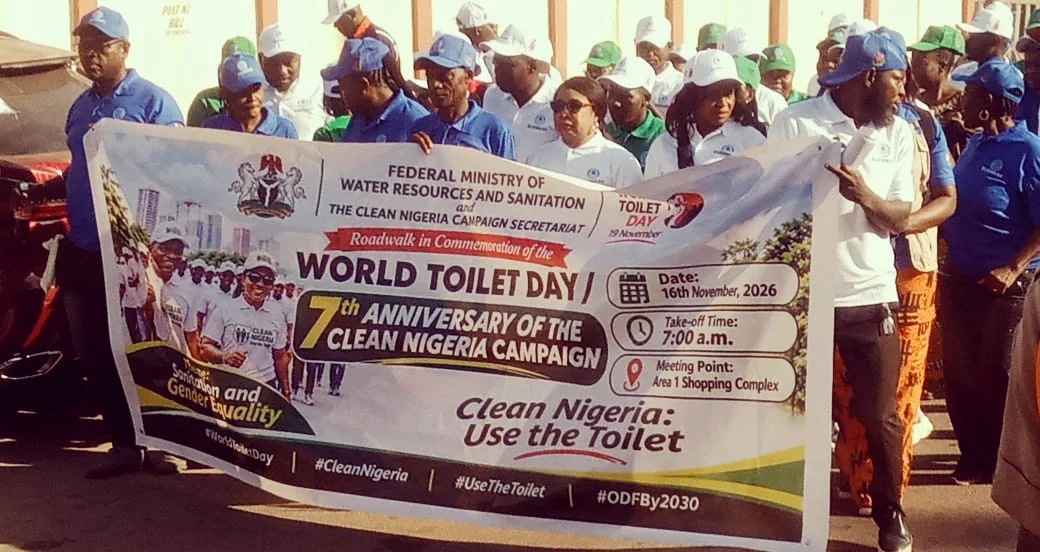
The minister’s appeal was reinforced in the FCT through a sensitization walk held on Monday to commemorate the 2026 World Toilet Day. Organized by the Federal Ministry of Water Resources and Sanitation in collaboration with development partners, the exercise brought together government officials, civil society organizations, sanitation advocates and community stakeholders.
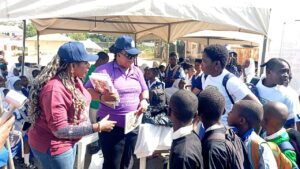
Participants moved through parts of the city, engaging residents on the importance of proper sanitation. They encouraged households to construct and use toilets, patronize available public sanitation facilities and adopt hygienic practices that can help prevent disease outbreaks.
Speaking during the exercise, Ms Bibian Ama, Head of Programme at the Society for Water and Sanitation (NEWSAN), described open defecation as a public health threat that affects people regardless of their social or economic circumstances.
“Open defecation is dangerous because human waste can contaminate our environment, food and water sources, leading to the spread of diseases,” she said.
Ama explained that inadequate sanitation exposes entire communities to preventable illnesses when human waste contaminates food and water supplies.
She also drew attention to the disproportionate impact of poor sanitation on women and girls. According to her, the absence of safe, private and accessible toilets, particularly in public spaces, creates additional difficulties for women, especially during menstruation.
These challenges can restrict women’s participation in business and other economic activities, reinforcing existing inequalities.
She called for greater involvement of women in sanitation planning and decision-making, recognizing their important role in promoting household hygiene and protecting families from sanitation-related diseases.
Residents who participated in the sensitization walk also welcomed the initiative, describing it as an important reminder of the health risks associated with poor sanitation.
Musa Abubakar, a sugarcane trader, said the exercise had broadened his understanding of open defecation, helping him recognize that it extends beyond environmental pollution to become a serious public health concern.
Similarly, Mrs Hannatu Sunday, a food vendor, called on landlords and school authorities to provide adequate toilet facilities within their premises. She noted that improving access to toilets would reduce the circumstances that encourage people to defecate in the open.
The sensitization exercise received support from several development organizations and private-sector partners, including SURWASH, RUTH WASH, UNICEF, Harpic, Clean Nigeria Campaign, SATO, WaterAid, Self Help Africa and Sightsavers.
As Nigeria approaches its 2030 target, the renewed call in the FCT highlights the importance of sustained investment, accessible sanitation infrastructure and public participation.
Achieving an open defecation-free Nigeria will require more than awareness campaigns. It will depend on whether households, schools, businesses and public institutions have the facilities and support needed to make safe sanitation a daily reality.