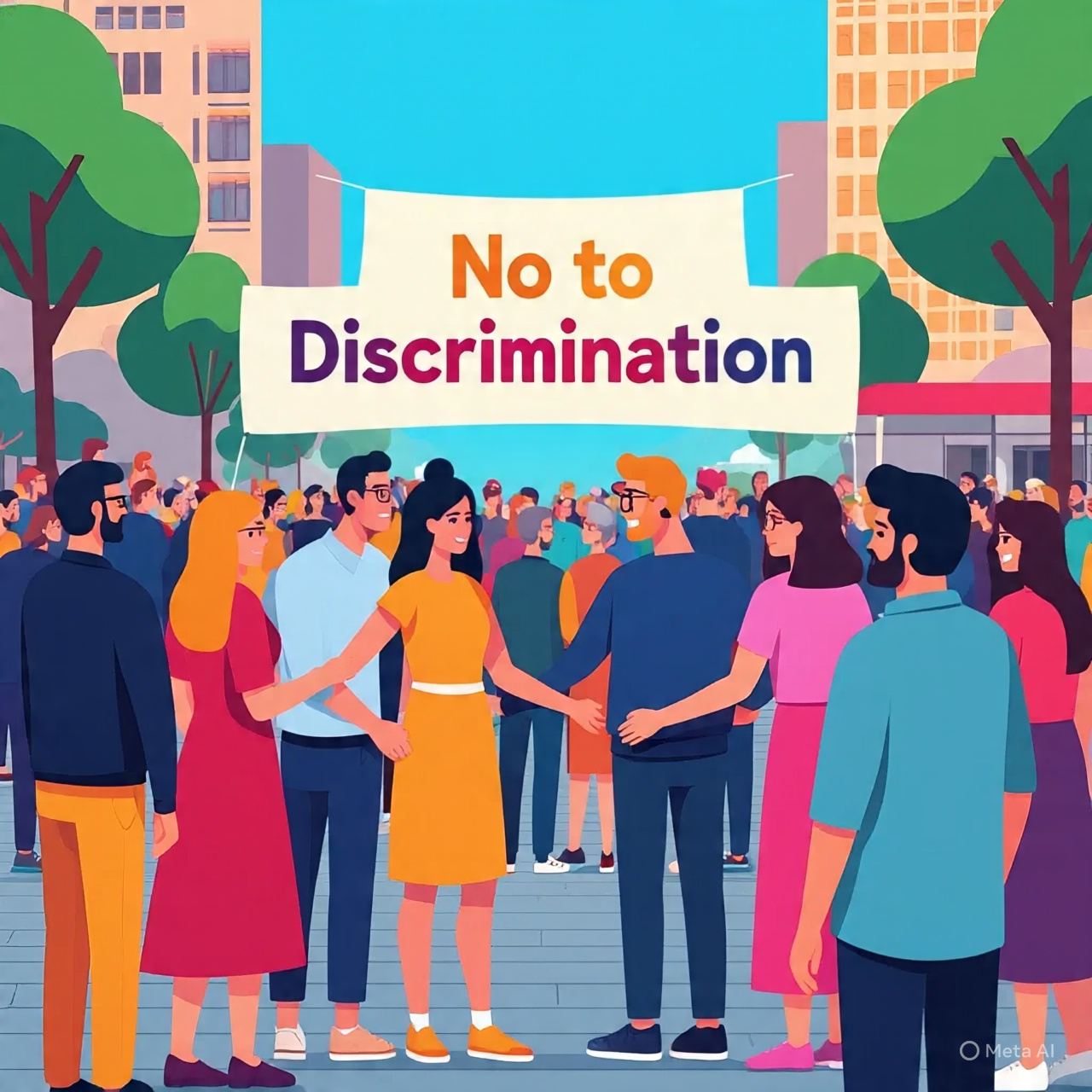
Discrimination is not a local challenge; it is a global one that is rife in every society. It is the unjust or prejudicial treatment of different categories of people or groups, especially on the grounds of differences, thereby treating them unfairly.
This is why UNAIDS created ‘Zero Discrimination Day’, which is observed on 1st March to promote equality, dignity, and inclusion for all people.
This day serves as a powerful reminder that discrimination, whether based on race, gender, religion, disability, health status, nationality, or social background, remains a major barrier to justice, development, and human rights across the world.
Across continents, millions of people continue to face unequal treatment in healthcare, education, employment, and access to justice.
Stigma persists against persons living with HIV; gender inequality is still the norm rather than the exception; racial injustice, xenophobia, and discrimination against persons with disabilities are still prevalent in many societies.
But why is Zero Discrimination Day important? Because without equality, true progress is impossible. Discrimination not only harms individuals but also weakens economies, fuels social unrest, and limits national growth. Inclusive societies, on the other hand, benefit from diverse perspectives, innovation, and stronger social cohesion.
Nigeria in the Global Conversation
As part of the global community, Nigeria reflects both the challenges and opportunities associated with diversity. With over 200 million people and hundreds of ethnic groups, it is one of the most culturally diverse nations in the world. But because discrimination manifests in various forms within the country, it continues to struggle and stagnate.
- Ethnic and tribal bias
- Religious intolerance
- Gender inequality
- Stigma against persons living with HIV/AIDS
- Discrimination against persons with disabilities
- Socioeconomic exclusion
- Tribal stereotypes/stigma
While Nigeria’s Constitution guarantees freedom from discrimination, the reality shows that more work remains to be done in order to translate legal protections into everyday experiences for citizens.
Zero Discrimination Day, therefore, resonates deeply in today’s Nigeria as a reminder that unity cannot thrive where prejudice exists, and development cannot flourish where opportunity is unequal.
It is the responsibility of Governments, Institutions, and Individuals, globally and locally, to eliminate discrimination by developing strong legal frameworks and enforcement to drive inclusive public policies that create equal access to healthcare, education, and employment.
Stakeholders must also amplify community awareness and advocacy activities that build responsible leadership and citizenry. Governments must emphasize and uphold anti-discrimination laws. Institutions must create safe and inclusive environments. Religious and traditional leaders must promote tolerance. Businesses must prioritize merit over bias.
But beyond policies and systems, change begins with individuals. Everyday actions challenging stereotypes, rejecting harmful language, and standing against injustice create cultural transformation.
A Shared Responsibility for a Fairer World
Zero Discrimination Day is not merely symbolic. It is a global movement and a personal commitment. Whether in Nigeria, Africa, Europe, Asia, or the Americas, the message remains universal: equality is a fundamental human right. When societies embrace inclusion:
- Productivity increases
- Innovation grows
- Social stability strengthens
- Human dignity is preserved
Discrimination anywhere threatens justice everywhere. A world free from discrimination is possible, “but only if we move from awareness to action.”
Zero discrimination is not just an international ideal. It is a collective responsibility.
James Nkoyomabasi & Nkirueka Onyeakwu
Abuja, Nigeria.