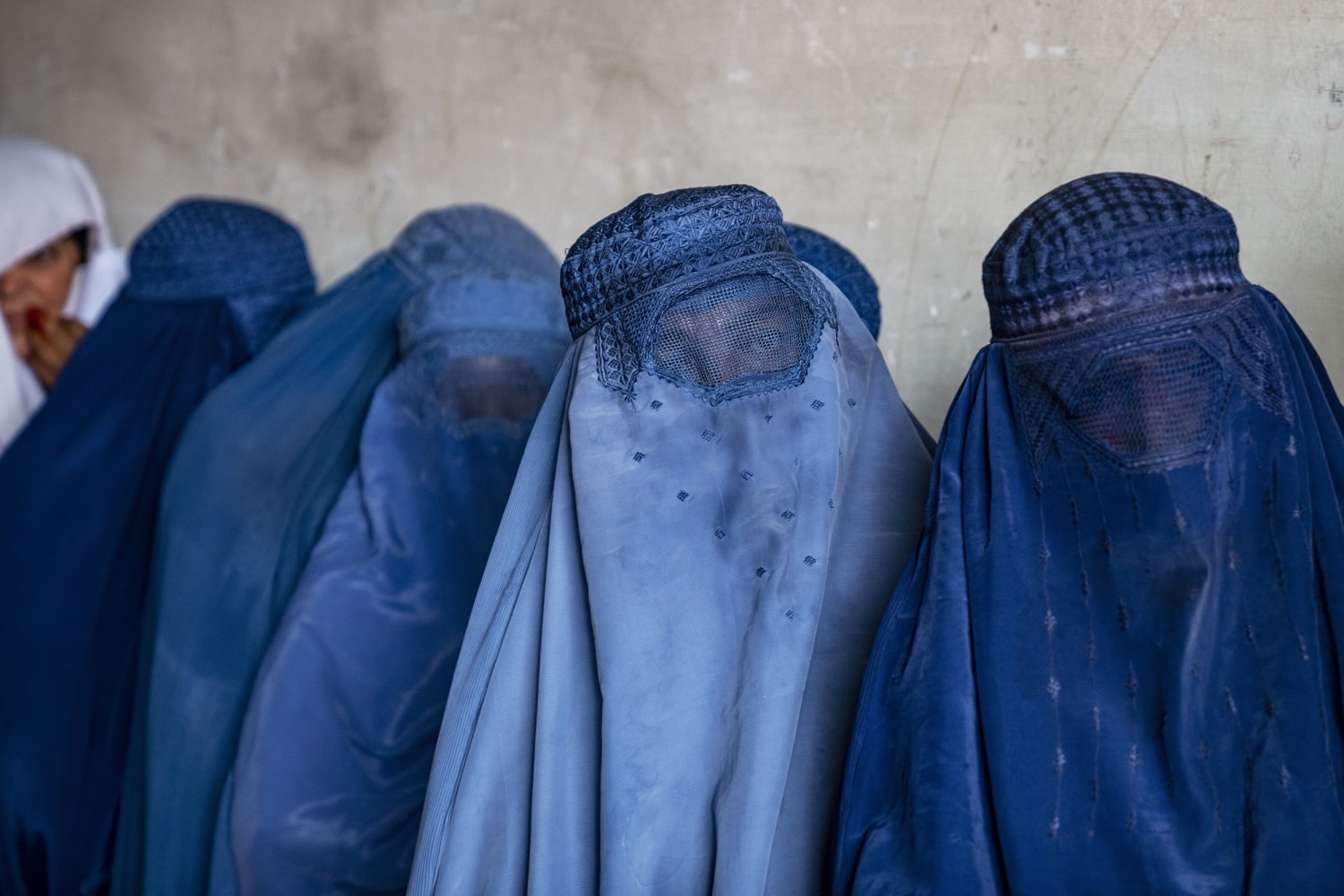
For millions of women in Afghanistan, life has quietly transformed into a daily struggle for survival, silence, and endurance. Behind closed doors and beneath the weight of political restrictions, poverty, and fear, countless women are living stories the world rarely sees.
Since the Taliban returned to power in 2021, Afghanistan has become one of the harshest places in the world to be a woman. Girls who once carried books to school now sit at home watching their futures disappear. Classrooms that once echoed with ambition and hope have fallen silent for millions of teenage girls banned from secondary schools and universities.
For many young women, education was more than learning. It was freedom, identity, and the promise of a different life. That promise has been stripped away.
Inside many Afghan homes, desperation has replaced stability. As unemployment spreads and the economy continues to collapse, families struggling to survive are making heartbreaking decisions. Some parents, unable to feed their children, marry off their daughters at very young ages in hopes of financial security. But for many girls, these marriages become prisons hidden behind household walls.
Farzana was one of them.
She was only eighteen years old when her life ended in Afghanistan’s western Ghor province. Married to a man in his fifties who already had two wives, Farzana reportedly suffered violence inside the home before her death. According to forensic examinations, her body showed signs of beatings and torture. Local sources believed she had been murdered.
Her story is not viewed by many as an isolated tragedy. Rights advocates and journalists inside Afghanistan say girls like Farzana are becoming victims of a system where poverty, forced marriage, and silence intersect. Families with little power often fear speaking against wealthy or influential people. Justice becomes distant when survival itself feels uncertain.
Even speaking about violence has become dangerous.
Journalists inside Afghanistan say fear now controls reporting. Media restrictions imposed by the Taliban have created an environment where many cases of abuse never reach public attention. Women suffer quietly, families remain silent, and entire tragedies disappear before they are ever documented.
“The Taliban have severely restricted journalists and the media, and no one dares to report on these cases,” one anonymous local journalist told Deutsche Welle.
For women trapped in abusive homes, escape has become nearly impossible. Restrictions on movement prevent many women from traveling freely without a male guardian. Shelters, support systems, and legal protections that once existed have weakened or disappeared entirely. In many areas, women cannot safely seek help from courts or authorities. Some cases are quietly settled through tribal mediation, where powerful families negotiate financial compensation while victims lose their voices completely.
At the same time, women are being erased from public life piece by piece. Many have lost jobs in education, government offices, journalism, and humanitarian work. Beauty salons, parks, gyms, and public spaces that once offered moments of normalcy have closed to women in several regions. Even the streets themselves have become spaces of anxiety and surveillance.
Beyond the visible restrictions lies another crisis that receives far less attention: emotional suffering.
Many Afghan women now describe living in deep isolation. Young girls who once dreamed of becoming doctors, teachers, or journalists spend years confined indoors with no clear future ahead. Mothers struggle to feed their families while carrying the fear of what awaits their daughters. Humanitarian organizations continue reporting rising levels of depression, hopelessness, trauma, and anxiety among Afghan women who feel forgotten by both their government and the world.
Healthcare has also begun collapsing around them. Because women face restrictions in education, the country is losing future female doctors and nurses at a time when many Afghan women cannot easily receive treatment from male healthcare workers. In remote communities, this creates life threatening consequences for pregnant women, mothers, and girls in need of urgent medical care.
Yet despite these conditions, Afghan women continue resisting in quiet but powerful ways.
Some operate underground schools for girls inside hidden rooms and private homes. Others continue learning online in secrecy. Female journalists, activists, and teachers continue documenting stories even while facing intimidation and threats. In a country determined to silence them, many Afghan women continue choosing courage every single day.
International organizations have repeatedly warned that the restrictions imposed on women in Afghanistan are not isolated policies, but part of a broader system of discrimination. The United Nations has stated that women and girls in Afghanistan are being “effectively erased from public life.” Human rights groups have also warned about rising violence, forced marriages, and what some experts describe as the growing risk of femicide.
But measuring the true scale of the crisis remains painfully difficult.
The question now is scale.
“When two women are killed in a small district within a few days,” the anonymous journalist told Deutsche Welle, “what will the annual number of femicide cases nationwide be?”
In today’s Afghanistan, the true scale of violence against women remains unknown not because it rarely happens, but because fear and silence continue burying countless stories before they are ever heard.
By Umm e Habiba, Pakistan