

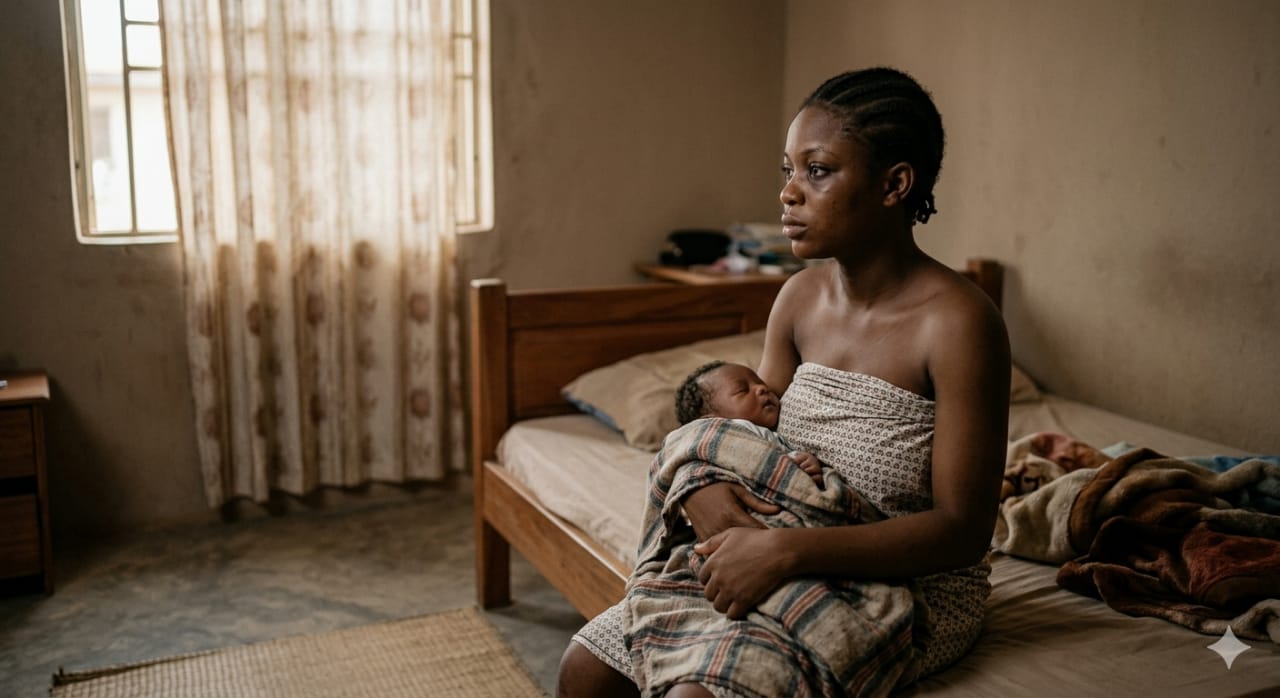
Postpartum depression is one of the most overlooked health conditions affecting women after childbirth. It remains widely misunderstood and often ignored.
Postpartum depression is a serious mental health condition that can develop after a woman gives birth. It goes beyond the temporary emotional changes commonly known as baby blues. Baby blues usually involve mild mood swings, sadness, or tiredness within the first days after delivery and typically resolve within two weeks. Postpartum depression is deeper, more persistent, and can significantly affect a woman’s emotional state, thinking patterns, and ability to function in daily life.
It is not weakness. It is not failure. It is not a lack of love for the child. It is a medical condition that requires understanding, care, and often professional treatment.
After childbirth, a woman’s body goes through intense physical and hormonal changes. Levels of estrogen and progesterone drop sharply. At the same time, she may be dealing with physical pain, exhaustion, sleep deprivation, and the emotional demands of caring for a newborn. These biological changes can affect brain chemistry and contribute to depression.
However, biology alone does not fully explain it.
Social expectations, emotional isolation, lack of support, financial pressure, traumatic birth experiences, and unrealistic ideas about motherhood all play a significant role. Many societies expect a woman to immediately feel joy after giving birth. Because of this expectation, emotional suffering during this period is often misunderstood or completely ignored.
A woman experiencing postpartum depression may show persistent sadness, loss of interest in activities she once enjoyed, difficulty bonding with her baby, overwhelming fatigue, irritability, anxiety, guilt, or feelings of worthlessness. In severe cases, she may experience thoughts of self harm or fear that she is incapable of caring for her child.
It is important to understand clearly that postpartum depression does not make a woman a bad mother. It means she is unwell and needs support.
Unfortunately, many women do not receive that support. Instead, their experiences are often dismissed, misinterpreted, or spiritualized. They are told “be strong,” “pray more,” or “others have gone through it.” While encouragement and faith can be helpful, they should never replace medical understanding or emotional care.
One of the most dangerous aspects of postpartum depression is silence. Many women hide their feelings because they fear judgment or shame. They do not want to be seen as weak or ungrateful. So they suffer quietly while trying to appear fine.
This silence deepens the condition and delays recovery.
It is important to know what postpartum depression really is and how it should be addressed.
First, awareness is essential. Families, partners, and communities must understand that postpartum depression is real, common, and treatable. It can affect any woman regardless of age, background, or social status.
Second, support is crucial. A new mother should not be left alone emotionally or physically. She needs help with rest, household tasks, and childcare. Most importantly, she needs people who listen without judgment.
Third, early recognition matters. If symptoms persist beyond two weeks after childbirth or begin to worsen, professional help should be sought. Doctors, psychologists, and trained health workers can provide proper diagnosis and treatment.
Treatment may include therapy, counseling, support groups, and in some cases, medication prescribed by a professional. With the right care, most women recover fully.
There are also things we should avoid doing.
We should not dismiss a woman’s emotional distress as normal tiredness or exaggeration. We should not pressure her to hide her feelings or tell her to simply be strong. We should not shame her for struggling. And we should not compare her experience to others in a way that invalidates her reality.
Most importantly, we should stop assuming that motherhood automatically protects a woman from mental health challenges.
Motherhood is a major life transition that requires care, patience, and emotional support, not silence and expectation.
Postpartum depression is treatable. But silence is dangerous.
What women need is not pressure to be strong. What they need is understanding, support, and recognition of their humanity beyond motherhood.
By Almustapha Bishir Jume