Some wounds never appear in hospital records. They leave no diagnosis in medical files, yet they shape an entire lifetime. They are not caused by disease or accident, but by the hands of those who believed they were protecting the children they loved.
For countless girls in parts of Africa, the journey into womanhood does not begin with celebration. It begins with pain—pain inflicted on their developing bodies in the hope of shielding them from sexual violence, harassment, or child marriage.
This is the story of one of those girls. Now a grown woman, she has chosen to break her silence so that others may never have to inherit it.
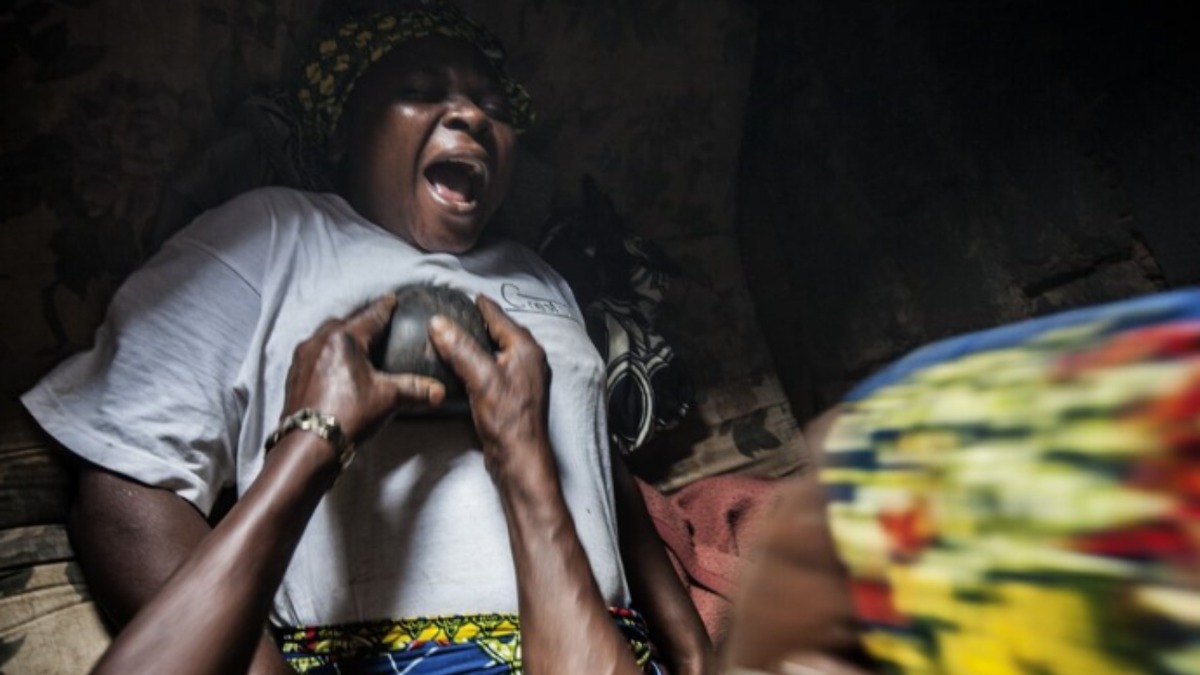
Lysra Akon was only nine years old when she underwent breast ironing, a harmful traditional practice intended to delay breast development.
“When I was nine years old, a painful practice was performed on me that I would not wish on my worst enemy. The practice was done because people believed it would protect girls.”
Those who carried out the practice believed they were safeguarding her future. They feared that once her breasts began to develop, men would begin to sexualize her. Rather than confronting the attitudes of those men, they attempted to change the body of a child.
Protection never came. The pain did.
“For me, the physical effects have lasted my entire life. My breasts never developed naturally. I believe the process obstructed their growth. I still have burns and scars on my skin from what was done. These are scars that never disappeared. They are scars I will live with forever.”
Years later, motherhood revealed another painful consequence.
“When I had my two children, I struggled to breastfeed them because I did not produce enough milk. I had to rely on formula because they were losing weight. As a mother, that was extremely painful.”
But the deepest wounds were not merely physical.
“Psychologically, it affected my self-esteem. I often felt that if this had not been done to me, I might have felt like any other woman. My confidence was very low.”
Growing up, there was no counselling, no psychological support, and no safe space to process what had happened.
“In my culture, we did not talk about these things. I simply learnt to live with it. Some of my relatives experienced the same thing, and together we tried to cope.”
Even today, the effects remain.
“I still feel uncomfortable about my body. I wear a different bra size just to make myself feel more normal. Whenever I enter a relationship, I feel I have to explain what happened to my breasts. It has affected my relationships because I often feel like I am not a ‘normal’ woman.”
Perhaps the most painful consequence was the emotional distance it created between her and her mother.
“She was the one who carried out the practice while my breasts were developing. I know she believed she was protecting me, but it still hurts deeply. It was never my choice.”
Reflecting on her experience, Lysra believes practices like breast ironing survive not because parents intend cruelty, but because fear and misinformation are passed from one generation to another.
“Parents need to understand that children should be allowed to grow naturally and make their own choices. Otherwise, they may carry pain and resentment for the rest of their lives.”
Rather than allowing that pain to define her, Lysra transformed it into purpose.
She chose to study nursing so she could educate families and support girls who might otherwise suffer in silence.
“I wanted to help others and provide information that many people never receive. There is a serious lack of awareness about practices like this and their long-term consequences.”
Today, she speaks publicly because silence protects harmful traditions far more than it protects children.
“No child should have their body changed without their consent. These are scars we live with forever.”
Beyond One Survivor
Lysra’s experience reflects a broader human rights issue.
International agreements, including the United Nations Convention on the Rights of the Child and the Convention on the Elimination of All Forms of Discrimination Against Women, recognize harmful practices against girls as violations of fundamental rights.
In Nigeria, breast ironing falls under the Violence Against Persons (Prohibition) Act, which criminalizes harmful traditional practices and provides penalties for offenders.
For gender advocate Dr Josephine Effah-Chukwuma, the practice represents a painful contradiction.
Instead of holding perpetrators of abuse accountable, society places the burden on girls’ bodies.
“Girls are being blamed for growing breasts instead of society confronting the men who prey on children. Girls should be given opportunities to learn, dream, and build their futures—not be harmed in the name of protection.”
She argues that keeping girls in school and protecting their education remains one of the strongest safeguards against child marriage.
Development consultant Sumbo Oladipo echoes that concern, describing breast ironing as a desperate attempt to prevent one tragedy by creating another.
Mental health experts warn that the psychological damage often lasts long after physical injuries heal. Shame, poor body image, anxiety, depression, and damaged self-esteem are among the long-term consequences many survivors experience.
Clinical psychologist Adelowo Adesina emphasises the urgent need for counselling services and widespread public education, while psychiatrist Dr Lizzy Etuk believes awareness campaigns must begin within homes, schools, religious institutions, and community leadership structures.
She also stresses that girls deserve accurate education about their bodies before fear and misinformation shape their understanding.
Medical experts add that although breast ironing has not been directly linked to breast cancer, its physical and emotional consequences remain profound and preventable.
Researchers likewise continue to call for stronger legal protections, better healthcare training, survivor support services, and stricter enforcement of laws addressing child marriage and gender-based violence—the very fears that often drive families toward this harmful practice.
A Childhood That Should Never Be Lost
At its heart, breast ironing is not a story about tradition.
It is a story about childhood.
It asks what happens when fear becomes stronger than protection, when silence becomes stronger than truth, and when the body of a little girl becomes the battleground for society’s failures.
For Lysra, the scars remain.
By telling her story, she hopes they will not become another child’s future.
No child should have to sacrifice her body in order to feel safe. The responsibility for protecting girls has never belonged on their bodies. It belongs to families, communities, institutions, and societies willing to defend their rights, dignity, and future.
By UMM E HABIBA (Punjab, Pakistan)