There is a kind of courage that rarely announces itself with raised voices or grand gestures. It appears instead in quiet determination—in a young economist walking into rooms filled with seasoned politicians, armed not with slogans but with expertise, patience and the conviction that competence can restore hope.
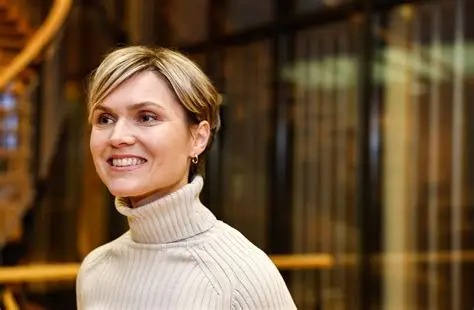
That is the story of Kristrún Frostadóttir, Iceland’s youngest prime minister.
Born in Reykjavík on May 12, 1988, Frostadóttir grew up in a family shaped by public service and intellectual curiosity. Her father was an ethnographer who studied human societies, while her mother was a physician dedicated to caring for others. From one came an interest in how societies function; from the other, a practical instinct to solve problems.
Her childhood coincided with the presidency of Vigdís Finnbogadóttir, the world’s first democratically elected female head of state. For Frostadóttir, the idea of a woman leading a nation was never extraordinary—it was simply part of Iceland’s political landscape.
Her path to leadership began not through activism or political theatre, but through education. She earned a bachelor’s degree in economics from the University of Iceland in 2011 before pursuing graduate studies in the United States. She completed a master’s degree in economics at Boston University in 2014 and later earned another master’s degree in global affairs from Yale University’s Jackson School in 2016, years she has described as formative.
Before entering politics, Frostadóttir built her career in finance. Between 2015 and 2017, she worked as an analyst at Morgan Stanley in New York and London. She later returned to Iceland, serving as chief economist at Kvika Bank from 2018 to 2022, where she became known for her careful analysis of economic policy and inflation.
Politics came later.
In 2021, she won election to Iceland’s parliament, the Althing, representing Reykjavík South under the Social Democratic Alliance—a party that had experienced years of declining electoral fortunes.
Just a year later, she became the party’s leader after securing overwhelming support from party members. Rather than seeking quick political victories, she focused on rebuilding public confidence, consistently highlighting rising housing costs, inflation and the pressures facing ordinary Icelandic families.
Her steady approach paid off.
In the snap parliamentary election of November 2024, the Social Democratic Alliance increased its representation from six to fifteen seats, recording its strongest performance in more than a decade. Following coalition negotiations, Frostadóttir was sworn in as prime minister on December 21, 2024, becoming the youngest person ever to hold the office in Iceland.
She assumed office at a challenging moment. Inflation remained high, housing affordability had become a growing concern, and questions about Iceland’s economic resilience and role in an increasingly strategic Arctic region were gaining prominence.
Her government has prioritized stabilizing the economy while addressing housing and cost-of-living pressures. Internationally, Frostadóttir has also sought to project Iceland’s voice on global issues. During a meeting with U.S. President Donald Trump in June 2025, she called for a ceasefire in Gaza, demonstrating that even smaller nations can contribute to international diplomacy.
Domestically, Iceland has also faced growing debates over immigration, with protests emerging outside government offices in 2025. Frostadóttir has warned that when governments fail to address people’s concerns, political extremism can find fertile ground—a reflection of her belief that effective governance is essential to sustaining public trust.
Away from politics, she is also a mother of two, balancing public leadership with family life.
Frostadóttir’s rise is not defined by dramatic upheaval or political spectacle. It is the story of a leader who has built her career on expertise, patience and persistence. In an era often dominated by polarisation and personality politics, her leadership suggests that competence, consistency and quiet resolve can still inspire confidence.
Whether history ultimately judges her tenure as transformative remains to be seen. But her journey has already challenged assumptions about what modern political leadership can look like—and who can embody it.
Umm e Habiba, Pakistan.