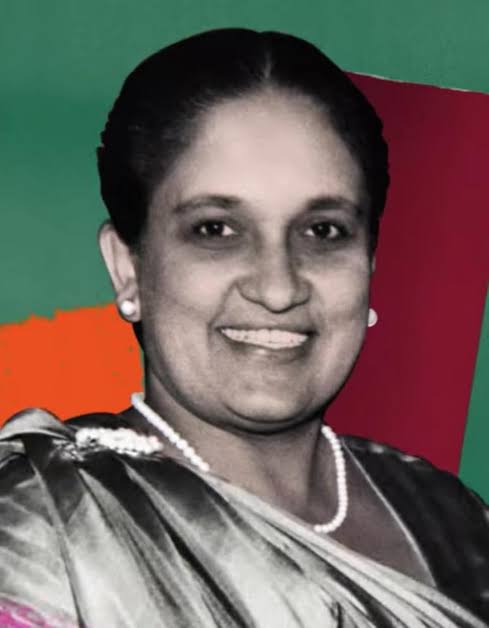
In moments when nations face uncertainty and shifting power, Sirimavo Bandaranaike emerged as a figure shaped by resolve, quiet persistence, and an unusual kind of political courage. Known widely as the world’s first female Prime Minister, she didn’t simply inherit a role.
She rebuilt a country’s confidence while navigating deep political storms, earning a reputation as a steady, determined leader in a male-dominated landscape.
Her journey is one of responsibility, resilience, and an instinct for service that rarely wavered.
Born on April 17, 1916, in Ratnapura, Sri Lanka, Sirimavo grew up in a family deeply connected to public life. Her father, Barnes Ratwatte Dissawa, was a prominent figure in the region, and her mother, Rosalind Mahawelatenne Kumarihamy, infused in her a sense of discipline and care for community.
These early influences lingered, shaping the poise and conviction she later brought into national leadership.
Sirimavo was educated at St. Bridget’s Convent in Colombo, where she developed an early appreciation for social welfare and civic duty. Before entering politics, she devoted herself to community service, especially in health, women’s affairs, and rural development.
Her shift into national leadership came unexpectedly after the assassination of her husband, Prime Minister S. W. R. D. Bandaranaike, in 1959. It was a moment that could have broken her, but instead, it pushed her into a path she hadn’t planned but embraced fully.
In 1960, she was elected Prime Minister of Ceylon (now Sri Lanka), becoming the first woman anywhere to hold that office. Her leadership style was calm and deliberate, and she carried the nation through complex economic and social transitions. She served three terms in total, guiding the country through constitutional changes, economic restructuring, and the early tensions that later shaped Sri Lanka’s political climate.
Her governance wasn’t easy, and the challenges she faced were immense. Still, she was recognized for her commitment to national sovereignty, social welfare, and the protection of rural communities. She also played a significant role in the Non-Aligned Movement, positioning Sri Lanka on the global stage with a voice that was firm yet thoughtful.
Sirimavo’s later years in office were marked by both hardship and resolve.
In 1980, she was stripped of her civil rights, a blow that would have silenced many. Yet she returned to public life in 1994 as a Senior Minister in her daughter Chandrika Kumaratunga’s government. Her resilience through political upheaval became part of her legacy, a quiet reminder that leadership is often forged in endurance rather than acclaim.
She died on October 10, 2000, shortly after casting her vote in the parliamentary elections.
Even in her final hours, she was doing what she had done for decades: showing up for her country.
Sirimavo Bandaranaike’s life remains a testament to what is possible when courage meets responsibility.
Her story continues to inspire women across the world who choose to step into leadership not because it is easy, but because it is necessary.
Praise Eberechi Azubuke
Abuja, Nigeria