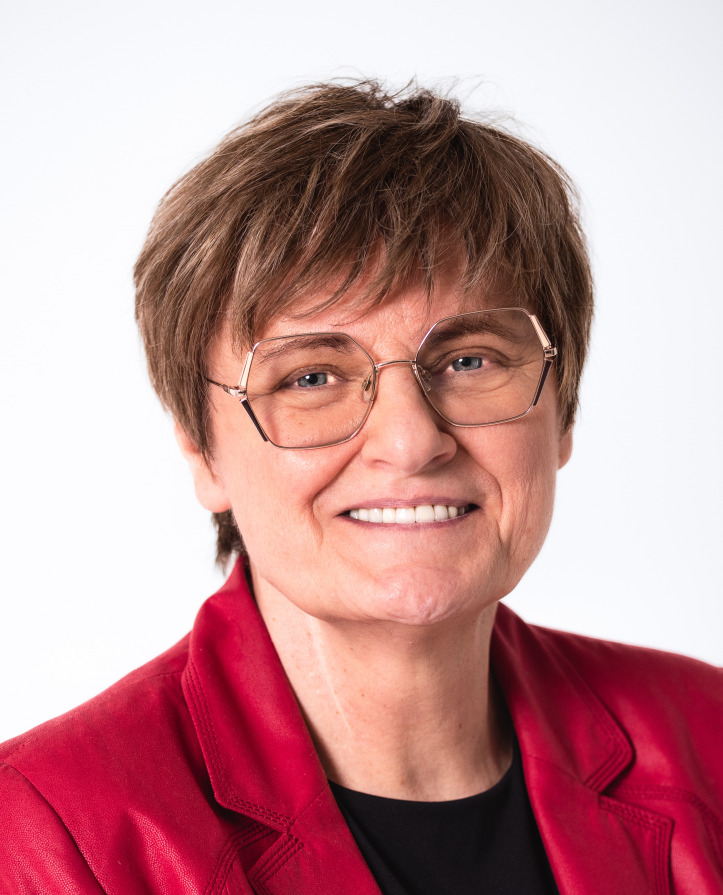
In 1985, a young Hungarian biochemist, her husband and two-year-old daughter board a plane to the United States of America.
They had only $900 hidden inside the child’s teddy bear; everything they own, smuggled out of communist Hungary after selling their car on the black market.
Her name is Katalin Karikó. She was born on 17 January 1955 Szolnok, Hungary. By age thirty, already had a PhD in Biochemistry. And she believed, almost alone, that messenger RNA could one day teach human cells how to fight disease.
She moved to Philadelphia with her family and took up a postdoctoral fellowship at Temple University not knowing that four decades of rejection lie ahead. Or that her work will eventually save millions of lives.
Karikó took a research position at Temple University in Philadelphia but ends up clashing with her supervisor four years later who eventually reports her to immigration authorities, claiming she is in the country illegally.
She had to hire a lawyer to avoid deportation. had her job offer from Johns Hopkins is withdrawn nearly ending her career before it has properly begun.
She however finds another position at the University of Pennsylvania and continues working on mRNA. But no one wants to fund it. In academic science, grants are survival without which you do not exist. But Katalin’s grant after grant proposal is rejected.
Most researchers avoid mRNA altogether. It degrades easily. Experiments fail and when Karikó argues that the problem is contamination, not the molecule, no one listens.
University of Pennsylvania gives her an ultimatum in 1995, abandon mRNA or accept a demotion off the tenure track. This is at a time when she is diagnosed with cancer. Her husband is stuck in Hungary because of visa problems. The future she worked hard towards is slipping away. She chooses the demotion.
Her salary drops below that of her own technician. She is demoted again; and again. Four times in total. She begins to doubt herself, to wonder whether she simply is not good enough. She considers leaving science altogether.
Then, in 1997, she meets Drew Weissman at a photocopier. They start talking. Weissman is trying to develop a HIV vaccine. Karikó tells him she can make any mRNA he needs. He listens. That alone sets him apart.
For years, they work in near invisibility. No funding. No prestige. No interest from major journals. They keep going anyway. In 2005, they make the breakthrough. They discover how to modify mRNA so it does not trigger the immune system to destroy it. One small change. One decisive insight. Suddenly, mRNA becomes usable for vaccines.
They submit the paper. Nature rejects it. Science rejects it. It is eventually published in Immunity and largely ignored.
In 2013, Karikó is pushed out of Penn. She is fifty-eight years old. No American university wants her. She takes a job at a small German biotech company called BioNTech. For years, she commutes between countries, still running experiments herself, still believing.
Then 2020 arrives.
A novel coronavirus spreads across the world. Millions die. Governments panic. The world needs a vaccine faster than any vaccine has ever been made. And the technology everyone dismissed becomes the solution.
The Pfizer-BioNTech and Moderna COVID-19 vaccines are built on the mRNA platform Karikó spent her life refining. The first mRNA vaccines ever approved for human use. They save millions of lives.
When she learns the trials worked, she celebrates alone by eating an entire box of chocolate-covered peanuts.
On October 2, 2023, Katalin Karikó and Drew Weissman are awarded the Nobel Prize in Physiology or Medicine.
She is not a professor. She never climbed the ladder she was told mattered. She was demoted, dismissed, nearly deported, and repeatedly told her work was worthless.
When asked how she endured it, her answer is simple. She did not crave recognition. She felt successful because she was doing the work she believed in. She believed rejection did not mean she was wrong. It meant she was early.
She kept going not because she expected a Nobel Prize, but because the science mattered. And when the world needed it most, it was ready.
What made Kariko remarkable is not that she won the noble prize in medicine. But that she did not stop even though she was told to. She did not stop even when she carried everything she owned in a teddy bear. And the world survived because of it.
Hawwah Gambo
Abuja, Nigeria.