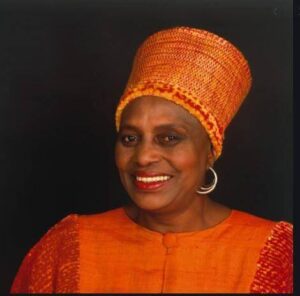


Some people inherit a legacy. Others choose to build one through vision, discipline, and service.
For Hannatu Musawa, the journey reflects both inheritance and intention. Long before she became a recognizable public figure, she was shaped by a strong foundation of education, identity, and civic responsibility. What distinguishes her story is not only where she came from, but how she has chosen to engage with the opportunities and responsibilities before her.
Her early life was marked by curiosity and a deep respect for learning. She pursued legal studies, building a strong understanding of governance, policy, and public affairs. For her, education was not merely a personal achievement but a tool for engagement with society. It became the foundation for a career shaped by public service and advocacy.
Over time, she developed a professional path that moved across law, writing, and civic engagement. She established herself as a lawyer, author, and public commentator, contributing to conversations on governance and national development. Her career reflects a consistent belief that leadership is not confined to office or title, but also expressed through voice, ideas, and responsibility.
One of the defining features of her journey is versatility. She has worked across multiple fields, including law, literature, and public policy. This breadth reflects a broader message about modern leadership, particularly for women, that identity does not have to be limited to a single professional category. A person can be analytical and creative, disciplined and expressive, ambitious and service oriented at the same time.
As her influence expanded, so did her focus on culture and national development. In a country like Nigeria, where cultural expression is both rich and globally influential, she has emphasized the importance of the creative sector as a driver of economic growth and national identity. Music, film, fashion, literature, and art are not only cultural expressions but also economic opportunities capable of transforming lives.
In her role as a national figure responsible for culture and the creative economy, she has been part of efforts aimed at strengthening these industries and expanding opportunities for young people. This includes supporting creative talent, encouraging cultural exchange, and promoting Nigeria’s artistic identity on global platforms.
Her approach reflects a belief that culture is not secondary to development. It is central to it. Behind every artist, filmmaker, and writer is not only creativity but also potential for employment, innovation, and global connection.
Beyond public service, her story also includes a strong dimension of social responsibility. She has participated in initiatives focused on community support and humanitarian engagement. This reflects a broader philosophy that leadership gains meaning when it is connected to service and impact beyond personal advancement.
Like many women in public life, her journey has unfolded in spaces that come with scrutiny and high expectations. Public leadership often demands resilience, especially for women, who are frequently evaluated through stricter standards and wider public judgment. Despite these realities, her career reflects persistence and a continued focus on contribution.
Her story offers several lessons for younger generations. Education remains a foundation for opportunity. Professional paths are not always linear. And meaningful success is not only defined by personal achievement but also by social contribution and impact.
At its core, her journey reflects a belief in possibility. It represents a generation of Nigerian women who are shaping public life through service, ideas, and institutional engagement rather than visibility alone.
When viewed as a whole, her legacy is still unfolding. It is defined not only by positions held, but also by the broader effort to strengthen culture, expand opportunity, and support national development through the creative economy.
That is what makes her story significant. It is not only about personal advancement, but about building systems and spaces where others can thrive.
In that sense, Hannatu Musawa represents a form of leadership rooted in culture, responsibility, and long term vision.