

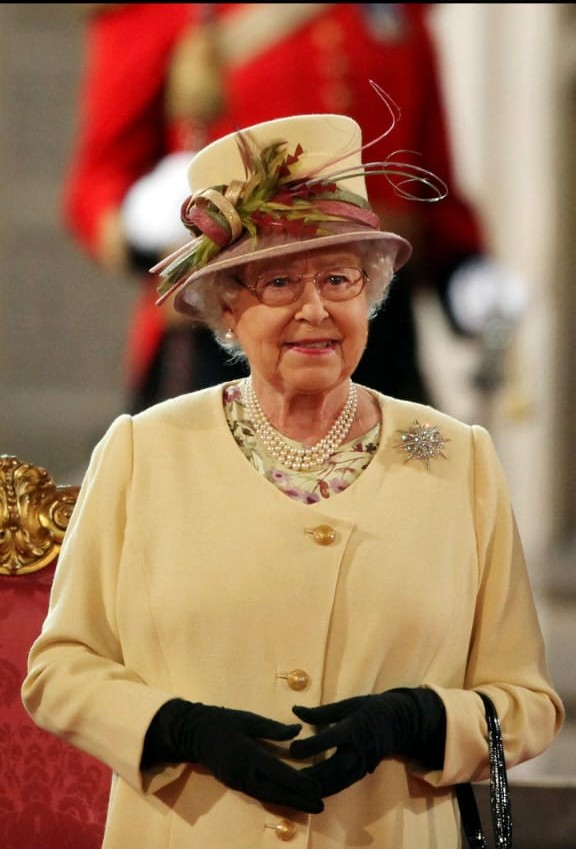
Few women have lived through as much history as Queen Elizabeth II. Her seventy-year reign witnessed war, recovery, political change, technological advancement, and shifting global power. Through it all, she remained a steady presence, known for duty, discipline, and an unwavering sense of responsibility.
Elizabeth Alexandra Mary Windsor was born on April 21, 1926, in London, England. At the time of her birth, she was not expected to become queen. Her father, the Duke of York, was the second son of King George V, and the throne was expected to pass to another branch of the royal family.
Her early life was shaped by privacy, structure, and preparation for a future that seemed far away. That future changed in 1936 when her uncle, King Edward VIII, abdicated the throne to marry Wallis Simpson. The decision shocked the British monarchy and changed the line of succession. Elizabeth’s father became King George VI, and ten-year-old Elizabeth suddenly became heir presumptive to the throne. From that moment, her life took on a different weight.
She received a careful education focused on history, constitutional law, languages, and public duty. Her upbringing was designed not for personal ambition but for responsibility. Those close to her described her as composed, observant, and serious from a young age, with a strong awareness of expectation.
When World War II broke out, Britain faced hardship and uncertainty. Like many young people of her generation, Elizabeth looked for a way to contribute. In 1945, she joined the Auxiliary Territorial Service. There, she trained as a driver and mechanic, learning practical skills and experiencing service beyond palace walls. It was a rare moment in history: a future queen working alongside ordinary citizens during wartime.
In 1947, she married Prince Philip, Duke of Edinburgh. Their marriage marked the beginning of a long partnership that would last more than seven decades. Together, they built a family while preparing for the responsibilities of the crown.
In February 1952, while on a royal tour in Kenya, Elizabeth received the news of her father’s death. At twenty-five years old, she returned to Britain as Queen Elizabeth II. Her coronation took place on June 2, 1953, at Westminster Abbey and was watched by millions around the world. It marked the beginning of a reign that would become the longest in British history.
Her time as queen covered a period of major global transformation. She witnessed the end of the British Empire and the rise of the Commonwealth as an association of independent nations. She saw the Cold War, the expansion of the European Union, and rapid advancements in science, medicine, and communication. Throughout these changes, her role remained rooted in continuity.
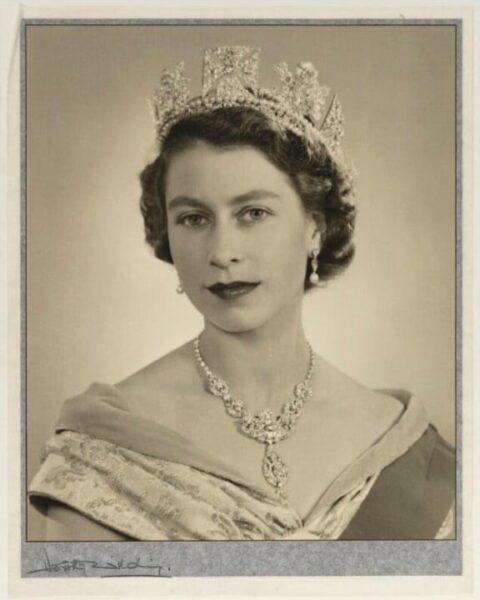
She worked with more than a dozen British prime ministers, beginning with Winston Churchill and continuing through successive generations of leadership. While she did not govern politically, her role required consistency, discretion, and presence. She represented stability during times of political uncertainty and national change.
Her reign also included major public milestones. In 2002, she marked her Golden Jubilee, celebrating fifty years on the throne. In 2012, she reached her Diamond Jubilee, sixty years of service. In 2022, she became the first British monarch to celebrate a Platinum Jubilee, marking seventy years as Queen.
Like any public figure with such a long life in service, she faced challenges. The royal family experienced moments of public scrutiny, criticism, and internal difficulty. Through these periods, she maintained a reserved and composed approach, choosing duty over public emotion.
Her personal qualities were widely recognized. She was known for her discipline, sense of humor, and ability to remain calm under pressure. She valued consistency and service above personal attention. Her leadership style was quiet but firm, built on presence rather than persuasion.
Even in her later years, she continued to carry out official duties despite declining health. Her commitment remained visible until the final months of her life. On September 8, 2022, Queen Elizabeth II passed away at Balmoral Castle at the age of ninety-six. Her death marked the end of an era, and tributes came from across the world.
Queen Elizabeth II’s life was not defined by struggle in the traditional sense, but by responsibility. She did not rise from hardship or obscurity; instead, she inherited a role and dedicated her entire life to fulfilling it with consistency and discipline. Her story is one of duty carried across generations and change.
Today, she is remembered as a symbol of stability in a changing world. Her reign demonstrated that leadership is not always about power or visibility, but about service, patience, and endurance. Her legacy continues to shape how history remembers the modern monarchy.
She remains a figure defined not only by the crown she wore, but by the life of service she lived.
By Rukayya Muhammad Adam