In the heart of the North, many children continue to battle one of the country’s deadliest yet preventable diseases, malaria.
Across Northern Nigeria, children face preventable health crises fueled by poor sanitation, malaria, and limited healthcare access. This story from Kano State reveals why empowering communities with health education is key to saving young lives.
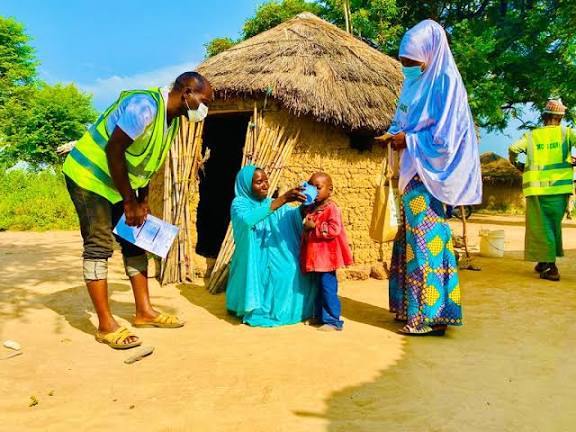
As a youth corps member and Training and Technology Assistant (TTA) under the National Malaria Elimination Program (NMEP) in Kano state, I witnessed how deeply this disease and other health challenges have taken root among rural communities.
In several underserved settlements, healthcare facilities were either too far away, dilapidated or non-existent. Children under the age of five, the most vulnerable to malaria, lived in conditions that made them easy targets for the disease.
Many families share cramped houses with poor ventilation. Open drainages clogged with refuse ran across verandahs and corridors. Clean water was scarce with the environment itself seeming to work against their survival.
Our mission was to roll back malaria (RBM) through dispensing Sulfadoxine-pyrimethamine and amodiaquine (SPAQ) and ensure that children aged three to fifty-nine months received the preventive treatment through the Seasonal Malaria Chemoprevention (SMC) program.
Yet, as I worked with local health teams to distribute medicines and track coverage, one question kept troubling me:
How could the “Roll Back Malaria” goal succeed in communities where people lacked even basic knowledge of sanitation and hygiene?
The challenge went far beyond medical distribution. It became clear that effective malaria control depends on more than just medication. It requires education, community engagement, and environmental reform.
Parents needed to understand why stagnant water breeds mosquitoes, why proper waste disposal matters, and how simple hygiene practices could protect their children’s lives. Without that knowledge, progress remained fragile.
Malaria is not the only health issue confronting children in Northern Nigeria. Malnutrition, poor sanitation, limited access to clean water, and low immunization rates continue to threaten child survival.
According to the National Demographic and Health Survey, northern regions record the highest rates of child mortality in the country. Poverty, distance from healthcare centers, and cultural barriers often make matters worse. For many families, illness is not just a medical problem but a social and economic one.
There is an urgent need for health promotion programs that go beyond curative care. Health education should be consciously integrated into community life through schools, local gatherings, and women’s groups. Environmental health campaigns must focus on cleaning up drainages, improving access to safe water, and promoting proper waste management.
These are practical, low-cost interventions that can make a lasting difference if communities are empowered to lead them.
Government agencies and partners like:
- The Federal Ministry of Health,
- National Malaria Elimination Program (NMEP),
- Kano State of Nigeria Ministry of Health (KSNMH),
- Society for Family Health (SFH) and
- Catholic Relief Services(CRS)
Collectively have made commendable efforts through initiatives such as the distribution of Insecticidal Treated Nets (ITN) and Seasonal Malaria Chemoprevention (SMC). But to sustain these gains, policies must link disease prevention to social reform.
When people are educated and given the resources to maintain cleaner environments, the burden of preventable diseases among children will drastically decline.
Health is a human right, and no child should have to fight for survival because of the environment they were born into.
The story of Northern Nigeria’s children is not one of helplessness but of untapped potential waiting for the right investment in education, health systems, and community participation.
Every child deserves to grow up healthy, to play without fear of disease, to dream without limits. Ensuring this future requires policymakers and parents to recognize that the fight against malaria and poor health begins not in hospitals, but in our homes, schools, and neighborhoods.
Praise Eberechi Azubuke
Abuja, Nigeria.