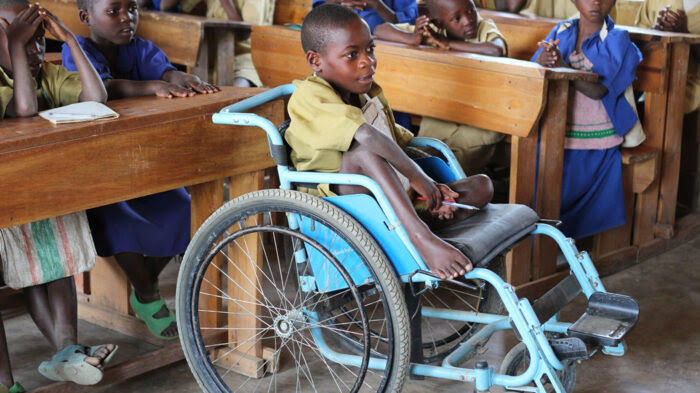
More than 600 million women and girls currently live within 50 kilometres of an active conflict zone, exposing them to the destruction, displacement and insecurity that accompany war. Conflict does not only destroy homes and livelihoods. It can also produce disability on a massive scale while increasing exposure to violence, injury and the loss of access to essential services.
That reality helps explain why a new global report argues that disability can no longer remain on the margins of conversations about democracy and gender equality.
The report, published by Women Enabled International (WEI), examines the erosion of democratic and human rights systems through the experiences and perspectives of feminists with disabilities. Titled 2026 Trend Report: Disability is a Gender Issue, it presents itself as the first global analysis of these trends from the perspectives of feminist disabled leaders.
WEI Executive Director Maryangel García-Ramos said the intersection of disability with other forms of inequality must be reflected in how movements and institutions respond to today’s global challenges.
“Today more than ever, everything is a race, gender, AND disability issue,” she said.
For García-Ramos, recognizing that intersection is not enough without the resources to support the people leading the work.
“Disability cuts across every issue we care about and our actions must reflect that reality. The time to center, resource, and support feminist disabled leaders is NOW,” she said.
WEI’s report documents how disabled feminist leaders are already responding to the challenges they face. They are monitoring human rights violations, defending reproductive rights, engaging with international human rights mechanisms and building alliances across movements.
Their experiences, the report argues, place them at the intersection of multiple crises while also positioning them as important actors in efforts to resist the erosion of rights.
Drawing on a 2025 survey of feminist disabled leaders and testimonies from advocates across Africa, Asia, Latin America, Europe and North America, the report identifies six major trends shaping the current environment for disability and gender rights advocacy.
One of the trends is the weakening of democratic and human rights institutions. According to the report, systems established to protect fundamental freedoms are being weakened or dismantled in different parts of the world.
The report also highlights concerns about institutions and rights frameworks being used in ways that undermine other human rights protections. It points to instances where disability rights language and international institutions are invoked in efforts to challenge LGBTQ+ protections and other advances in human rights.
Resourcing is another major concern.
Global military expenditure increased by 9.4 per cent in 2024, according to figures cited by the report, raising concerns about resources being diverted away from programmes supporting gender equality and disability rights.
At the same time, progress on gender equality has stalled or reversed in one in four countries over the past five years, according to the report. For women with disabilities, such setbacks compound existing barriers created by the intersection of gender and disability discrimination.
The report also examines the growing pressure on advocacy itself.
In some settings, organisations working on gender and disability rights are portrayed as agents of foreign interference. WEI says such narratives can be used to challenge gender rights and restrict access to reproductive healthcare, including abortion, sometimes through arguments presented as being in the interests of people with disabilities.
These developments are taking place amid a broader decline in civic and political freedoms.
The report states that global freedom has declined for 20 consecutive years and that only seven per cent of the world’s population lives in countries where fundamental freedoms are broadly respected.
Despite the scale of these challenges, women with disabilities remain underrepresented in mainstream discussions about democracy, human rights and gender equality.
Approximately one in five women globally lives with a disability, according to the report, meaning that disability is a significant part of the lived experience of women around the world. Their perspectives, however, are still frequently absent from policy discussions and advocacy spaces addressing the very issues that affect them.
WEI concludes the report with six recommendations directed at funders, policymakers and civil society organisations. At the centre of the recommendations is a call for greater investment in the leadership of women with disabilities and for their meaningful inclusion in efforts to protect democratic institutions, advance gender equality and defend human rights.
The report’s central argument is that disability cannot be treated as a separate issue within the broader struggle for equality.
For millions of women and girls, disability shapes their experiences of discrimination, conflict, reproductive rights, political participation and access to justice.
As democratic freedoms come under pressure in different parts of the world, WEI argues that women with disabilities must be recognised not only as people affected by these developments, but also as leaders with an essential role in responding to them.
By Umm e Habiba, Pakistan