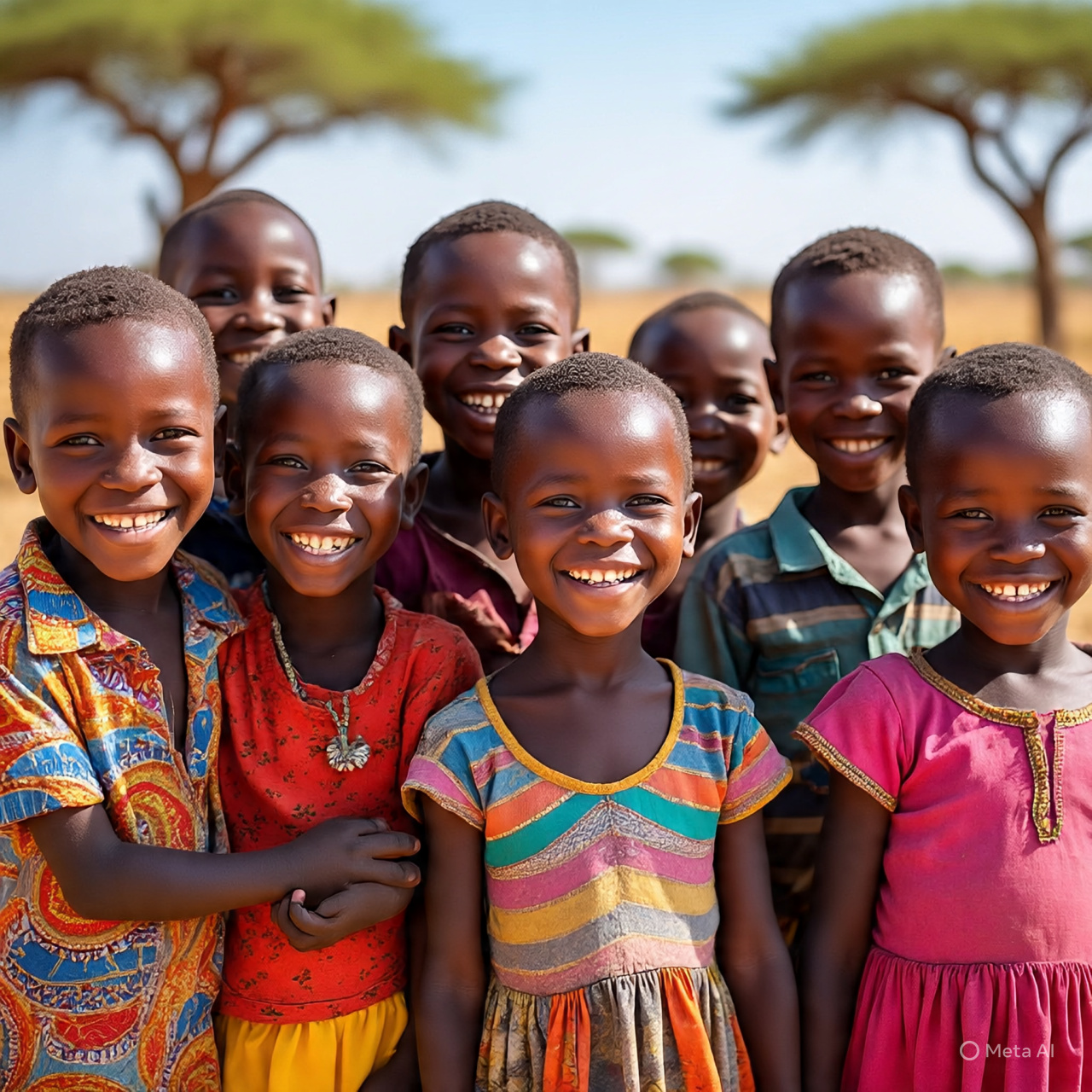
Every November 20th, the world pauses to honor its youngest citizens; CHILDREN
World Children’s Day may come with colorful posters, cheerful school activities, and hopeful speeches, but beneath the celebration lies a deeper truth:
Our children are not just the future — they are the present; fully human, deserving of dignity, safety, love, and opportunity.
However, from the bustling streets of Lagos to the classrooms of Nairobi, refugee camps in Syria to quiet villages in India, the world’s children face different realities that shape who they become.
While some have access to education, healthcare, and secure homes. Others grow up navigating fear, hunger, child labor, displacement, or discrimination.
Yet everywhere, children share something powerful: DREAMS.
This day, is designed to reminds us of our shared responsibility to protect and nurture those dreams.
Children’s Rights Are Universal — Not A Privilege
The UN Convention on the Rights of the Child outlines rights that belong to every child, no matter where they are born:
- The right to survival
- The right to develop physically and mentally
- The right to protection from harm
- The right to participate and be heard
These rights apply equally to every child; whether in Brazil, Kenya, Nigeria, Ukraine or Canada.
But in reality, many children across the world still struggle to access even the simplest parts of these rights. Millions are out of school, some are working to support families instead of learning. Others live in unsafe environments, where violence, neglect, or conflict threatens their childhood.
Even in developed countries, children face mental health challenges, bullying, and pressures intensified by technology and social media.
These diversity of challenges clearly shows only one thing:
Protecting children is a global responsibility.
Children’s Resilience: An Inspiration Across Borders
One of the most remarkable things about children is their ability to find hope even when circumstances are difficult.
Across the world, they demonstrate courage and creativity. In Ukraine, children continue to learn underground during air raids. In Kenya, girls walk long distances to attend school, refusing to give up on education. In India, children turn scraps into toys and spaces into playgrounds.
In Nigeria, children transform narrow alleys and small compounds into imaginative play areas and football fields. In Gaza, children cling to moments of joy amidst conflict.
In Brazil, children dream of becoming doctors, engineers, and artists, despite growing up in disadvantaged communities. In the United States, young advocates lead campaigns on climate, equality, and inclusion.
No matter the environment, children find ways to dream, laugh, and imagine — reminding us why their protection is non-negotiable.
Every Society Is Measured by How It Treats Its Children
Children cannot vote, enact laws, or advocate for themselves. Their safety, education, and well-being depend entirely on adults. Yet, globally, there are still gaps in protection, opportunities and safety.
- Violence or neglect at home
- Insecure communities and conflict zones
- Displacement and refugee crises
- Socioeconomic inequality
- Discrimination based on gender, ability, or background
- Online exploitation and cyberbullying
These realities highlight a universal truth: the responsibility of raising and protecting children belongs to all of us.
Education: A Global Bridge of Opportunity
Education is transformative. It equips children with knowledge, confidence, and the ability to contribute meaningfully to society.
- In Nigeria, girls who attend school are more likely to delay marriage, earn an income, and impact their communities positively.
- In other parts of Africa, Asia, and Latin America, education is a lifeline for children growing up in poverty or conflict.
- All over the world, children gain voice and agency through access to learning.
World Children’s Day reminds us that every child deserves a classroom, a teacher, and the opportunity to grow intellectually, emotionally, and socially — regardless of where they are born.
Protection: Safety Is A Right, Not a Luxury
Children everywhere deserve to grow up free from harm. But globally, children face:
- Abuse and exploitation
- Trafficking
- Child labor
- Early marriage
- Violence and insecurity
- Displacement
Nigeria’s urban and rural communities, like many others, offer both inspiration and a reminder: where protection is lacking, children are vulnerable; where protection exists, they thrive.
Creating safe environments is not a national challenge alone — it is a shared, global commitment.
Health and Emotional Well-Being: The Foundation Often Overlooked
Children need more than food and shelter. They need warmth, love, and emotional support. From refugee children in camps to children in affluent urban areas facing mental health pressures, the emotional well-being of young people is often overlooked.
A child who feels valued and seen grows into an adult with confidence and resilience.
A child who is abused, gets ignored or silenced carries wounds that last a lifetime.
Every community, from Lagos to London, Mumbai to Rio, has a role to play in nurturing the emotional lives of children.
World Children’s Day Is About Action, Not Just Celebration
This day is not only about hashtags, school programs, or balloons. It is about real children with real needs:
- The child in a refugee camp longing for safety
- The girl in rural Nigeria determined to finish school
- The boy in South Asia balancing work and education
- The child in conflict zones seeking moments of normalcy
- The disabled child hoping to be included and valued.
- The teenager wishing for someone to listen.
Children deserve the freedom to explore, imagine, learn, make mistakes, play, grow, and simply be children.
And they deserve our commitment to protect these fundamental rights — everywhere.
This Is A Global Promise That We Must Keep
As we celebrate World Children’s Day, let us do more than reflect — let us act.
Nations must strengthen policies that safeguard children.
Communities must create safe, inclusive spaces for children.
Parents and caregivers must nurture both the physical and emotional needs of children.
Global leaders must prioritize children’s well-being across borders.
Protecting children is not charity. It is responsibility. It is justice. And it is an investment in the future of our world.
A world that protects its children safeguards its future. And a world that neglects its children cannot claim progress. Children deserve the freedom to explore, imagine, learn, make mistakes, play, grow, and simply be children.
Awwal Sheriff & Nsikak Ekong
Abuja, Nigeria.