Before sunrise touches the dry fields of Northern Ghana, Madam Saada Abdul, a farmer from Kpadjai in the Kpandai District, is already awake.
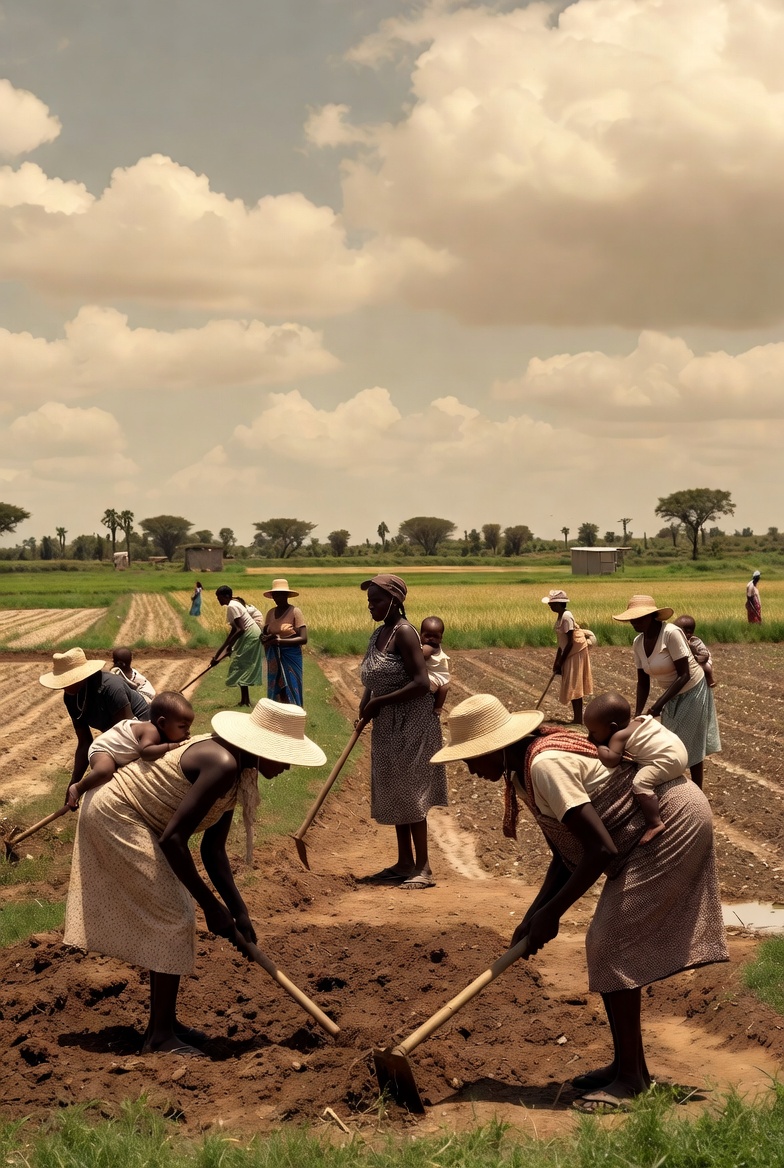
Her day begins not with rest, but with responsibility. She carefully wraps her infant onto her back using a long cloth, securing the baby close to her body. Then, carrying her farming tools, she walks toward the fields where hours of labour await her.
Saada is not just a farmer. She is also a mother, a caregiver, and a provider. Leaving her baby behind is not an option. There are no childcare centers in her community, and there is no one available to look after her child. Her family depends on her farm for survival. Every crop she grows contributes to feeding her household and sustaining their livelihood.
As she works, bending, weeding, and harvesting under the rising sun, her baby remains tied to her back. The cloth keeps her child safe and allows her to breastfeed when needed. But it also adds weight to an already exhausting routine. The physical strain builds slowly, settling into her back and waist.
The work is very hard; Saada says. “The baby’s weight adds to the pain in my back and waist. I hardly get time to rest compared to my husband.”
Her story is not unique. It reflects the daily reality of thousands of women farmers across Northern Ghana.
Across rural farming communities, women begin their days long before sunrise. Their responsibilities stretch far beyond the farm. They fetch water, gather firewood, cook meals, clean their homes, and care for their children all before heading to their fields.
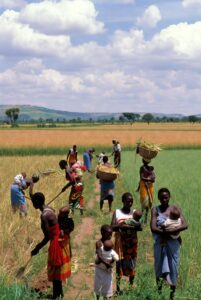
Women make up more than half of Ghana’s agricultural workforce, especially in subsistence farming. Yet much of their labour remains informal and undervalued. They carry the responsibility of feeding their families and supporting their communities, often without recognition or adequate support.
Carrying babies on their backs allows them to work and care for their children at the same time. It is a practice shaped by necessity, not choice.
Ramatu Iddris, another farmer from the Nawuri community in the same district, explains that women often work longer hours but have fewer resources. Many farm on their husbands’ land, limiting their independence and productivity. With little access to tractors, credit, or agricultural support services, they rely almost entirely on manual labour.
The Silent Toll on Women’s Bodies
But while these women demonstrate remarkable strength, medical experts warn that the physical cost is severe.
Dr Enoch Harvoh, a Senior Medical Doctor at the Tamale Teaching Hospital, explains that carrying babies while performing heavy farm labour places significant stress on the body. Many women suffer from chronic pain in their lower back, neck, and shoulders. The constant load alters spinal alignment and posture, leading to long-term musculoskeletal problems.
The risks increase with repetitive bending, lifting, and prolonged exposure to heat. Fatigue becomes a constant companion. Injuries, sprains, and physical exhaustion are common. Exposure to pesticides and harsh environmental conditions further threatens their health, particularly for pregnant and breastfeeding mothers.
These women endure not because their bodies are immune to pain, but because their survival depends on it.
The Hidden Risks for the Babies
While the cloth on their mothers’ backs offers warmth, safety, and constant closeness, the farm environment exposes infants to dangers their fragile bodies are not fully prepared to handle.
Dr Enoch Harvoh, explains that prolonged back-carrying during strenuous farm work can affect an infant’s physical development. When babies remain in the same position for many hours, their movement becomes restricted. This can limit their ability to stretch, kick, and explore naturally activities that are essential for healthy muscle and motor development.
Some studies, he notes, have linked extended back-carrying to changes in leg alignment, including conditions such as knock-knees, though many cases fall within normal clinical limits. However, the concern grows when babies spend excessive hours on their mothers’ backs daily, with little opportunity for free movement.
Beyond posture and development, the farm itself presents environmental threats. Infants are exposed to intense heat, which increases the risk of dehydration and heat stress. They may also inhale pesticide fumes or come into contact with harmful agricultural chemicals. Dust, insects, and farm pathogens further increase their vulnerability to infections.
Equally concerning is the lack of stimulation. While tied to their mothers’ backs, babies have limited visual interaction with their surroundings. This may reduce sensory stimulation, which plays a crucial role in early brain development.
Despite these risks, mothers like Saada have few alternatives. Carrying their babies with them is often the only way to ensure their safety while continuing to work and provide for their families.
Strength, Resilience, and the Hope for Change
Despite these challenges, women farmers continue to show extraordinary resilience. Many form farming groups to support one another, share labour, and access training or financial assistance. Others take on additional work such as shea butter processing, poultry farming, petty trading, or charcoal production to supplement their income.
Still, resilience alone cannot solve systemic problems.
Improving the lives of women farmers like Madam Saada Abdul requires practical and immediate support. One key solution is the establishment of community childcare centers, where babies can be safely cared for while their mothers work. This would protect infants from harsh farm conditions and reduce the physical burden on women.
Women also need ergonomic training on safe baby-carrying, proper posture, and simple strengthening exercises to prevent long-term back and spinal injuries. Access to improved farming tools and small-scale mechanization can further reduce reliance on exhausting manual labour.
In addition, providing clean drinking water, shaded rest areas, and protective equipment can help protect women from heat stress and harmful chemical exposure. Expanding access to credit, farm inputs, and agricultural support services would also enable women to work more efficiently and improve their livelihoods.
Recognizing and supporting women’s dual role as farmers and caregivers is essential to protecting their health and securing the well-being of future generations.
Umm E Habiba,
Punjab Pakistan