Clean energy is the technical pollution free solution to accessing energy; Solar panels, wind turbines, electric grids humming quietly in the background.
But at its core, clean energy is not really about technology. It is about how societies choose to live, who gets protected, and who gets left behind.
International Day of Clean Energy is an invitation to delve into the existing realities about clean energy and the role of women in the use of clean energy.
Before the buzzwords and climate pledges, the subject matter itself is simple. Energy is power in the most literal sense. It lights homes, drives hospitals, fuels schools, and shapes economies. For decades, that power has come largely from fossil fuels, extracted at immense environmental and human cost.
Clean energy challenges this legacy by offering a different pathway. One that reduces emissions, limits ecological damage, and reimagines development as something that does not depend on sacrifice zones or disposable communities.
The history of this day matters. In 2023, the United Nations General Assembly proclaimed January 26 as the International Day of Clean Energy, with the first global observance in 2024. The date is not accidental. It marks the anniversary of the International Renewable Energy Agency, (IRENA), established in 2009 to accelerate the global transition to sustainable energy.
The declaration came at a moment when climate conversations were no longer theoretical. Floods, heatwaves, energy poverty, and displacement had become lived realities, especially in the Global South.
The International Day of Clean Energy was not created to celebrate progress alone, but to also acknowledge urgency and accepting the fact that energy choices are moral choices. That the way we generate and distribute power reflects what we value as a global community. From there, the conversation widens.
Clean energy sits at the intersection of climate action, development, and social justice. It is central to achieving the Sustainable Development Goals, particularly affordable and clean energy, climate action, and reduced inequalities.
Yet access to clean energy remains deeply uneven with millions of people still relying on unsafe cooking fuels and entire communities still living without reliable electricity.
Women and girls, especially in low income settings, shoulder the physical and emotional burden of this energy gap through unpaid labor, health risks, and lost opportunities.
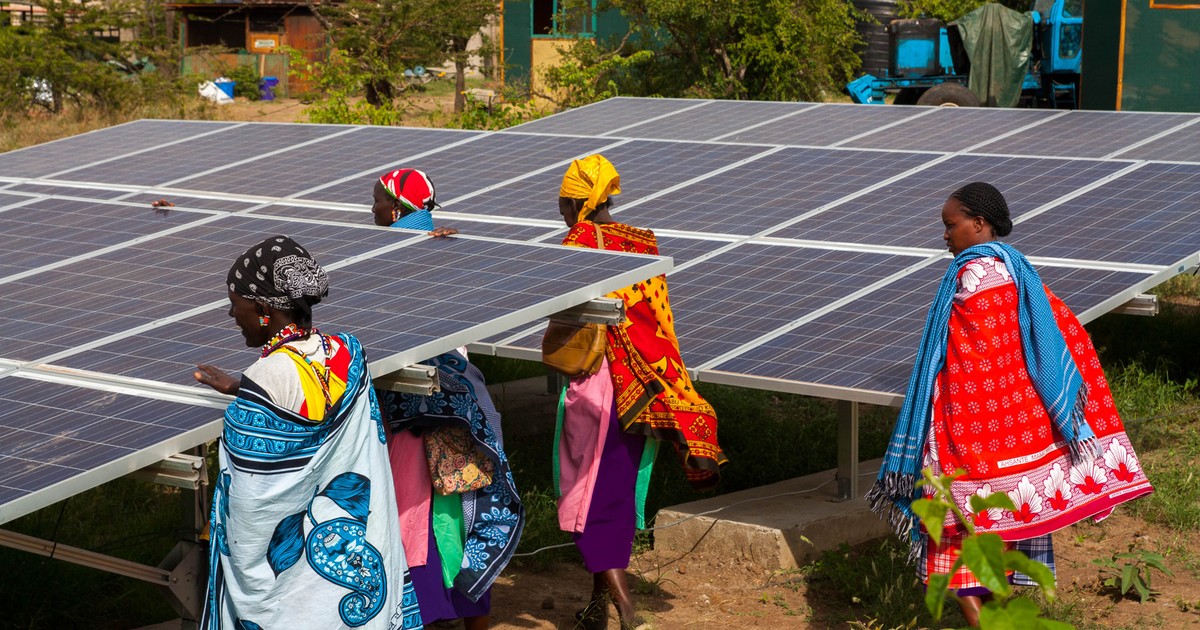
When energy systems are dirty, unreliable, or inaccessible, inequality deepens. Healthcare fails during outages. Education becomes fragile. Economic participation shrinks. Clean energy, when designed equitably, can reverse this pattern. Decentralized solar systems can power rural clinics. Clean cooking solutions can reduce maternal health risks. Renewable energy jobs can offer pathways out of poverty, if they are made accessible and inclusive.
But this is the uncomfortable part we do not always say out loud. Clean energy is not automatically just. Large scale renewable projects cannot replicate old extractive models if communities are excluded from decision making. Energy transitions can marginalize workers if reskilling is not prioritized. Climate solutions can become elitist if affordability is ignored.
So International Day of Clean Energy is also a moment for reflection. Are we transitioning fast enough? Yes, maybe. Are we transitioning fairly? That answer is still unsettled.
To understand what clean and reliable energy can enable, it helps to look at countries where stable power is already treated as a non-negotiable public good.
In many high-income countries, electricity reliability is measured using indicators like SAIDI and SAIFI. These are tools that are used to track how often power goes out and for how long.
Countries like Germany, Japan, and South Korea record average annual outage times of under one hour per customer. In some years, it is closer to fifteen or twenty minutes. Power interruptions are rare, brief, and often planned.
Here, households do not structure their lives around blackouts. Hospitals, schools, and small businesses operate with predictability. Energy stability fades into the background, which is exactly the point.
In the United States and Canada, reliability varies by region, but many states still average between one and two hours of outages per year. Even then, extended outages are treated as emergencies, not routine inconveniences. There is accountability. Utilities are regulated. Consumers expect explanations.
This is a huge contrast in countries like Nigeria, sub Saharan Africa and South Asia where annual outage durations can exceed several hundred hours, in some cases, thousands.
Businesses invest heavily in diesel generators, households ration electricity mentally, charging phones early, planning cooking schedules around supply windows. The cost is not just financial. It is psychological. It shapes how people imagine possibility.
What these metrics reveal is not simply a development gap, but an energy justice gap. Stable power correlates strongly with human development indicators. Countries with low outage times tend to have higher life expectancy, stronger healthcare systems, better educational outcomes, and higher labour productivity.
Clean energy, when paired with reliability, reinforces these gains. It reduces dependence on polluting backups, lowers long term costs, and improves air quality.
And yet, stability is not only about wealth. Countries like Costa Rica and Uruguay show what is possible with political commitment. Both generate the vast majority of their electricity from renewable sources and maintain high grid reliability. Their success did not emerge from abundance alone, but from long term planning, public investment, and governance that treated energy as a public interest issue, not a luxury.
So when we talk about clean energy, metrics matter, not to rank countries, but to reveal priorities. Reliability tells us whose time is valued. Whose labour is protected. Whose lives are planned for.
This is why international cooperation matters. Clean energy transitions cannot be imposed, they must be enabled through climate finance that is accessible, not extractive. Through technology transfer that respects local contexts and policies that center people, not just carbon metrics.
Women’s Role In Clean Energy
Women play a pivotal, multifaceted role in the global clean energy transition, —from accelerating adoption and innovation to driving equitable, sustainable outcomes. Their involvement is essential for achieving net-zero goals, expanding energy access, and addressing climate change impacts that disproportionately affect women and girls.
However, systemic barriers limit their full participation, particularly in technical, leadership, and STEM roles.
Women contribute across the clean energy value chain, often bringing unique perspectives that enhance inclusivity and effectiveness:
- As decision makers in the home front, — women frequently manage energy use at home (e.g., cooking, lighting, water pumping). Their preferences drive demand for clean solutions like solar lanterns, improved cookstoves, and off-grid renewables, reducing health risks from traditional fuels (e.g., indoor air pollution) and freeing time from chores for education or paid work.
- As entrepreneurs and innovators, — Women lead startups, distribute clean technologies (e.g., solar products in rural areas), and create last-mile solutions. This fosters community-level adoption and job creation in supply chains.
- As workforce participants and leaders: Women hold about 32% of full-time jobs in the renewable energy sector higher than in fossil fuels but stagnant since 2019 and below the global workforce average of 45-46%. They excel in administrative/support roles; averaging about ~45%, but are still underrepresented in:
– STEM/technical positions; with only 28% participation
– Medium-skilled jobs like installation/construction; they hold only 22% of spaces.
– Senior leadership/board roles; women are only 19%.
– Agents of equitable outcomes: Research shows that women-led initiatives promote more inclusive policies, better community buy-in, and faster transitions. Diverse teams drive innovation, and women’s leadership correlates with stronger sustainability focus and organizational performance.
Barriers that keep holding women back include workplace discrimination, cultural norms, limited access to training/finance, and male-dominated cultures—leading to high turnover and slow progress.
Nigeria faces acute energy challenges: low grid access, heavy reliance on polluting fuels with only 5% having access to clean cooking resources, and a push toward renewables (solar dominant) for economic growth and climate goals. Women are central to this shift:
- According to data by the Renewable Energy Association of Nigeria, Women make up ~30% of staff in the Nigeria’s renewable energy sector (mostly solar) but only ~8% are in STEM roles, 21% are in administrative roles, and ~64% in non-STEM positions. Overall energy sector female participation is lower (18.2% workforce, 25.6% leadership), with renewables showing a wider gap in technical/leadership areas (7-8%).
- As end-users and community influencers: Women bear the brunt of energy poverty (time spent fetching firewood/water, health impacts from biomass. Clean energy reduces unpaid care burdens, improves health, and enables economic participation—aligning with Nigeria’s WEE Policy pillars on skills, entrepreneurship, and emerging sectors.
- As entrepreneurs and change agents: Women lead cooperatives distributing clean cookstoves/solar products, run off-grid businesses, and innovate in mini-grids/community solar programs like:
– USAID Power Africa’s “Growing Green Jobs for Women” launched 2023 which trained 500 women/youth for energy jobs.
– Clean Technology Hub’s She Sustains Accelerator that supports 60+ women-led clean energy startups with funding/training.
– RETTI Wave Solar Training which trained thousands, created 6,500+ jobs, many targeting women/youth. - Leadership and impact: Notable Nigerian women drive innovation, policy advocacy, and expansion of clean energy solutions.
Initiatives like RMI’s Women in Clean Energy Fellowship (Nigeria, Ethiopia, Zambia) aim to build leadership capacity in mini-grids and renewables.
Why Women’s Participation Is Important for Clean Energy Transition
Empowering women in clean energy isn’t just about equity—it’s strategic thinking as it:
- Boosts adoption rates women influence household purchases.
- Creates jobs renewables projected to generate millions globally; Nigeria’s power sector could add 420,000 by 2060.
- Enhances sustainability diverse teams yield better outcomes.
- Aligns with SDGs 5: Gender Equality; 7: Affordable/Clean Energy; 13: Climate Action and national frameworks like Nigeria’s WEE Policy.
However, maximizing this impact requires policies that must prioritize gender-inclusive training, finance access, anti-discrimination measures, and leadership pipelines. Progress is underway, but closing gaps requires urgent, intentional action from governments, private sector, and partners.
The International Day of Clean Energy is not a finish line.
It is a reminder, a checkpoint to pause and ask whether our pursuit of sustainability includes dignity, equity, and care. Because a future powered by clean energy should also be a future powered by justice.
Hawwah A Gambo & Praise Eberechi Azubuke
Abuja, Nigeria.