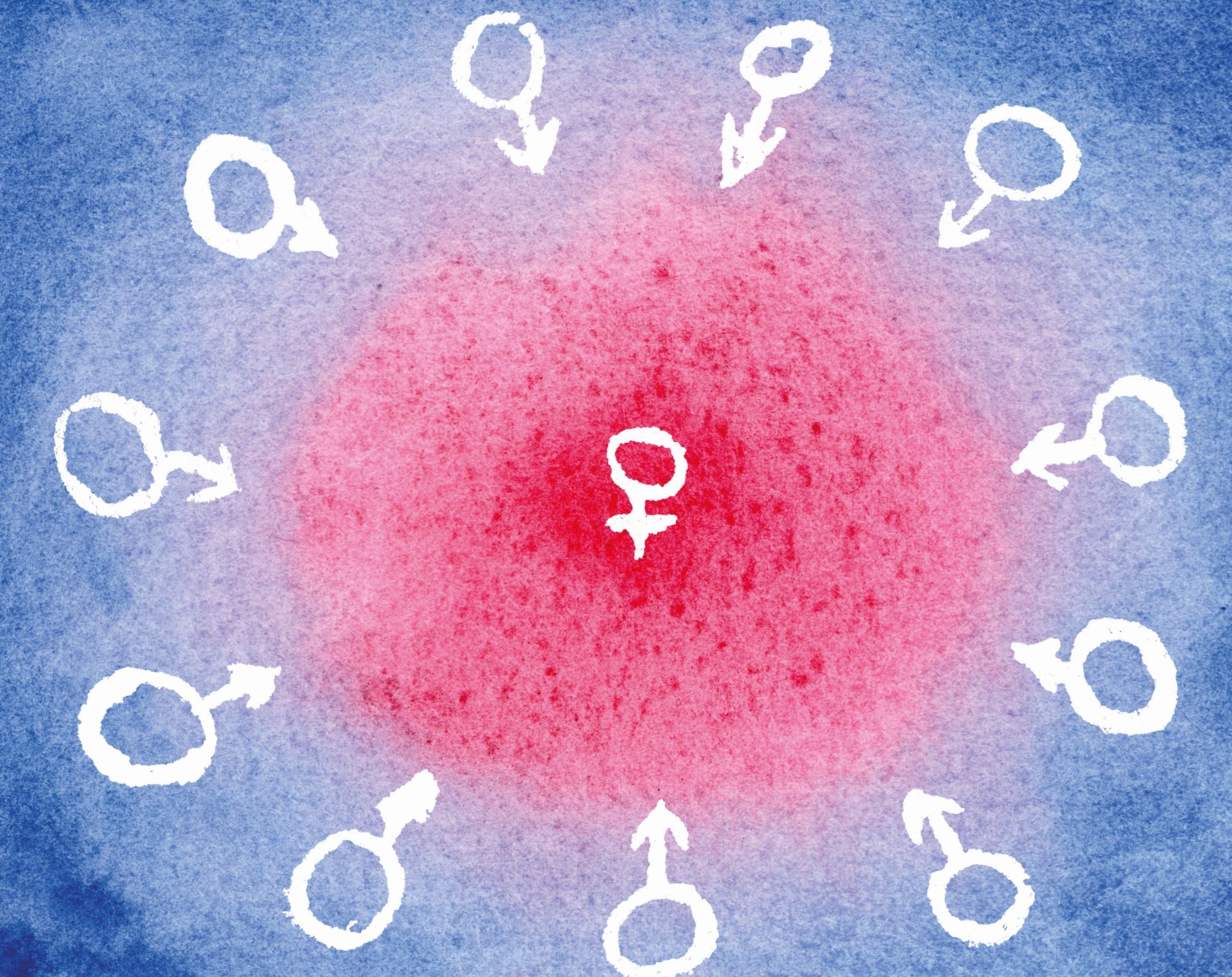
Recently, public conversations about gender have grown increasingly intense across the world. Terms such as misogyny and misandry are frequently used, often as though they are symmetrical opposites, equal and interchangeable.
While both describe different forms of gender based prejudice, their historical development, structural impact, and social consequences significantly differ.
Understanding these differences is not just about competing over who suffers more, but about recognizing how gender based hostility operates to address it responsibly globally and locally, including in countries such as Nigeria.
While misogyny refers to the hatred, contempt, or systemic prejudice against women embedded in cultural and religious beliefs, misandry refers to the hatred, contempt, or prejudice against men.
But even though both undermine dignity and create division, their scale and institutional footprint are not identical.
Across much of recorded history, misogyny has been embedded in political, legal, economic, and religious systems. In many countries, women were denied voting rights until legal reforms such as the 19th Amendment to the United States Constitution and the Representation of the People Act 1918 expanded suffrage.
In Nigeria, women’s political participation evolved gradually through colonial and post independence reforms. Figures such as Funmilayo Ransome Kuti played a pivotal role in challenging colonial taxation policies and advocating for women’s representation. Although Nigerian women secured voting rights nationally before independence, their representation in leadership positions remains significantly lower than that of men.
In many Nigerian communities, customary laws and cultural norms historically restricted women’s inheritance rights, property ownership, and decision-making authority. While constitutional protections and reforms now exist, implementation and enforcement vary across regions.
There has not been a widespread historical pattern globally of legal systems designed to deny men civil rights solely based on being male. This does not imply that men face no disadvantages; rather, it highlights a structural distinction between systemic exclusion and social prejudice.
Globally, misogyny is frequently linked to gender based violence, including domestic abuse, sexual violence, trafficking, and femicide. But in Nigeria, issues such as child marriage in some northern regions, sexual assault, and domestic violence remain serious concerns.
Legislative efforts such as the Violence Against Persons Prohibition Act were introduced to strengthen legal protections against abuse, though adoption and enforcement differ by state.
In contrast to misogyny, misandry commonly manifests through discrimination, exclusion, stereotyping, ridicule, or generalized distrust.
In Nigeria, as in many other countries, misandry manifests in the use of phrases such as ‘men are irresponsible or men are inherently unfaithful circulate socially and online. While such generalizations can damage relationships and reputations, they do not typically operate as codified systems of exclusion, nor do they constitute grievous harm like misogyny does.
Yet, at the same time, Nigerian men face serious challenges that deserve attention, including unemployment pressures, hazardous labor conditions, and social expectations that discourage emotional vulnerability.
Men are also statistically less likely to seek mental health support, often due to cultural norms equating masculinity with emotional restraint. Both realities matter.
Historically, misogyny has limited women’s participation in governance, religious leadership, and economic independence.
In Nigeria, women remain underrepresented in political office and corporate leadership despite educational progress and growing advocacy movements.
Misandry, on the other hand, more often manifests as reputational bias, assumptions that men are aggressive, emotionally detached, or unsafe. While these stereotypes can harm men’s social standing and discourage emotional expression, they rarely function as formal barriers to political or economic participation.
Misogyny has deep historical roots in many societies, often reinforced by selective interpretations of tradition, religion, and social hierarchy. The distinction lies largely between structural limitation and social suspicion. Cultural Roots and Contemporary Backlash
Nigeria’s cultural landscape is diverse and varies across ethnic and religious communities. In some contexts, patriarchal traditions have strongly shaped gender expectations.
At the same time, Nigeria has produced influential female leaders, entrepreneurs, academics, and activists who continue to reshape these norms.
Contemporary expressions of misandry, particularly on social media, often emerge as reactionary responses to lived experiences of harassment, inequality, or disappointment. However, anger, even when rooted in legitimate grievance, does not justify dehumanization.
Prejudice cannot cure prejudice. Fear, Power, and Perception does not promote justice and inclusion which is what we should all stive towards because fear, whether of violence or rejection, cannot serve as the foundation of a healthy society.
At a psychological level, misogyny often reflects attempts to control women’s autonomy economically, socially, or physically. Misandry more commonly reflects distrust or fear of harm, betrayal, or emotional disappointment.
Gender tensions are frequently intensified by economic hardship, social pressure, and rapid cultural change. When employment opportunities are scarce and expectations are high, frustration can easily become gendered.
The Way Forward: Global Principles, Local Responsibility
Addressing misogyny requires enforcing laws that protect women from violence, expanding women’s access to leadership and economic opportunity, challenging harmful cultural practices, and ensuring equal application of justice.
And addressing misandry requires rejecting harmful generalizations about men, encouraging emotional openness without stigma, recognizing male victims of abuse, and promoting balanced dialogue rather than adversarial rhetoric.
In Nigeria and across the globe, progress depends on mutual respect. Gender justice cannot mean replacing one form of hostility with another. Equality is not achieved by reversing prejudice. It is achieved by dismantling it.
Respect and dignity are not Western inventions or modern constructs. They are universal human values. Whether in India, London, Ghana or Niger, sustainable gender harmony begins with a simple principle:
See and recognise one another as human beings first.
Only then can societies move from division toward dignity for women and for men alike.
Hawwah A Gambo James Nkoyomabasi
Abuja Nigeria. Abuja, Nigeria